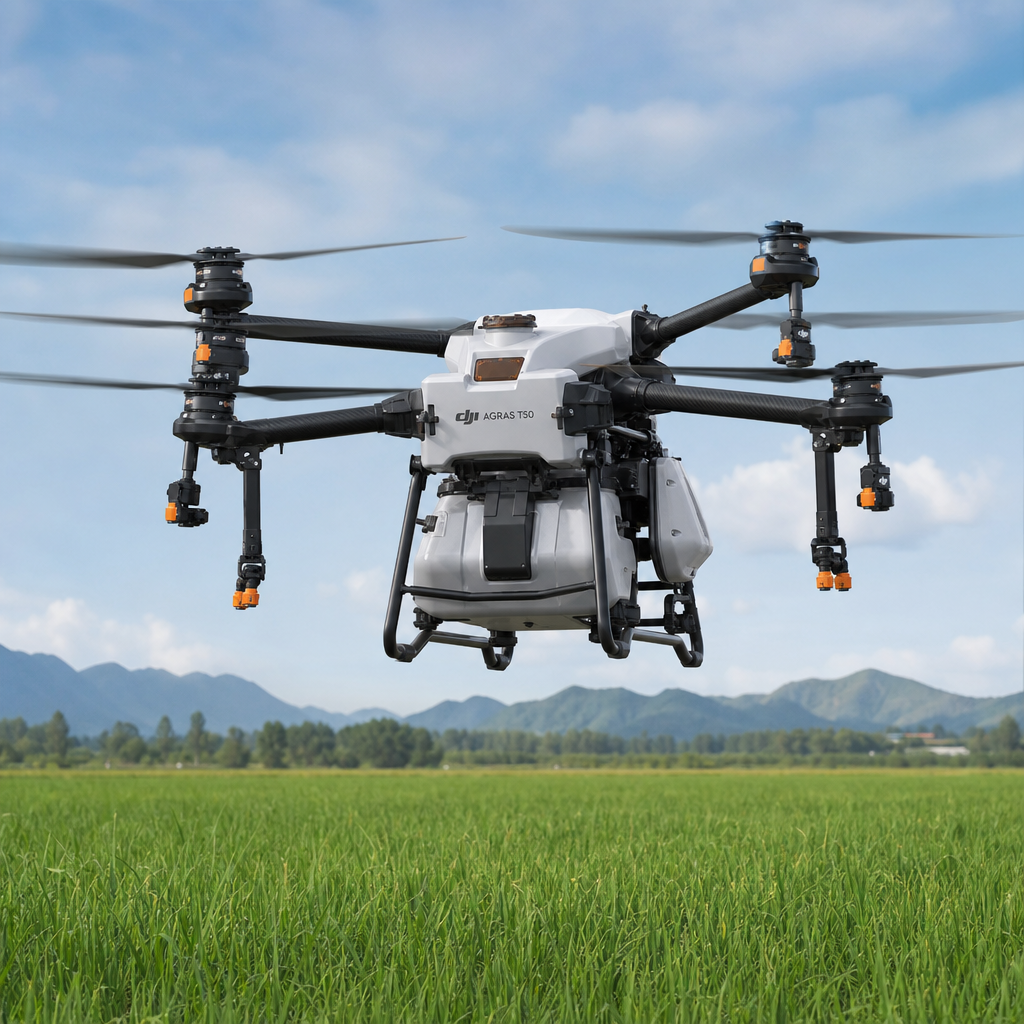
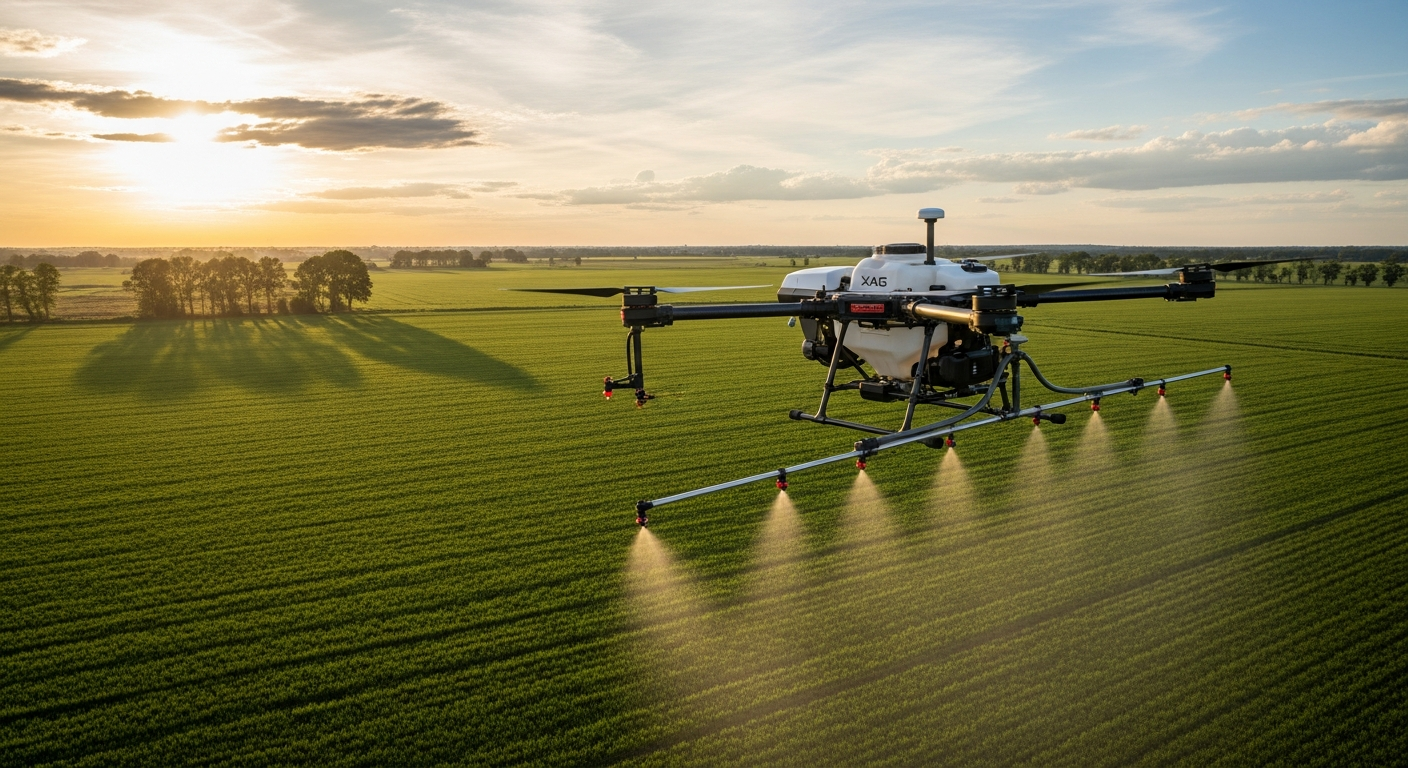
DJI Agras T50 vs XAG P100 Pro
Side-by-side comparison of the DJI Agras T50 ($17K – $25K) and XAG P100 Pro ($12K – $22K). Specs, price breakdown, ROI economics, and expert buying guidance for rice, wheat, corn growers.
DJI Agras T50
$17K – $25K
XAG P100 Pro
$12K – $22K
DJI Agras T50 coverage
20+ ha/hour (spraying)
XAG P100 Pro coverage
40 acres/hour
The XAG P100 Pro starts at $12K, roughly 42% less than the DJI Agras T50 ($17K), making capital cost the first filter for most buyers. Coverage is their sharpest dividing line: the XAG P100 Pro achieves 40 acres/hour against 20+ ha/hour (spraying) for the DJI Agras T50, a throughput gap that becomes decisive above 300 acres per season.
Price Comparison
DJI Agriculture
DJI Agras T50
$17K – $25K
~8mo payback
dealer listing
XAG
XAG P100 Pro
$12K – $22K
~8mo payback
unknown
Specifications
| Spec | DJI Agras T50 | XAG P100 Pro |
|---|---|---|
| Price range | $17K – $25K | $12K – $22K |
| Coverage | 20+ ha/hour (spraying) | 40 acres/hour |
| Herbicide reduction | 30% | 35% |
| Labor reduction | 60% | 55% |
| Availability | commercial | commercial |
| Crops | rice, wheat, corn, cotton | rice, wheat, corn, cotton |
| Nozzles | 8 atomised spray nozzles | — |
| Coverage | 20+ ha/hour (spraying) | — |
| Spray Tank | 40 L | — |
| Spread Payload | 50 kg | — |
| Obstacle Avoidance | Phased-array radar + binocular vision | — |
| Rotor Configuration | Coaxial twin-rotor | — |
| Tank | — | 40L |
| Flow Rate | — | 12L/min |
| Navigation | — | RTK + Vision |
| Wind Resistance | — | Level 5 |
ROI & Economics
DJI Agras T50
- Payback period
- ~8 months
- Labor reduction
- 60%
- Herbicide reduction
- 30%
- Coverage
- 20+ ha/hour (spraying)
XAG P100 Pro
- Payback period
- ~8 months
- Labor reduction
- 55%
- Herbicide reduction
- 35%
- Coverage
- 40 acres/hour
Use the Monday Robotics ROI Calculator to estimate payback for your specific operation size, labor costs, and crop mix.
Which Should You Choose?
Guidance based on actual spec differences between these two robots.
Large-acreage operations (500+ acres)
XAG P100 Pro covers more ground (40 acres/hour) versus DJI Agras T50 (20+ ha/hour (spraying)). Large farms with tight seasonal windows will see materially better throughput with XAG P100 Pro.
→ XAG P100 Pro
Smaller or intensively managed farms
DJI Agras T50's lower coverage rate (20+ ha/hour (spraying)) is not a penalty on farms under 100 acres — and often comes with a lower price point or more precise application that suits intensive cropping.
→ DJI Agras T50
Growers of canola, fruit trees
DJI Agras T50 supports canola, fruit trees which XAG P100 Pro does not. For these crops, DJI Agras T50 is the specific fit.
→ DJI Agras T50
Frequently Asked Questions
What is the price difference between the DJI Agras T50 and the XAG P100 Pro?
The DJI Agras T50 is priced at $17K – $25K, while the XAG P100 Pro is priced at $12K – $22K. The XAG P100 Pro is the less expensive option, with a mid-point price difference of approximately $4K.
Which covers more area — the DJI Agras T50 or the XAG P100 Pro?
The DJI Agras T50 covers 20+ ha/hour (spraying), while the XAG P100 Pro covers 40 acres/hour. Coverage varies by field conditions, crop row spacing, and operator settings.
Which robot uses less herbicide — the DJI Agras T50 or the XAG P100 Pro?
The DJI Agras T50 reduces herbicide use by up to 30%, and the XAG P100 Pro by up to 35%. The XAG P100 Pro achieves the greater chemical reduction. Both represent significant savings over conventional boom spraying.
Who makes the DJI Agras T50 and the XAG P100 Pro?
The DJI Agras T50 is made by DJI Agriculture, headquartered in Shenzhen, China. The XAG P100 Pro is made by XAG, headquartered in Guangzhou, China.
Which has a faster return on investment — the DJI Agras T50 or the XAG P100 Pro?
The DJI Agras T50 has an estimated payback period of 8 months, while the XAG P100 Pro is approximately 8 months. The DJI Agras T50 offers a faster payback. These estimates assume typical field conditions and labor cost savings — use the Monday Robotics ROI calculator for figures specific to your operation.