Best Robots for Apple Orchards
Apple orchards are a prime target for harvest robotics. Picking apples requires workers to climb ladders and carefully handle fruit, making it labor-intensive and increasingly difficult to staff. Harvest robots use AI vision to locate apples in the canopy, assess ripeness, and pick them without bruising. Autonomous mowers and sprayers also reduce orchard maintenance labor.
Apple picking labor costs $20–$35/bin (900 lb), with crews picking 6–8 bins/day. A harvest robot at $400K–$600K handling 150–200 bins/day reaches payback in 3–5 seasons. Spray drones reduce fungicide and insecticide costs by 30–40%, saving $15–$30/acre per season on a commercial apple operation.
Quick answers:
- •Can robots pick apples? — Yes, robots like the Abundant Robotics apple picker and Advanced Farm T22 use vacuum suction and robotic arms to pick apples from trees at commercial speeds. They identify ripe fruit using AI cameras and pick gently to avoid bruising..
- •What robots help with orchard management? — Beyond harvest robots, autonomous mowers keep orchard floors maintained, spray drones apply pesticides and thinning agents, and monitoring robots track fruit development and tree health throughout the season..
Apple orchards are a prime target for harvest robotics. Picking apples requires workers to climb ladders and carefully handle fruit, making it labor-intensive and increasingly difficult to staff.
- ↓Reduce farm labor by 48% on average
- ✓Typical payback period of 42 months
- ✓4 verified solutions in our directory
4 Robots Found
| Robot | Price Range | Action |
|---|---|---|
| Robotics Plus AP Harvester | Contact | View → |
| Tevel Flying Autonomous Picker | Contact | View → |
| Abundant Robotics Apple Harvester | $300K-$500K | View → |
| Advanced Farm T-22 Apple Harvester | $250K-$400K | View → |
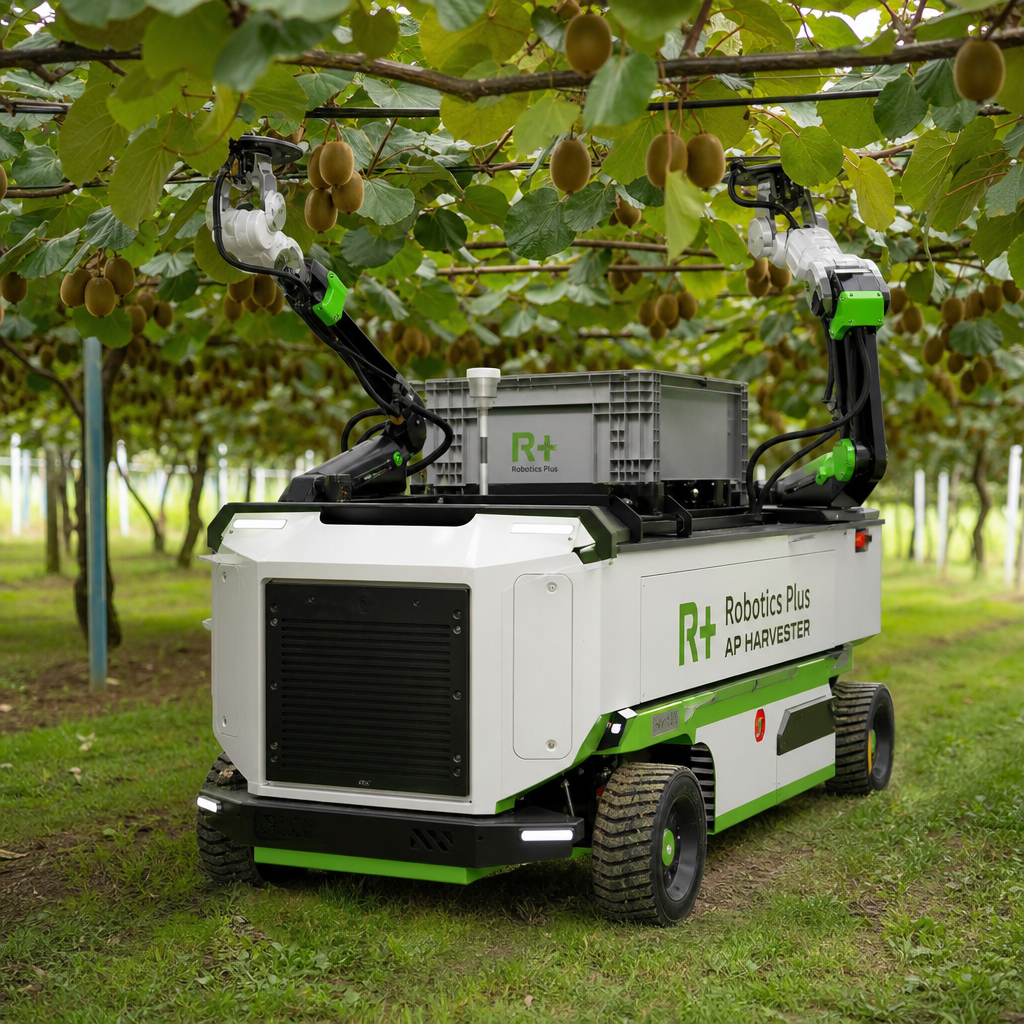

Robotics Plus AP Harvester
The Robotics Plus AP Harvester is an autonomous orchard harvesting platform developed in New Zealand for kiwifruit and apple picking. The system uses a combination of 3D vision, machine learning, and a multi-arm picking mechanism to locate, assess, and harvest fruit from trellis-trained orchards at commercial speed. Robotics Plus has developed the AP Harvester through a collaboration with Zespri, the global kiwifruit marketer, and has conducted extensive trials in New Zealand's Bay of Plenty kiwifruit industry. The platform navigates autonomously between orchard rows, with the fruit conveyance system feeding picked fruit directly to bins for export-grade post-harvest handling. It is also being adapted for apple varieties in collaboration with Washington State University and New Zealand pipfruit growers.
Contact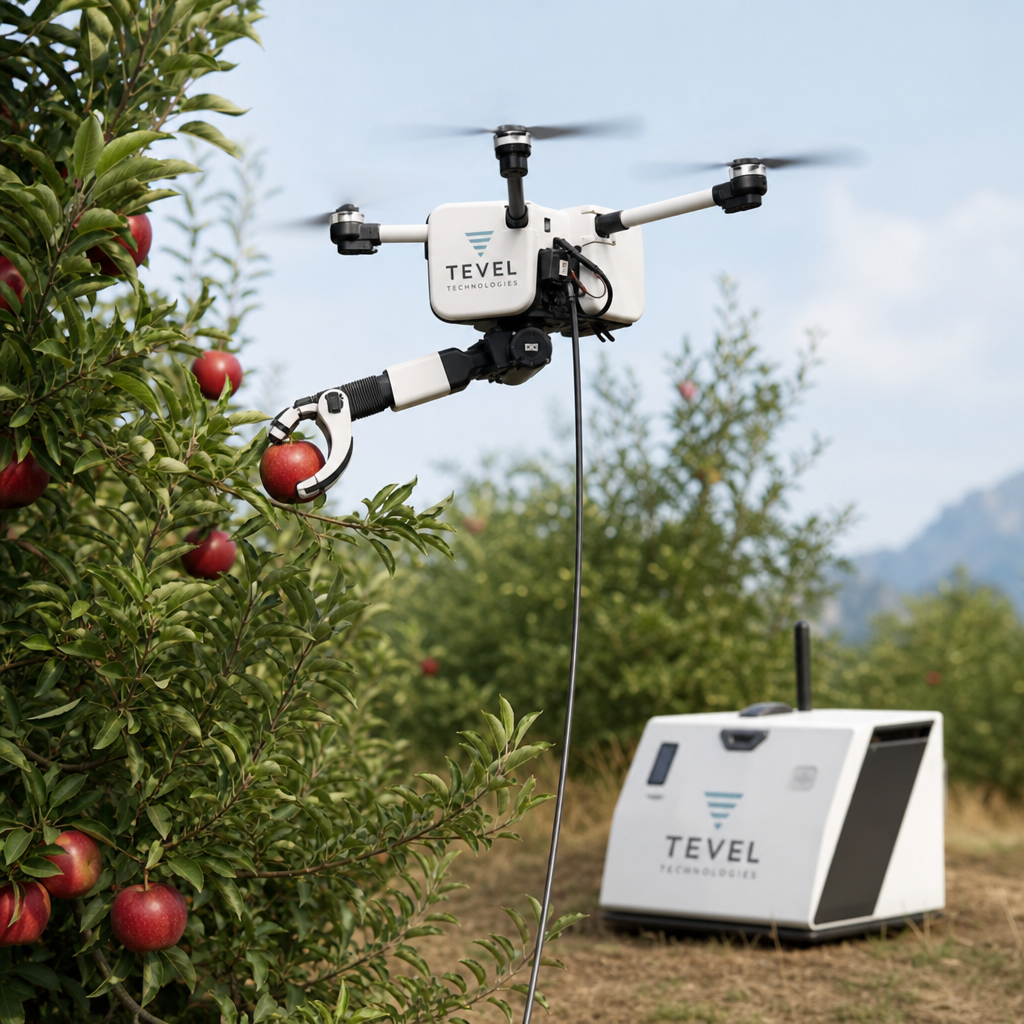

Tevel Flying Autonomous Picker
Tevel's Flying Autonomous Picker uses a fleet of tethered UAVs — each carrying a robotic arm and AI vision system — to harvest apples, peaches, plums, and other tree fruit from orchard canopies. Each drone is tethered to a ground unit that supplies continuous power and handles fruit transport, removing the battery-life constraint that limits free-flying harvest drones. The AI vision system evaluates fruit colour, size, and position in real time, picking only ripe fruit and leaving under-ripe fruit to mature further — reducing wastage and the need for multiple passes. Multiple flying units operate from each ground unit simultaneously, enabling meaningful throughput at commercial scale. Tevel is in pilot and early-commercial deployments with orchard operators in Europe, North America, and the Middle East, focusing initially on apple and stone-fruit varieties.
Contact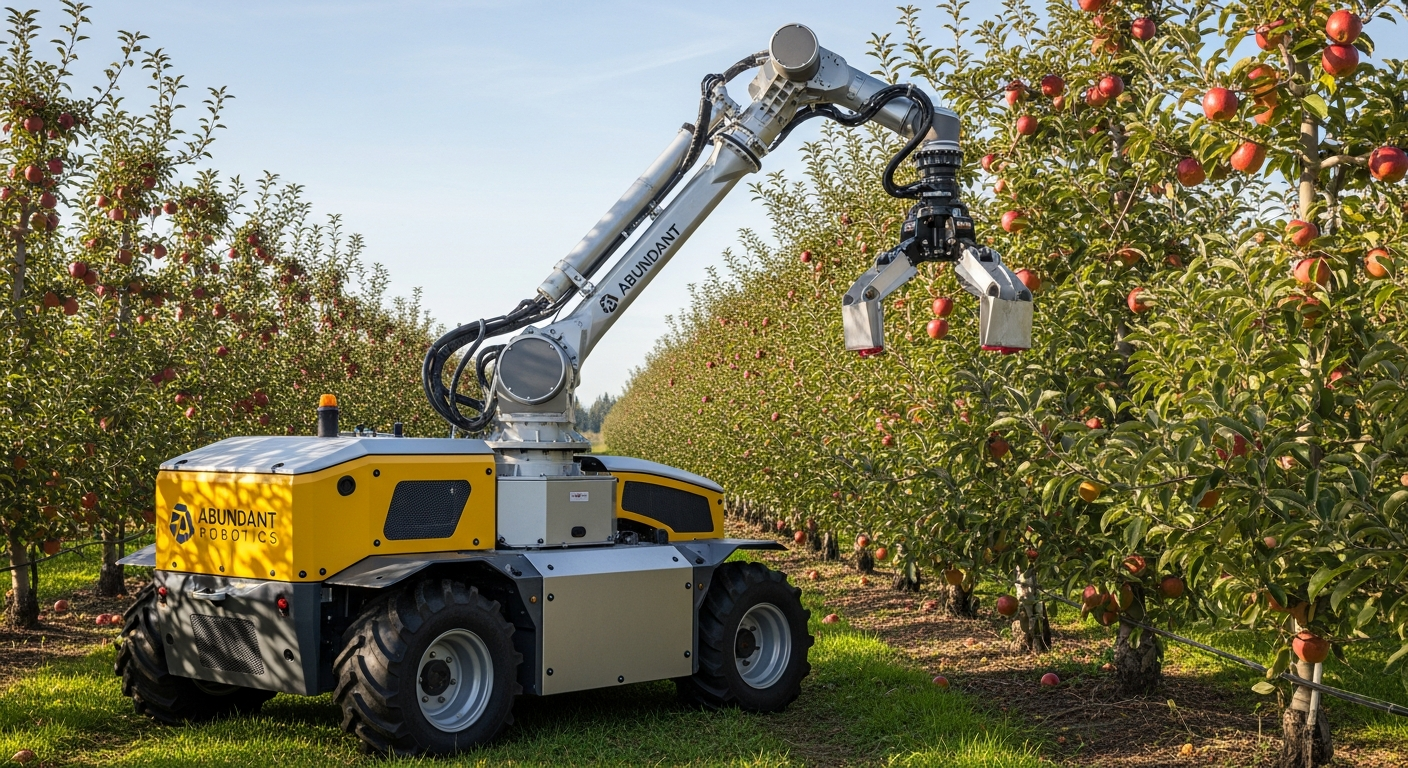

Abundant Robotics Apple Harvester
The Abundant Robotics apple harvester was a pioneering autonomous fruit picking system that used vacuum-based suction to gently detach ripe apples from trees. Using LIDAR and computer vision to identify pickable fruit, the system's suction cups applied calibrated negative pressure to detach apples without bruising or stem damage. The robot navigated autonomously between orchard rows on a self-propelled platform, picking at rates comparable to human workers. Though the company later pivoted, its technology demonstrated that autonomous tree fruit harvesting was technically achievable and influenced numerous subsequent harvest robotics ventures. The technology was trialed in Washington State apple orchards.
$300K-$500K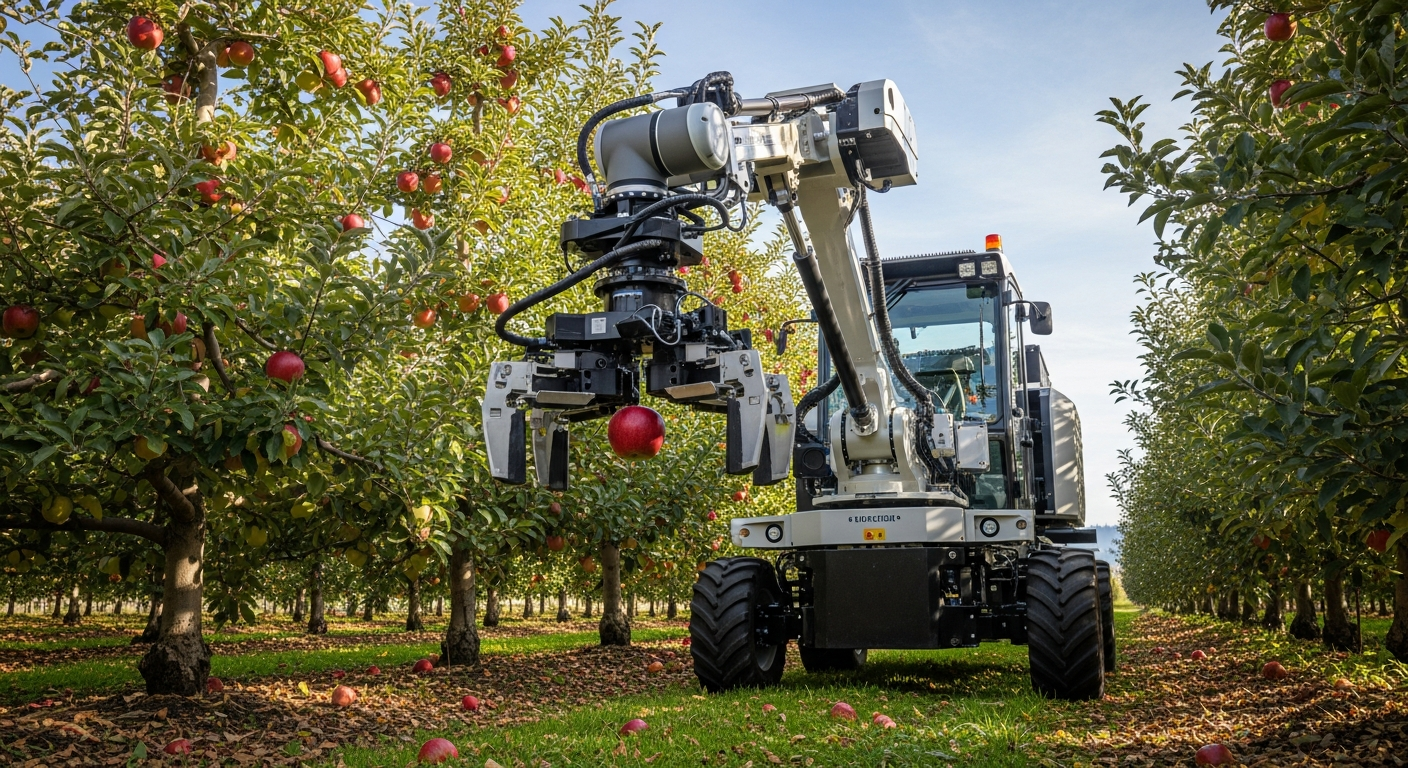

Advanced Farm T-22 Apple Harvester
The Advanced Farm T-22 is an autonomous apple harvesting robot designed to work alongside human pickers in commercial orchards. Using 3D vision and AI fruit detection, it identifies ripe apples on the tree, determines optimal pick sequences, and harvests fruit using a gentle vacuum-grip end effector that prevents bruising. The T-22 navigates autonomously between tree rows and can harvest at a rate approaching 50% of an experienced human picker's speed, operating 24/7 without breaks. It has been deployed in Washington State apple orchards, the world's largest apple-growing region, helping growers address critical labor shortages during harvest season.
$250K-$400K