Best Robots for Dairy Farms
Dairy farming is the most automated segment of agriculture. Robotic milking systems allow cows to be milked voluntarily, 24 hours a day, without human operators. Over 50,000 robotic milking units are deployed globally, from 30-cow family farms to 500-cow commercial herds. Beyond milking, dairy robots automate feed pushing, manure scraping, and individual cow health monitoring — reducing the skilled labor burden that makes dairy farming increasingly difficult to staff.
A single robotic milking unit costs $150K–$250K and handles 55–70 cows. At $1,500–$2,500/cow in annual labor savings and a 5–15% milk yield increase from voluntary milking, most units pay back in 4–6 years. Farms eliminating one full-time milking employee ($45K–$65K/year) often reach payback in 3–4 years.
Quick answers:
- •How many cows can one milking robot handle? — A single robotic milking unit handles 55–70 cows effectively. Farms with larger herds install multiple units — a 200-cow dairy typically uses 3–4 robots.
- •What is the payback period for a dairy milking robot? — Robotic milking systems typically pay back in 4–7 years on labor savings alone, but 3–5 years when accounting for the 5–15% milk yield increase from voluntary milking and better per-cow health data that reduces veterinary costs. Farms that eliminate 1–2 milking employees reach payback fastest..
Dairy farming is the most automated segment of agriculture. Robotic milking systems allow cows to be milked voluntarily, 24 hours a day, without human operators.
- ✓2 verified solutions in our directory
2 Robots Found
| Robot | Price Range | Action |
|---|---|---|
| GEA DairyRobot R9500 | $150K-$230K | View → |
| BouMatic Robotic Milker | $150K-$220K | View → |
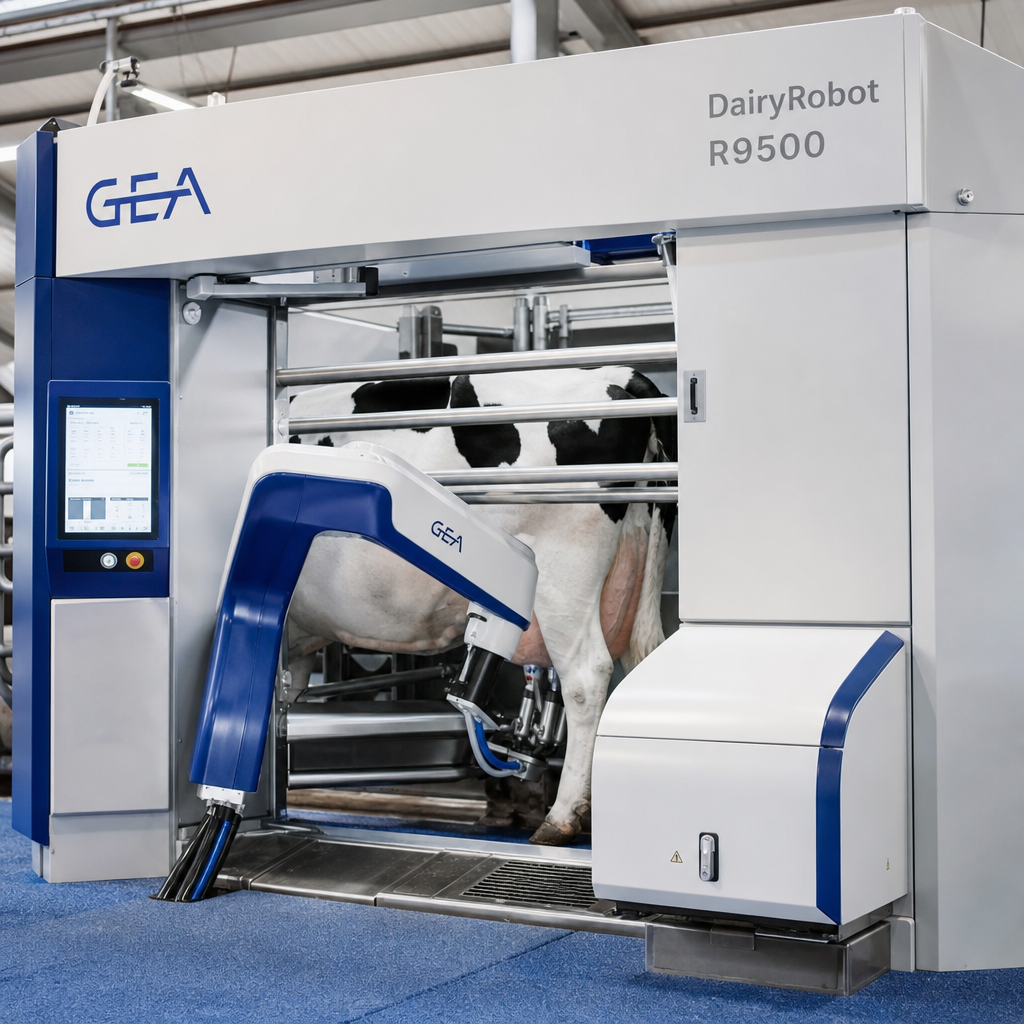
GEA DairyRobot R9500
The GEA DairyRobot R9500 is a voluntary milking system (VMS) that allows dairy cows to choose when to be milked, typically increasing milking frequency and milk yield compared to conventional twice-a-day parlours. A 3D camera system guides a robotic arm to attach individual teat cups with precision, and per-quarter milking control optimises each teat independently for the animal's health and comfort. Real-time milk quality sensors detect issues such as mastitis before they become costly herd problems. The R9500 is designed for herds of 50–70 cows per unit, and multiple robots can be deployed in larger operations. GEA's farm management software integrates directly with the robot, providing farmers with animal-level health and production data. Installation and commissioning are handled through GEA's global service network.
$150K-$230K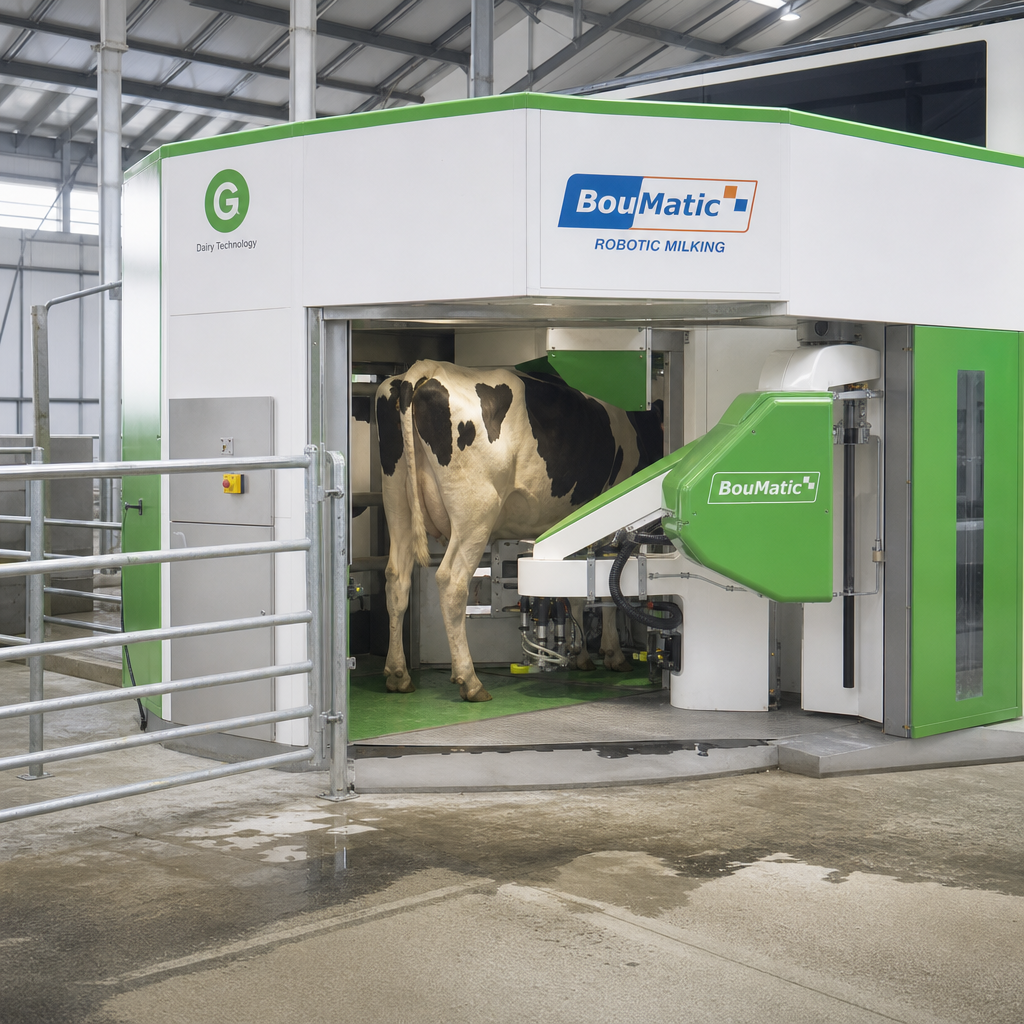

BouMatic Robotic Milker
The BouMatic Robotic Milker is a voluntary milking system designed for mid-size dairy operations, offering automated cow traffic management and intelligent milking that adapts to each animal's individual cycle. BouMatic's system uses laser-guided teat detection and a multi-box configuration to keep throughput high even during peak milking periods. Each milking is monitored for conductivity and colour changes that may indicate subclinical mastitis, providing early-warning data to the herd manager. BouMatic has decades of dairy equipment experience and provides a full service and consumables support network across North America, Europe, and Australia. Pricing is estimated for a single-unit installation; multi-unit farms qualify for volume pricing.
$150K-$220K