Best Robots for Lettuce Farms
Lettuce farming is one of the most labor-intensive forms of agriculture, requiring precision planting, intensive weeding, and careful harvesting. Weeding robots are particularly valuable in lettuce production where herbicide options are limited. Harvest robots are being developed to automate the cutting and packing process, and greenhouse robots manage hydroponic lettuce growing operations.
Lettuce hand-thinning labor costs $150–$350/acre per pass. Precision thinning robots like the Blue River LettuceBot eliminate that cost entirely. Weeding robots save $80–$200/acre in herbicide and hand-weeding labor over a season. On a 300-acre lettuce operation running 3 crops/year, automated weeding and thinning saves $300,000–$600,000 annually.
Quick answers:
- •What robots work for lettuce farms? — The Blue River LettuceBot provides precision thinning and weed control. Weeding robots like the Naio Oz handle intra-row weeding in lettuce beds.
- •Can robots thin lettuce plants? — Yes, the Blue River LettuceBot uses AI cameras to identify and thin lettuce seedlings to optimal spacing with precision spraying, replacing hand-thinning crews that are increasingly difficult to hire..
Lettuce farming is one of the most labor-intensive forms of agriculture, requiring precision planting, intensive weeding, and careful harvesting. Weeding robots are particularly valuable in lettuce production where herbicide options are limited.
- ↓Reduce farm labor by 68% on average
- ↓Cut chemical use by 88%
- ✓Typical payback period of 22 months
- ✓8 verified solutions in our directory
8 Robots Found
| Robot | Price Range | Action |
|---|---|---|
| Carbon Robotics LaserWeeder | $750K-$1000K | View → |
| Naio Orio | $40K-$60K | View → |
| Stout Smart Cultivator | $150K-$250K | View → |
| Nexus LaserBot | $200K-$350K | View → |
| Naandanjain ReBot Greenhouse | $60K-$100K | View → |
| Verdant Robotics Sharpshooter | $250K-$400K | View → |
| Blue River LettuceBot | $120K-$180K | View → |
| Naio Dino | $130K-$180K | View → |
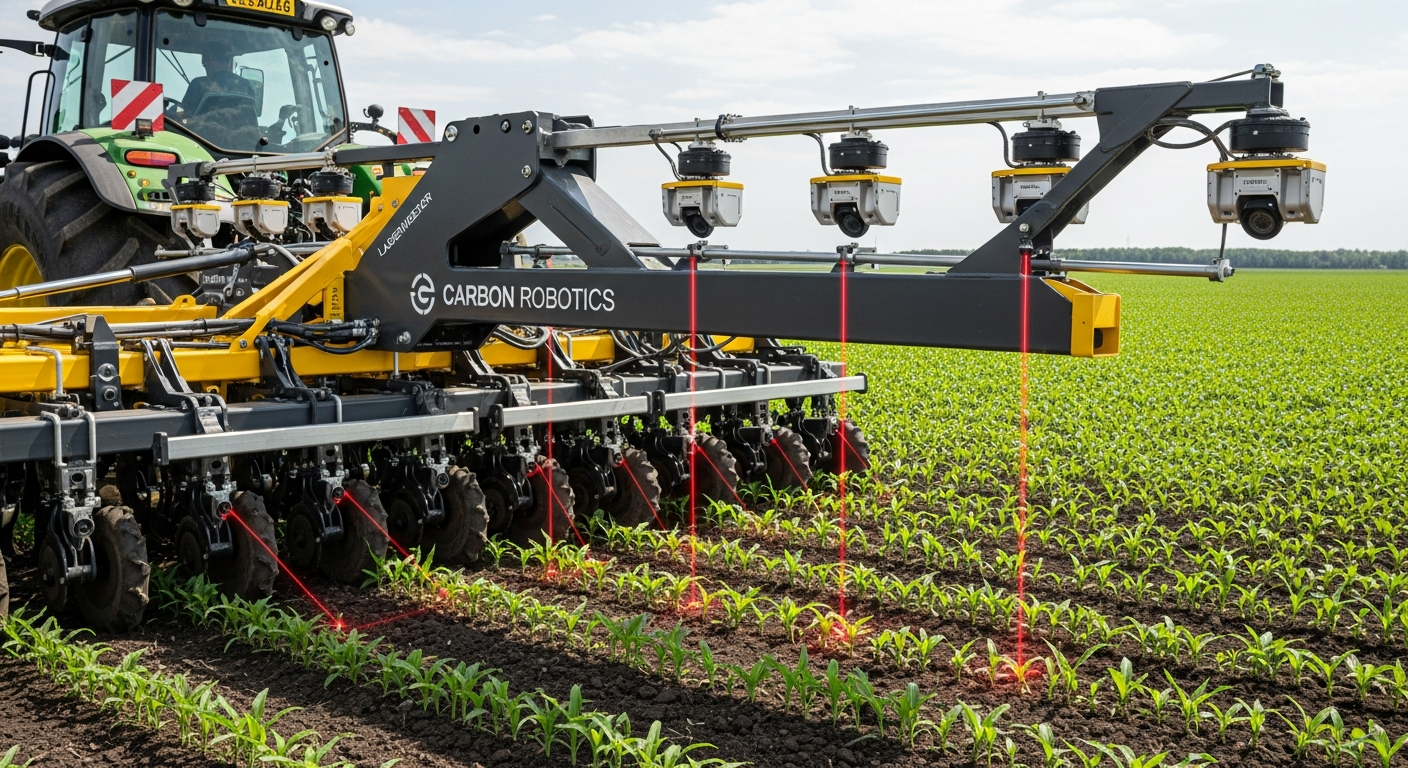

Carbon Robotics LaserWeeder
The Carbon Robotics LaserWeeder is a cutting-edge agricultural implement that uses 30 high-power CO2 lasers to eliminate weeds with millimeter precision, achieving a kill rate of 200,000 weeds per hour. The system is pulled behind a standard tractor and uses 12 high-resolution cameras paired with deep-learning AI to distinguish weeds from crops in real time, even at speeds up to 6 mph. Because it uses thermal energy rather than chemicals, it delivers 100% chemical-free weed control, making it ideal for both organic and conventional operations. The LaserWeeder can operate day and night, with its computer vision system performing equally well in darkness using its own lighting array. It has seen rapid commercial adoption across onion, carrot, broccoli, and cotton farms in the western United States.
$750K-$1000K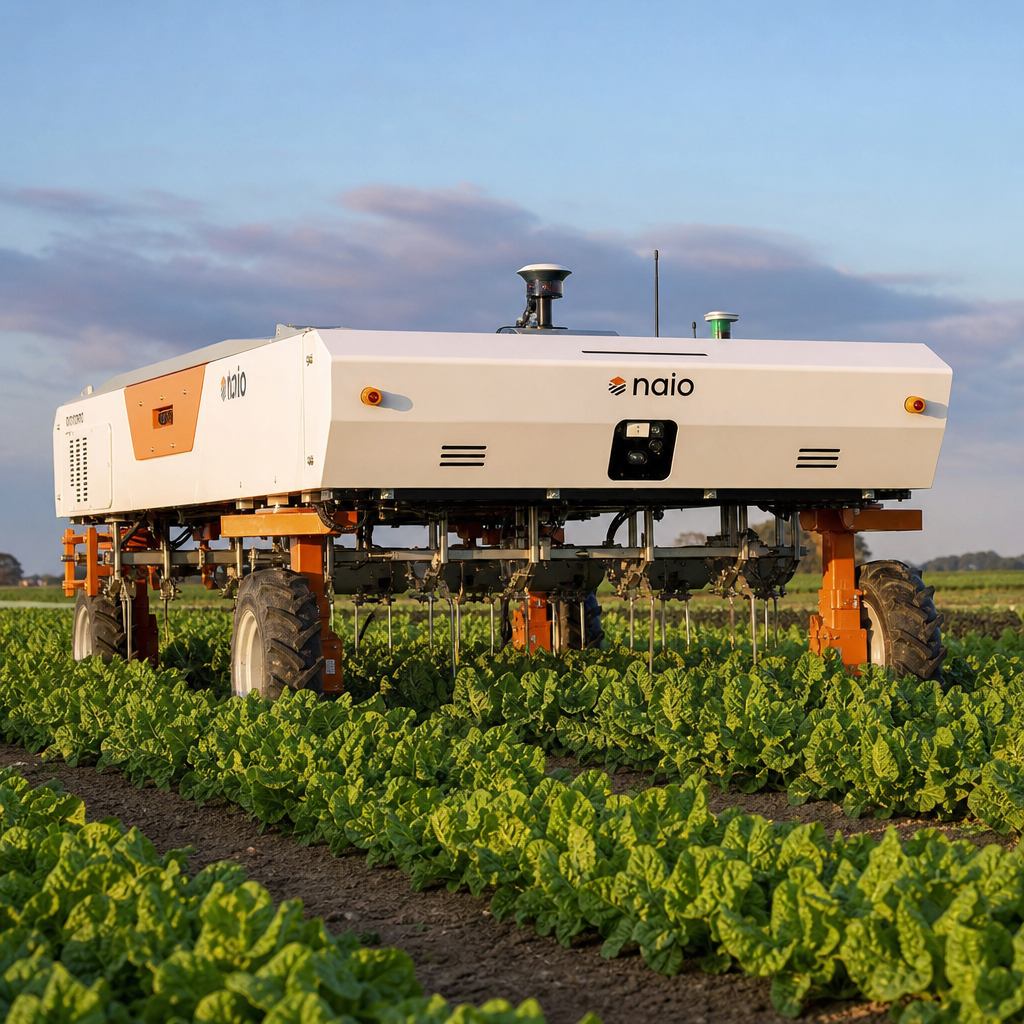

Naio Orio
The Naio Orio is the largest robot in Naio Technologies' lineup, designed to tackle large-scale market garden and vegetable production where smaller robots like the Oz and Dino lack the working width and speed needed to cover significant acreage economically. Built for professional vegetable growers, the Orio navigates crop rows autonomously using RTK GPS and vision guidance, using mechanical inter-row and intra-row weeding tools to clear weeds without chemicals. Its broader working width and faster travel speed compared to the Oz and Dino make it viable for vegetable farms running 10–50+ hectares of intensive production. The Orio is compatible with a range of Naio-developed tooling for different crop row spacings and weed types. As with all Naio robots, it is designed for ease of use by non-technical farm staff.
$40K-$60K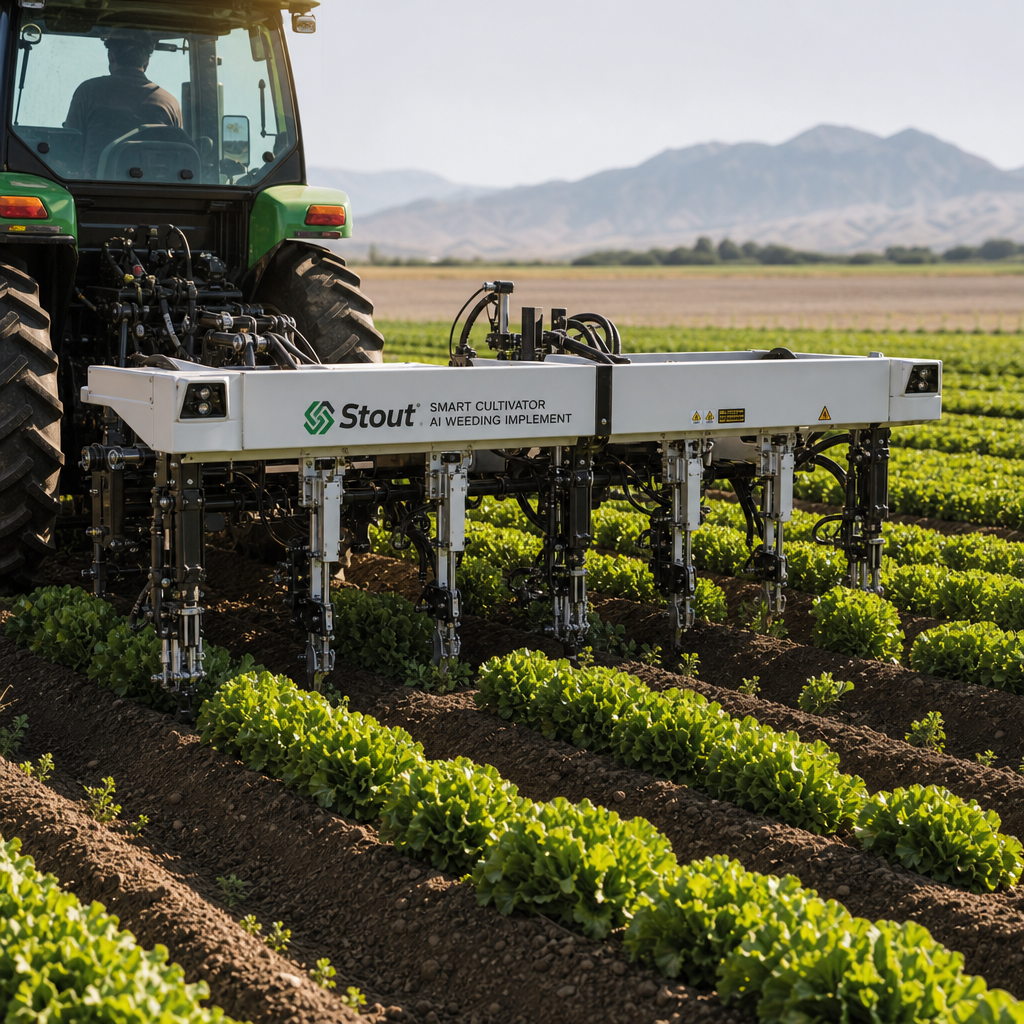

Stout Smart Cultivator
The Stout Smart Cultivator is an AI-driven mechanical weeding implement that attaches to a standard tractor and uses computer vision to guide high-speed rotary cultivation tools precisely between and within crop rows. Unlike autonomous robots, the Stout system works with the tractor the farmer already owns, reducing capital cost and making adoption straightforward. Vision cameras scan ahead of the cultivation tools at 30 frames per second, adjusting tool positioning in real time to avoid crop plants while aggressively removing weeds. The system is particularly well established in lettuce, broccoli, cauliflower, and other brassica crops in California's Salinas Valley, where labour for hand-weeding is both expensive and unreliable. Stout offers the cultivator on a lease-to-own basis as well as outright purchase.
$150K-$250K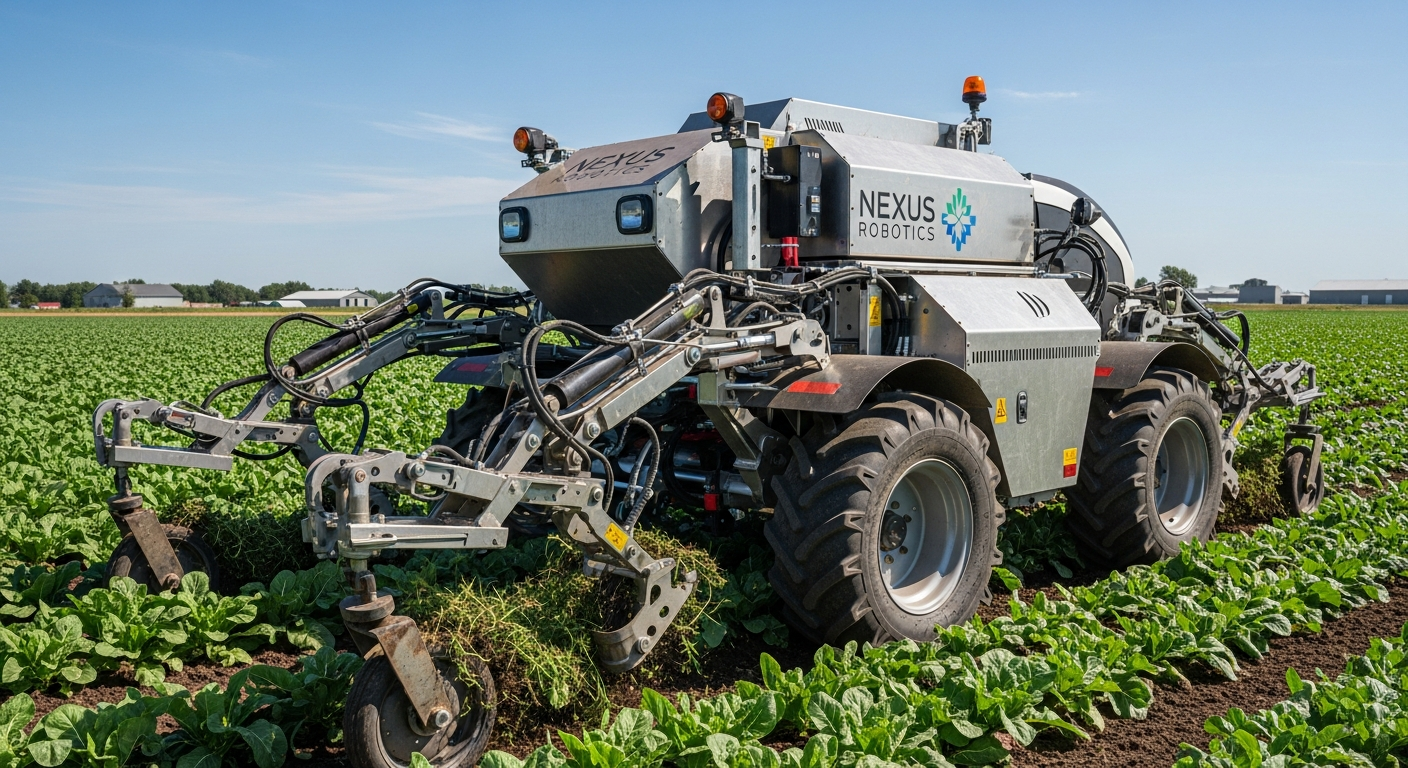

Nexus LaserBot
The Nexus LaserBot is a fully autonomous weeding robot that uses mechanical removal instead of chemicals or lasers, physically extracting weeds from vegetable crop rows. Using advanced deep learning vision running on edge processors, it identifies weeds at 99% accuracy and removes them with precision mechanical tools at speeds up to 3 mph. The robot is designed for organic farmers who need zero-chemical weed control without any soil disturbance or thermal damage to nearby crops. Weighing 2,000 lbs and powered by a diesel-electric hybrid system, it operates for 12+ hours per charge cycle. Commercially deployed in Quebec and expanding across North American organic vegetable operations.
$200K-$350K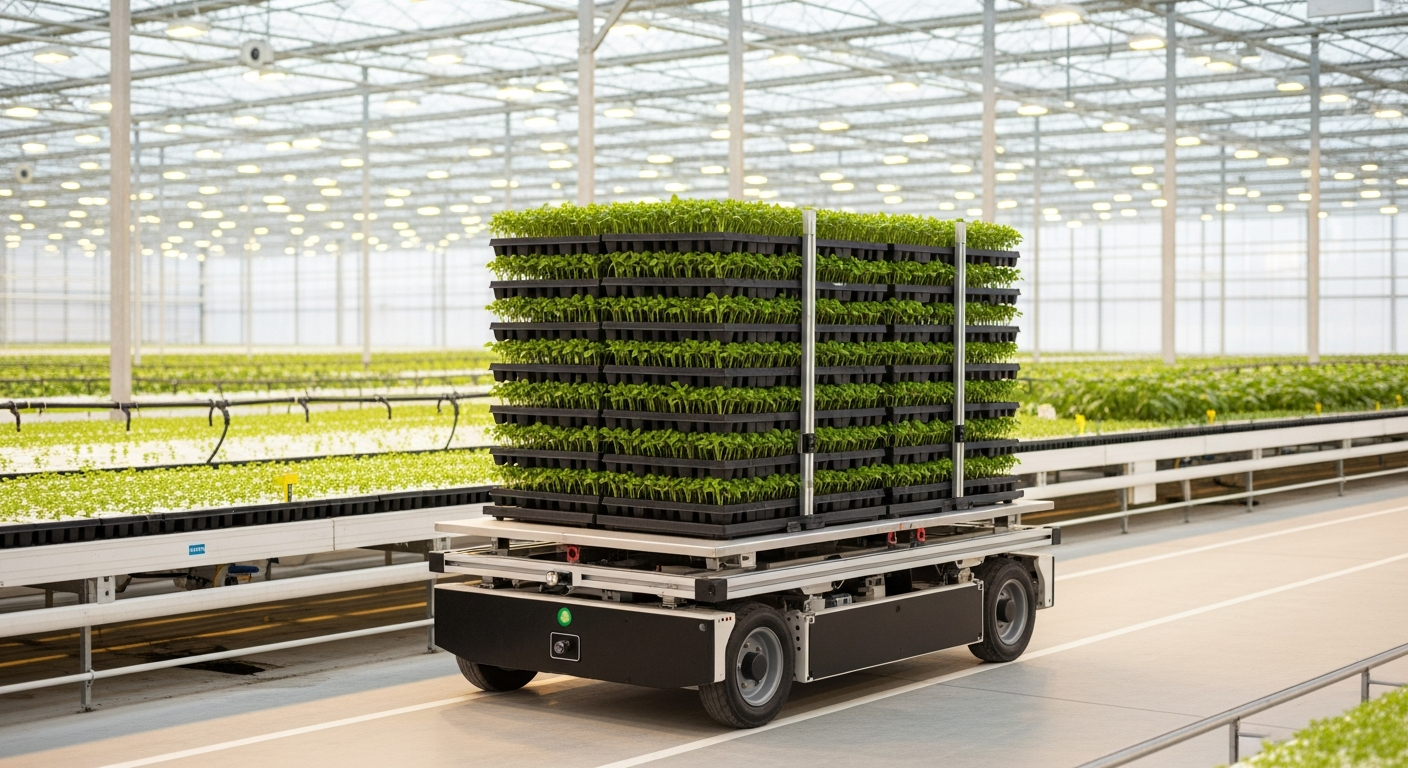

Naandanjain ReBot Greenhouse
The ReBot is an autonomous greenhouse logistics robot that handles the heavy labor of moving plant trays and growing containers within large commercial greenhouses. Using magnetic floor guides and RFID plant tracking, it transports growing modules weighing up to 500 lbs between germination areas, growing zones, and harvest stations. The system integrates with greenhouse management software to optimize plant spacing, ensure uniform light exposure, and schedule harvests at peak quality. Each ReBot can replace 3-4 manual laborers for internal transport tasks, operating continuously through multiple shifts. Deployed in commercial greenhouses growing lettuce, herbs, and ornamental plants across North America.
$60K-$100K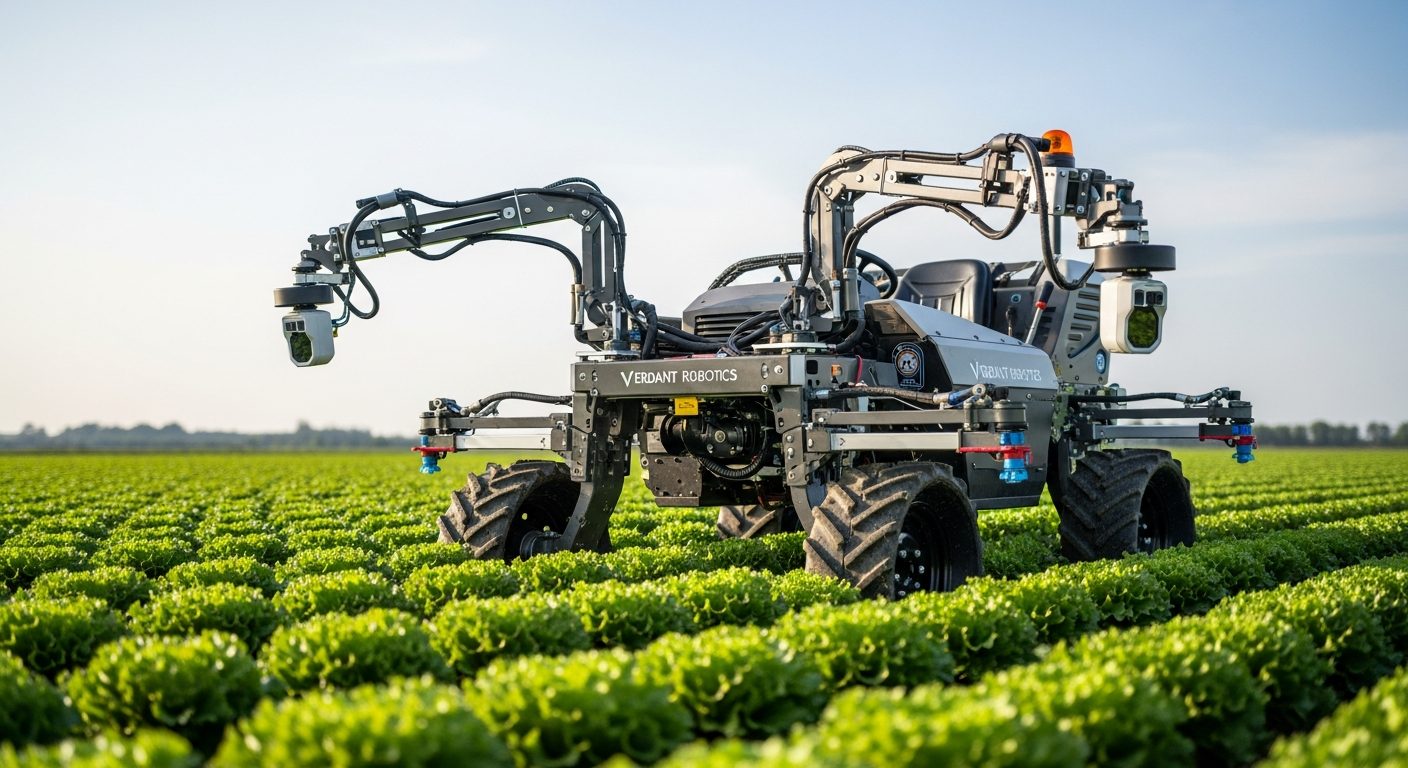

Verdant Robotics Sharpshooter
The Verdant Sharpshooter is a multi-action robotic platform that combines AI-powered plant identification with precision micro-spraying, mechanical thinning, and targeted fertilization. Using millimeter-accurate computer vision running at 20 frames per second, it distinguishes crops from weeds and applies micro-doses of herbicide only where needed, reducing chemical use by up to 95%. The platform operates autonomously through crop rows at speeds up to 5 mph, handling lettuce, broccoli, cauliflower, and other specialty crops. Each Sharpshooter can cover 15-25 acres per day and integrates multiple farming operations into a single pass, saving both time and labor. Deployed across major California growing regions, it represents a breakthrough in multi-action autonomous farming.
$250K-$400K