Best Robots for Vineyard Management
Vineyards require intensive labor for pruning, canopy management, spraying, and harvesting. Compact agricultural robots navigate between vine rows to handle spraying, mowing, and monitoring tasks. Drones provide aerial vineyard mapping that reveals water stress patterns and disease hotspots. The high value per acre of grape production makes robotics investment particularly attractive.
Premium wine grapes generate $5,000–$20,000+/acre for growers. Labor accounts for 60–70% of vineyard operating costs, with spraying, mowing, and canopy work costing $600–$1,200/acre/year. A compact vineyard robot at $80K–$150K handling inter-row tasks pays back in 2–4 seasons, while reducing chemical use by 30–50% on targeted spray applications.
Quick answers:
- •What robots work in vineyards? — Compact spray robots like the Naio Ted handle inter-row spraying and mowing. The DJI Agras T25 sprays vineyards from the air.
- •Are vineyard robots worth the investment? — Yes. With grape values of $5,000-$20,000+ per acre for premium wine grapes, even modest yield improvements from precision robotics deliver strong ROI.
Vineyards require intensive labor for pruning, canopy management, spraying, and harvesting. Compact agricultural robots navigate between vine rows to handle spraying, mowing, and monitoring tasks.
- ↓Reduce farm labor by 54% on average
- ↓Cut chemical use by 45%
- ✓Typical payback period of 20 months
- ✓7 verified solutions in our directory
7 Robots Found
| Robot | Price Range | Action |
|---|---|---|
| Monarch MK-V Electric Tractor | $78K-$130K | View → |
| Burro Grande | $30K-$50K | View → |
| GreenBot Semi-Autonomous Mower | $25K-$45K | View → |
| Milrem Robotics MR-10 Ag | $180K-$300K | View → |
| Naio Ted Vineyard Robot | $150K-$220K | View → |
| DJI Agras T25 | $10K-$18K | View → |
| XAG R150 Ground Robot | $20K-$35K | View → |
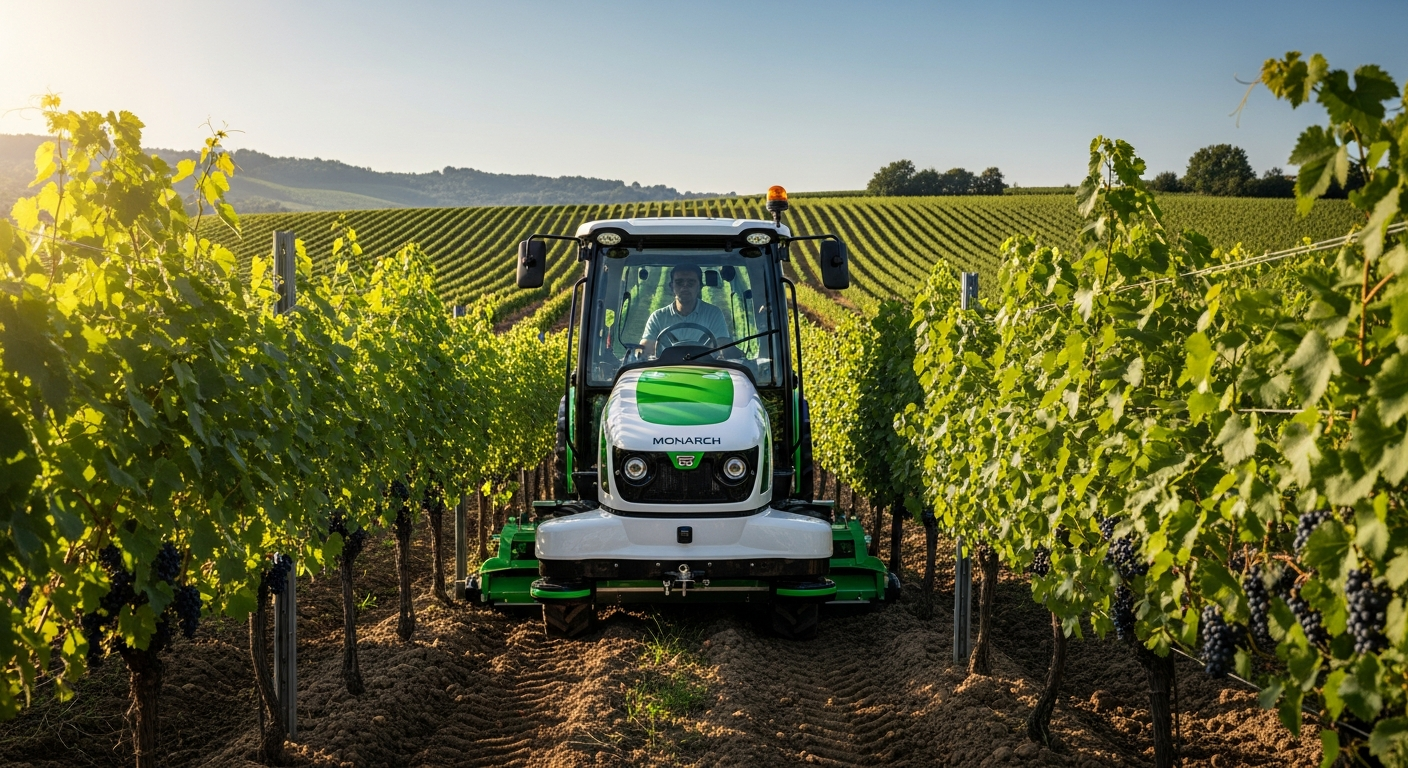

Monarch MK-V Electric Tractor
The Monarch MK-V is a groundbreaking all-electric, driver-optional smart tractor designed for vineyards, orchards, and specialty crop operations. It combines zero-emission electric power with AI-driven machine vision to operate autonomously or with a driver, adapting to the needs of the operation. The tractor continuously collects data on crop health, soil conditions, and implement performance, turning every pass through the field into actionable intelligence. With over 8 hours of battery runtime and 70 HP equivalent power, it handles mowing, spraying, and tillage tasks while reducing operating costs by up to 30% compared to diesel equivalents. The MK-V has been adopted by leading sustainable vineyards and organic farms across California.
$78K-$130K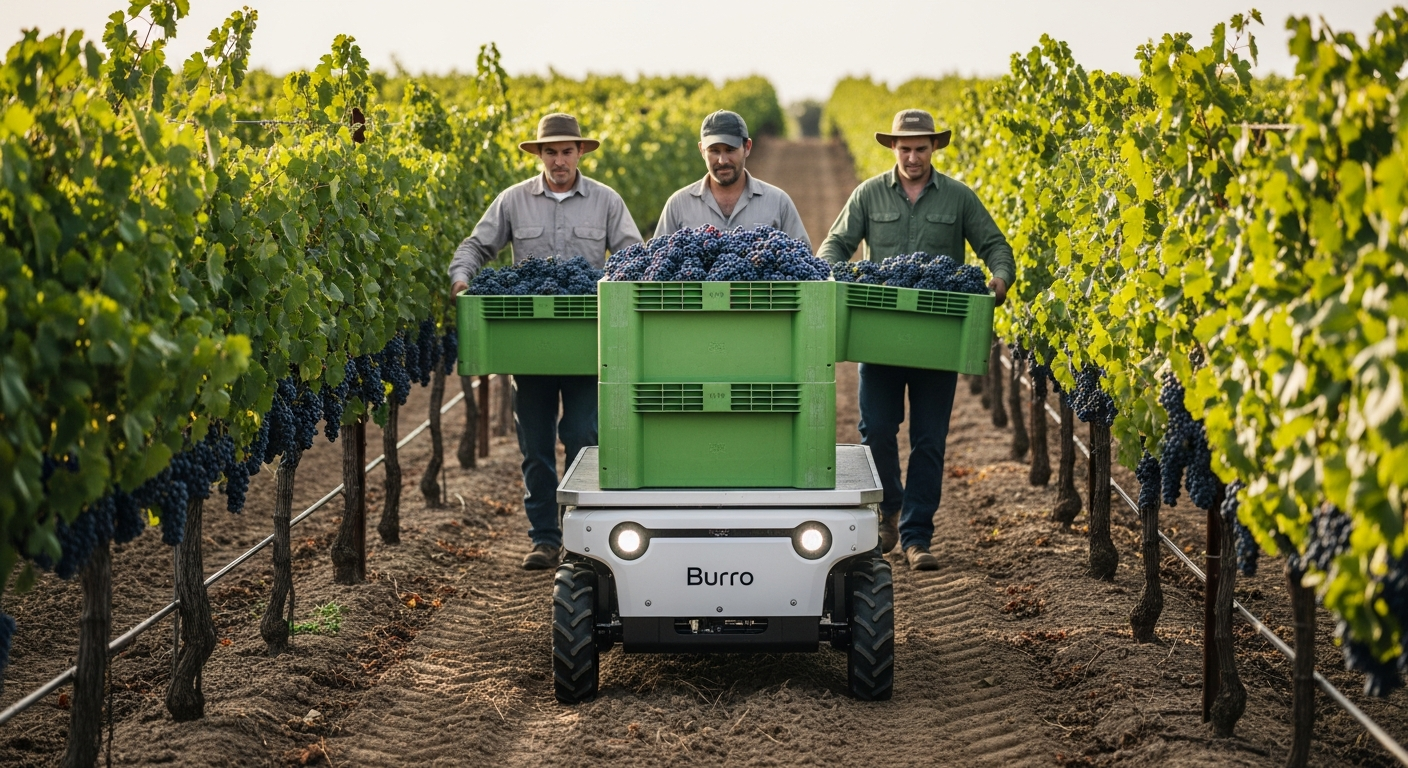

Burro Grande
The Burro Grande is an autonomous mobile robot designed to follow farm workers through fields, hauling harvested produce without any human driving. Using LIDAR and visual sensors, it autonomously follows pickers through crop rows, learns the farm layout over time, and returns loaded bins to collection points. With a 500 lb payload capacity and all-terrain capability, it eliminates the need for manual cart pushing that causes worker fatigue and injury. The Burro operates in diverse crops including table grapes, citrus, nursery plants, and berries across hundreds of commercial farms in the United States.
$30K-$50K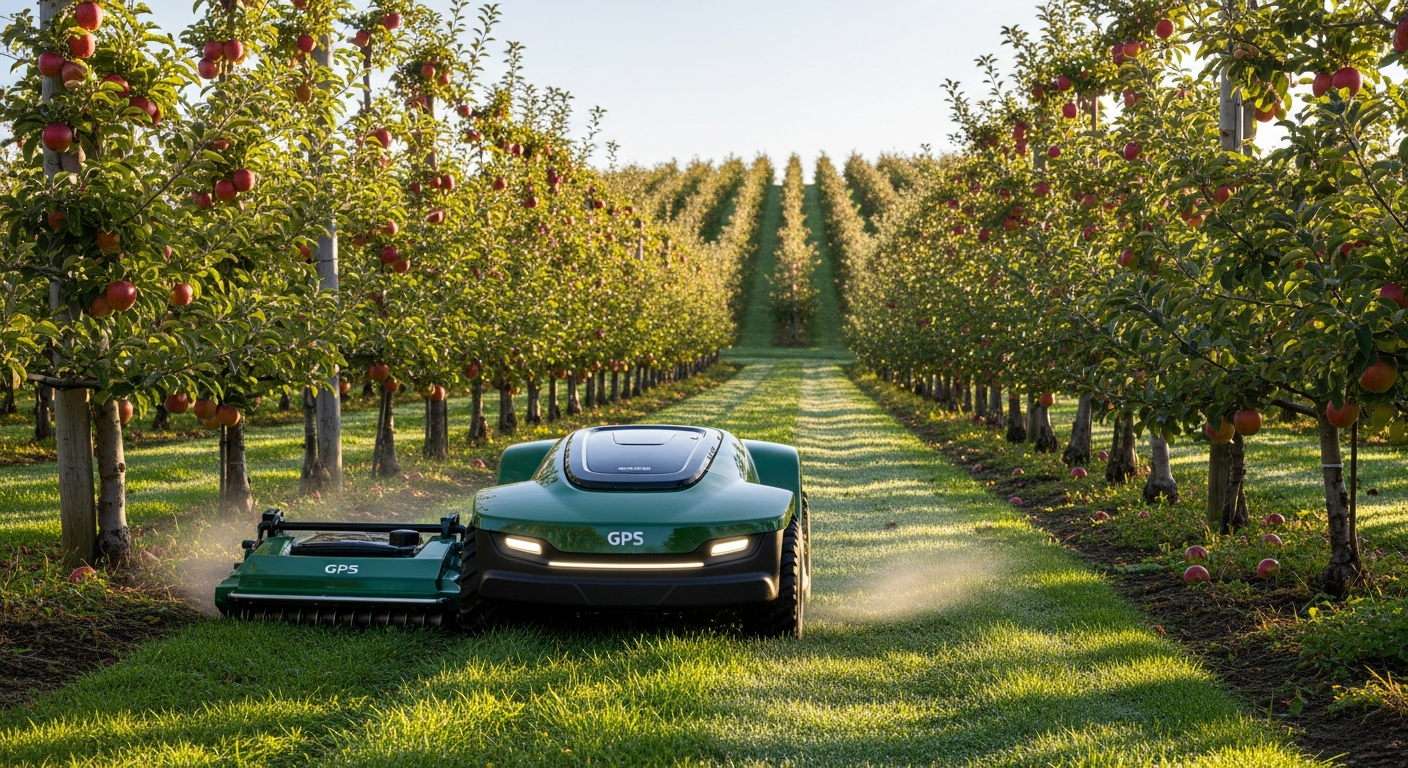
GreenBot Semi-Autonomous Mower
The GreenBot is a semi-autonomous GPS-guided mowing robot designed for orchards, vineyards, and large turf operations. Using RTK GPS positioning and programmable mowing patterns, it navigates between tree rows and around obstacles while maintaining precise cut height. The electric-powered unit operates quietly, produces zero emissions, and can mow for 8+ hours on a single charge. Its compact 50-inch cutting deck fits between tight orchard rows while its low center of gravity handles slopes up to 20 degrees. Particularly popular in organic orchards and vineyards where regular mowing replaces herbicide-based weed management in row middles.
$25K-$45K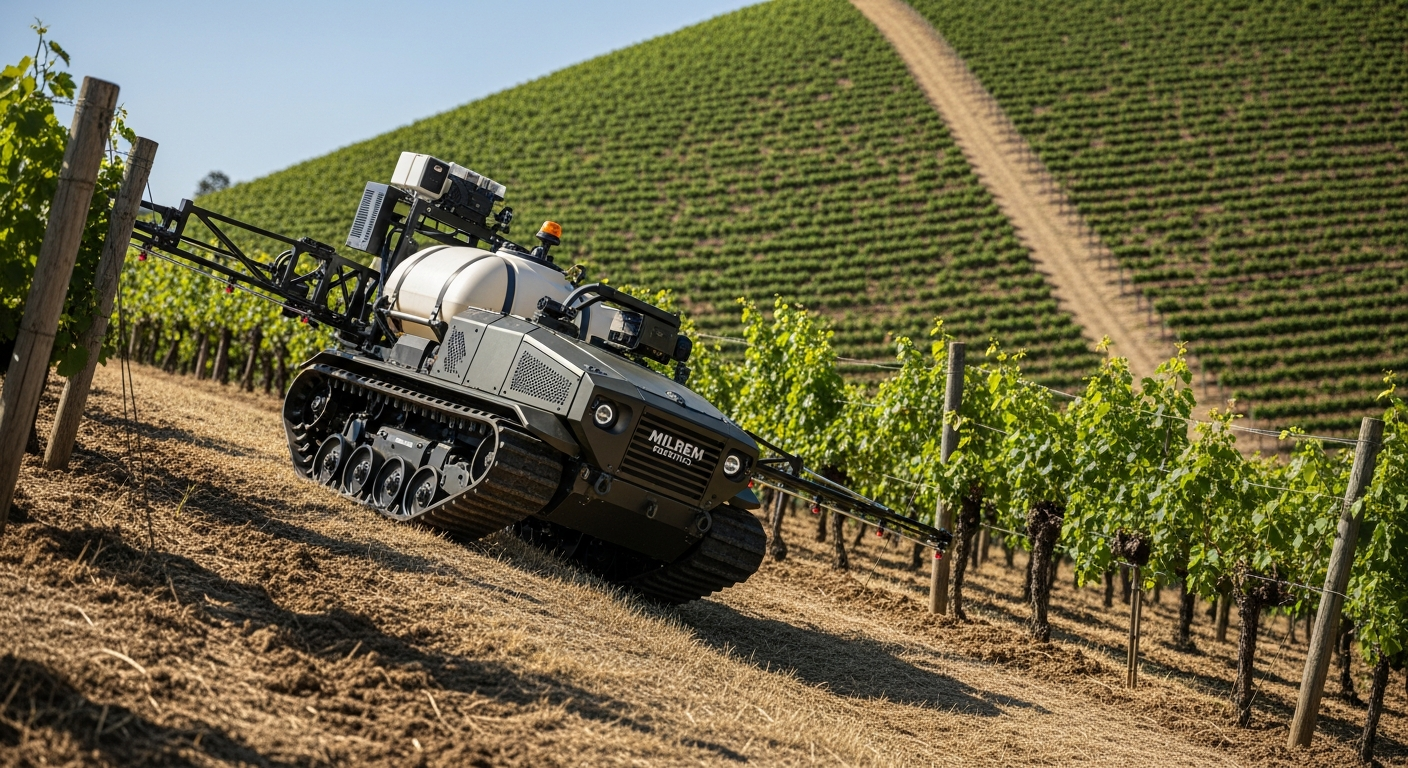

Milrem Robotics MR-10 Ag
The Milrem MR-10 Ag is a compact autonomous unmanned ground vehicle adapted from military technology for agricultural applications. The tracked all-terrain platform weighs 1,200 kg and can carry 1,000 kg of payload while navigating difficult terrain including steep hillsides, muddy fields, and forested orchards. Its modular design accepts various agricultural implements including sprayers, mowers, seeders, and sensor arrays. Originally developed for defense applications, the MR-10 Ag excels in hazardous or inaccessible terrain where conventional tractors cannot safely operate. Deployed in Nordic and Baltic forestry-agriculture operations and hillside vineyards.
$180K-$300K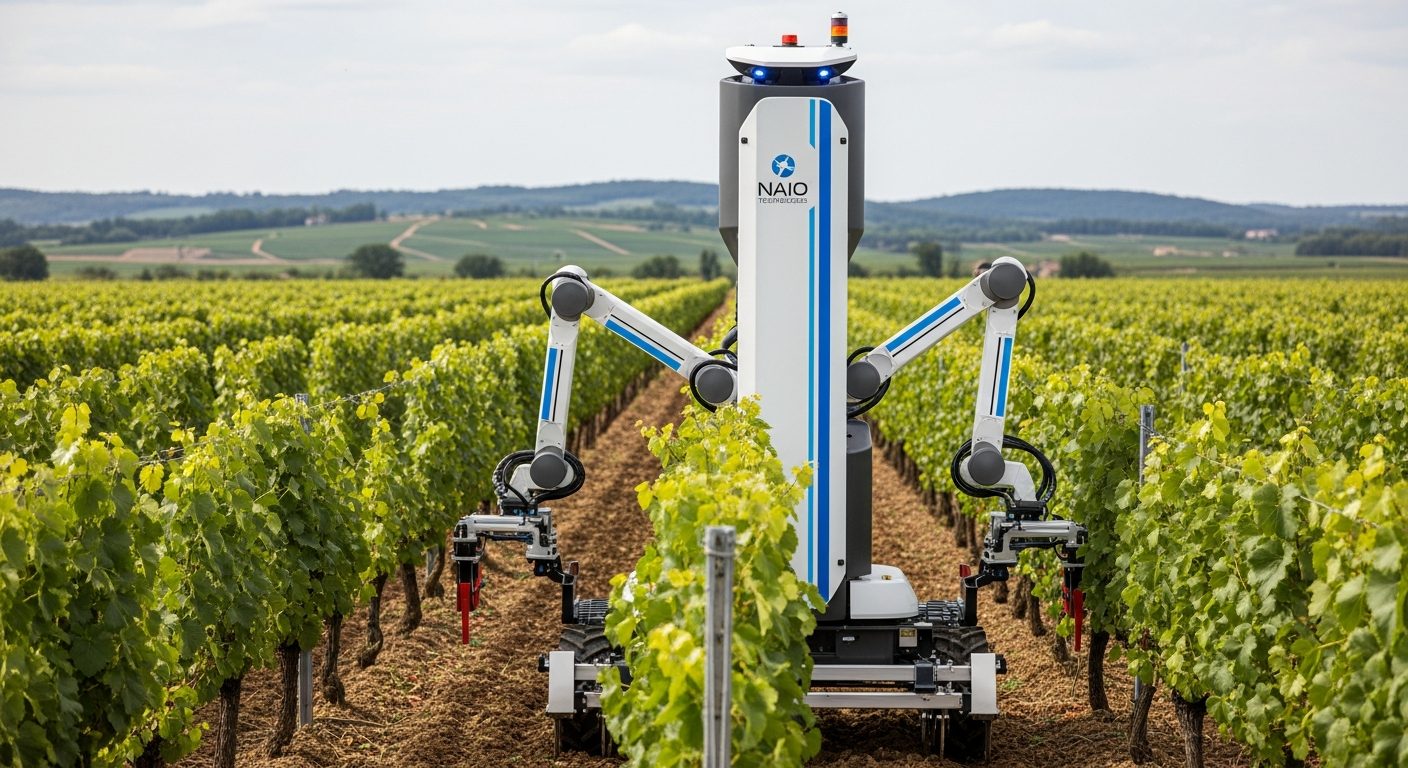

Naio Ted Vineyard Robot
Naio Ted is a fully autonomous vineyard weeding robot that straddles grape vine rows, performing mechanical weeding both between and under the vines. Standing 2 meters tall with adjustable width, it navigates autonomously through vineyard rows using RTK GPS and camera-based vine detection. Its intercep tools work the soil surface around vine trunks while its inter-row tools manage the row middles, all without any chemical inputs. The electric-powered Ted operates silently and emission-free, making it suitable for organic and biodynamic wine producers. Deployed across French, Spanish, and Italian vineyards, it has become a leading solution for Europe's growing organic viticulture sector.
$150K-$220K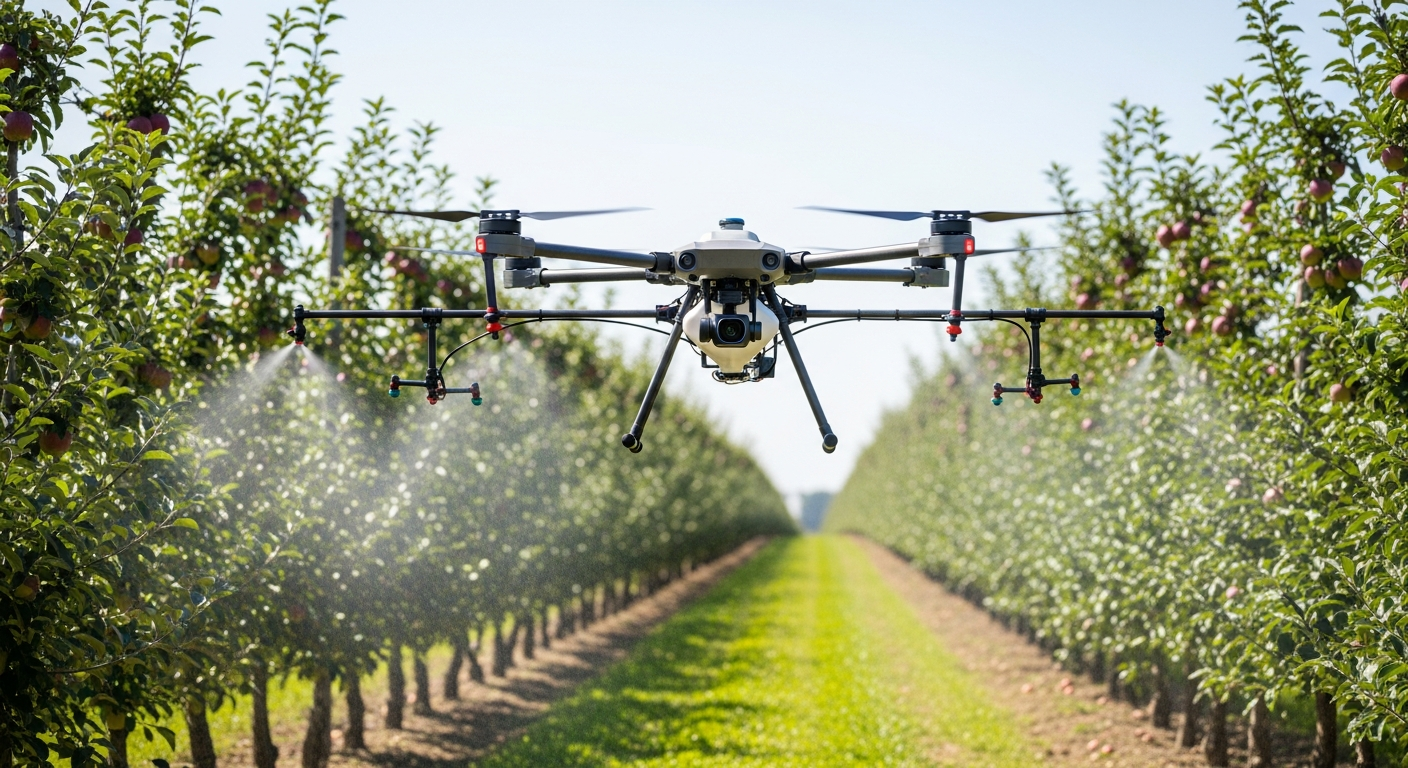

DJI Agras T25
The DJI Agras T25 is a compact agricultural drone specifically designed for orchards, vineyards, and hilly terrain where larger drones cannot safely operate. With a 25 kg spray capacity and dual phased-array radar for advanced obstacle avoidance, it can navigate between tree canopies and along hillside contours with precision. The T25's smaller footprint makes it ideal for fragmented farmland and smaller operations that need professional-grade spraying capabilities at a lower price point. Its terrain-mapping system creates 3D models of orchards and hillsides to optimize spray routes and ensure complete coverage. Popular among tea plantation operators in Asia and vineyard managers in Europe, the T25 has proven especially effective in areas where ground-based spraying equipment cannot easily access.
$10K-$18K