Robot Directory
Explore 64 agricultural robots across 6 categories

Kubota Agri Robo
The Kubota Agri Robo is a series of autonomous tractors developed by Kubota Corporation to address Japan's severe agricultural labour shortage — the average Japanese farmer is now over 67 years old, and the number of farm workers has halved over the past three decades. The Agri Robo platform covers key operations including rice transplanting, tillage, and harvesting across paddy fields, using RTK GPS and advanced sensors to follow pre-programmed field paths without an operator. Kubota's approach focuses on making autonomous operation accessible to small and medium-scale family farms, which dominate Japanese agriculture. The Agri Robo line is commercially available in Japan and Kubota is progressively expanding availability to other Asian rice-growing markets. It integrates with Kubota's KSAS (Kubota Smart Agriculture System) cloud platform for field planning, work logging, and fleet management.

Hylio AG-272
The Hylio AG-272 is Hylio's largest professional agricultural spray drone, carrying a 27-litre tank and designed for high-throughput operations on mid-to-large farms. Like all Hylio platforms, the AG-272 is manufactured in the United States — one of the very few American-built agricultural drones on the market — making it compliant for government farms, defence-adjacent operations, and growers who need to avoid foreign-manufactured technology under NDAA restrictions. The AG-272's AG-PILOT flight management software handles autonomous route planning, terrain following, wind compensation, and return-to-home with refill notifications. Coverage reaches approximately 18–22 acres per hour in standard field conditions. Hylio provides full dealer support, operator training, and a repair network across North America.
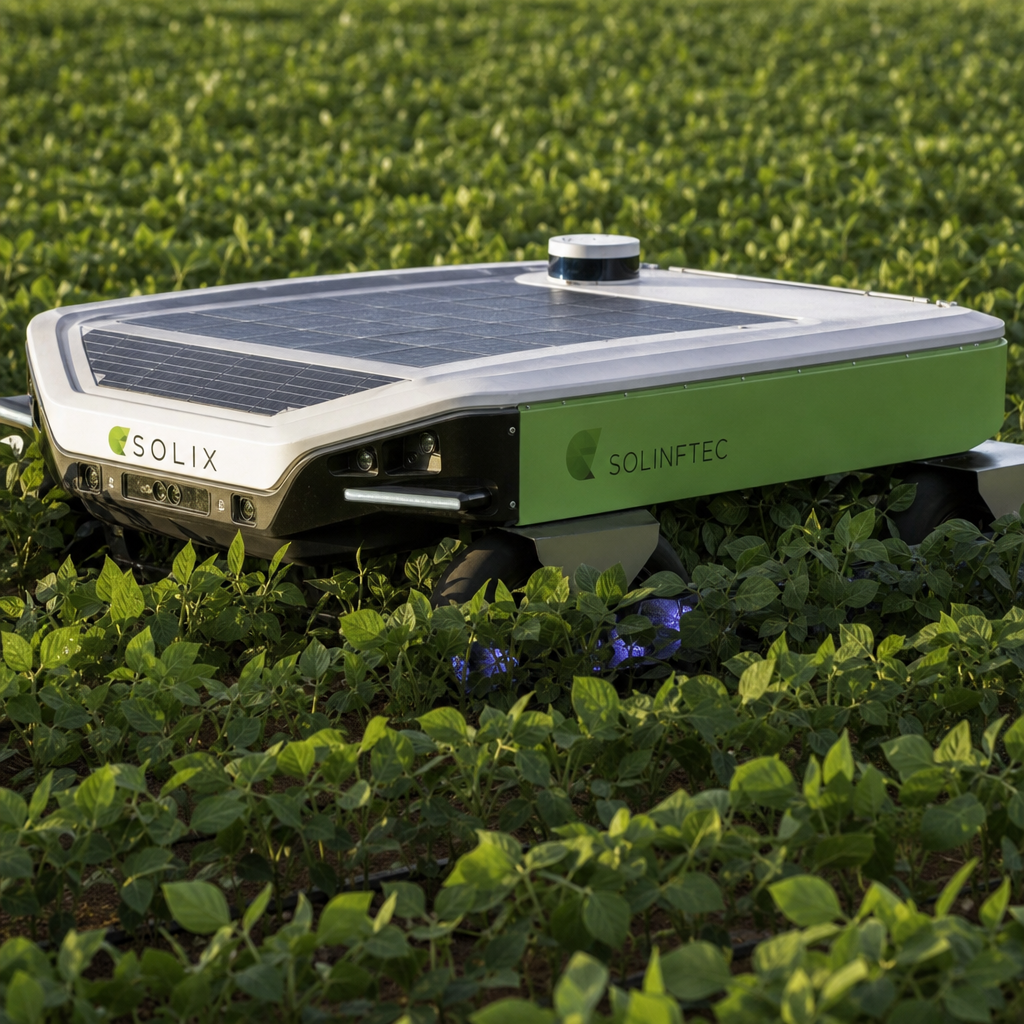
Solinftec Solix
The Solinftec Solix is an autonomous solar-powered scouting and targeted-spray robot deployed commercially across corn and soybean fields in the US Midwest. Moving continuously through crop rows, the Solix uses computer vision and AI to identify individual weed plants and apply micro-doses of herbicide at the plant level — a dramatically more precise approach than conventional boom spraying. Because the robot's solar panels keep it powered indefinitely in the field, it can provide near-continuous coverage of large row-crop farms across the growing season. Solinftec operates the Solix on a per-acre subscription model rather than selling the hardware outright, which eliminates the upfront capital cost for growers. The service includes data reporting on weed pressure maps and application records for agronomic and compliance purposes.
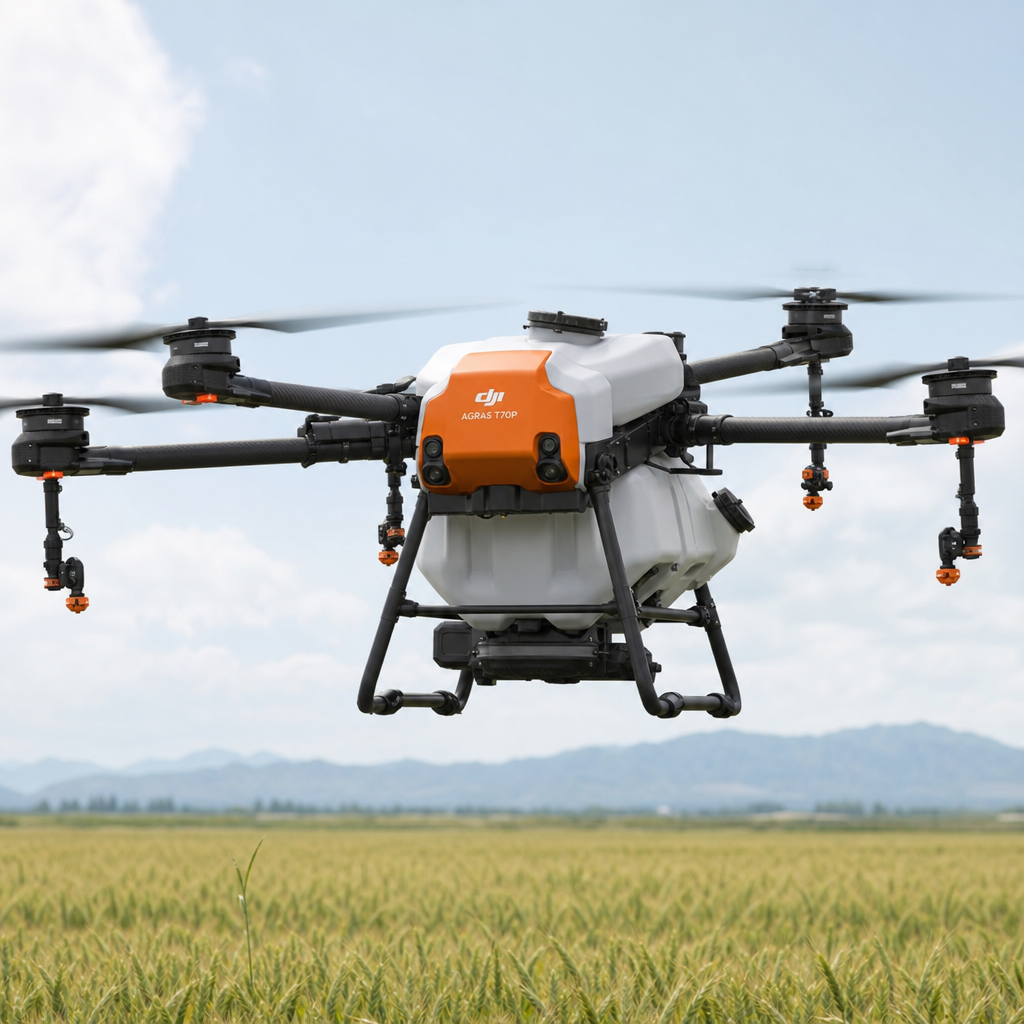
DJI Agras T70P
The DJI Agras T70P bridges the gap between the T50 and the T100, offering a mid-range payload capacity suited to medium-to-large farming operations where the T50's payload is insufficient but the full scale of the T100 is not required. It shares the Agras platform's core strengths — intelligent obstacle avoidance, terrain-following radar, and compatibility with DJI's fleet management system — while delivering a payload step-up over the T50 at a price point below the T100. The T70P is aimed at operators running 500–2,000 ha seasons who want to reduce field-stop frequency. Pricing is estimated; buyers should contact DJI authorised dealers for current availability and quotes.
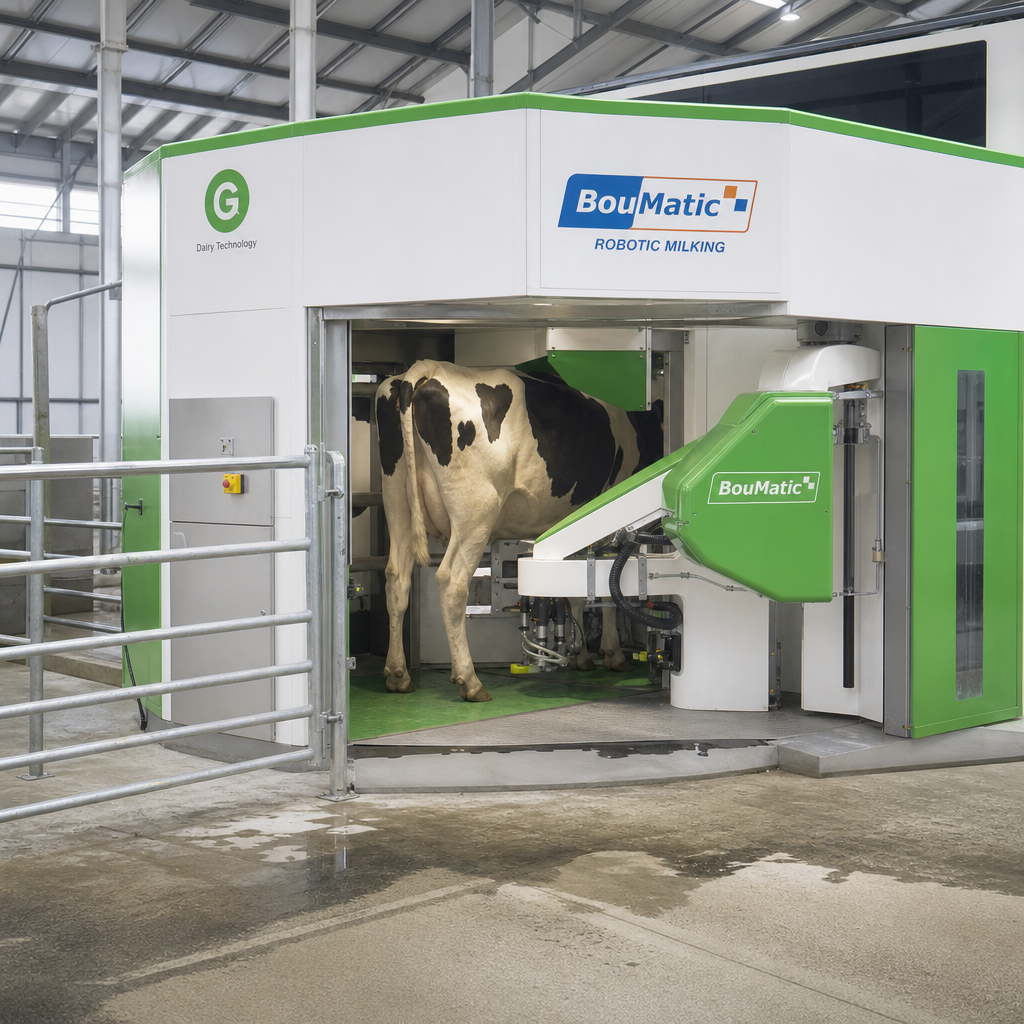
BouMatic Robotic Milker
The BouMatic Robotic Milker is a voluntary milking system designed for mid-size dairy operations, offering automated cow traffic management and intelligent milking that adapts to each animal's individual cycle. BouMatic's system uses laser-guided teat detection and a multi-box configuration to keep throughput high even during peak milking periods. Each milking is monitored for conductivity and colour changes that may indicate subclinical mastitis, providing early-warning data to the herd manager. BouMatic has decades of dairy equipment experience and provides a full service and consumables support network across North America, Europe, and Australia. Pricing is estimated for a single-unit installation; multi-unit farms qualify for volume pricing.
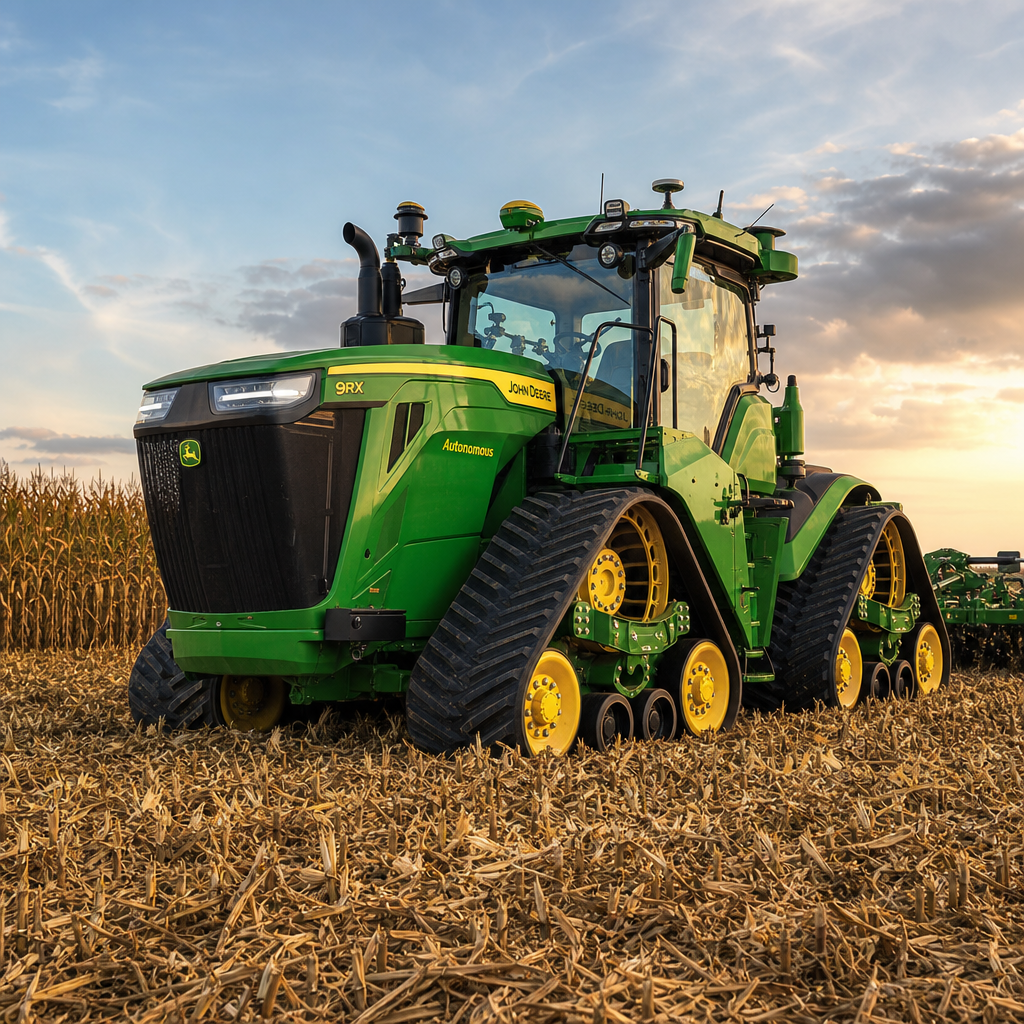
John Deere 9RX Autonomous
Revealed at CES 2025, the John Deere 9RX Autonomous represents the second generation of John Deere's autonomy platform, built on the 830-horsepower 9RX 830 tracked tractor — one of the most powerful row-crop tractors in production. Sixteen cameras provide 360-degree perception around the machine, using computer-vision technology derived from See & Spray to continuously monitor the operating environment and detect obstacles in real time. The system is initially targeted at large-scale tillage applications where the risk profile is well-understood and GPS field boundaries are already established. John Deere is positioning the platform to address the skilled-operator labour shortage facing large grain farms. Pricing has not been announced by the manufacturer; the system is expected to be available through John Deere's authorised dealer network when it enters commercial availability.
Robotics Plus AP Harvester
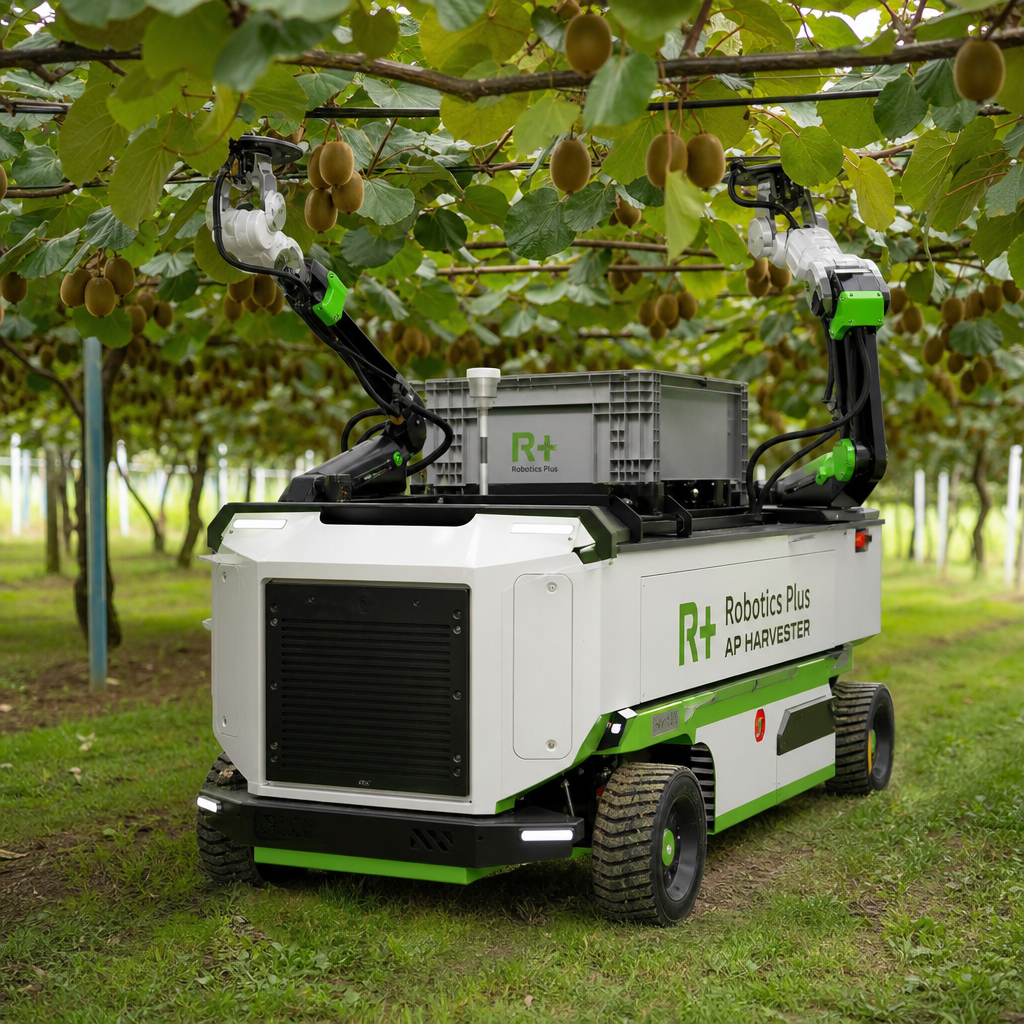
The Robotics Plus AP Harvester is an autonomous orchard harvesting platform developed in New Zealand for kiwifruit and apple picking. The system uses a combination of 3D vision, machine learning, and a multi-arm picking mechanism to locate, assess, and harvest fruit from trellis-trained orchards at commercial speed. Robotics Plus has developed the AP Harvester through a collaboration with Zespri, the global kiwifruit marketer, and has conducted extensive trials in New Zealand's Bay of Plenty kiwifruit industry. The platform navigates autonomously between orchard rows, with the fruit conveyance system feeding picked fruit directly to bins for export-grade post-harvest handling. It is also being adapted for apple varieties in collaboration with Washington State University and New Zealand pipfruit growers.
AgXeed AgBot 5.115T2
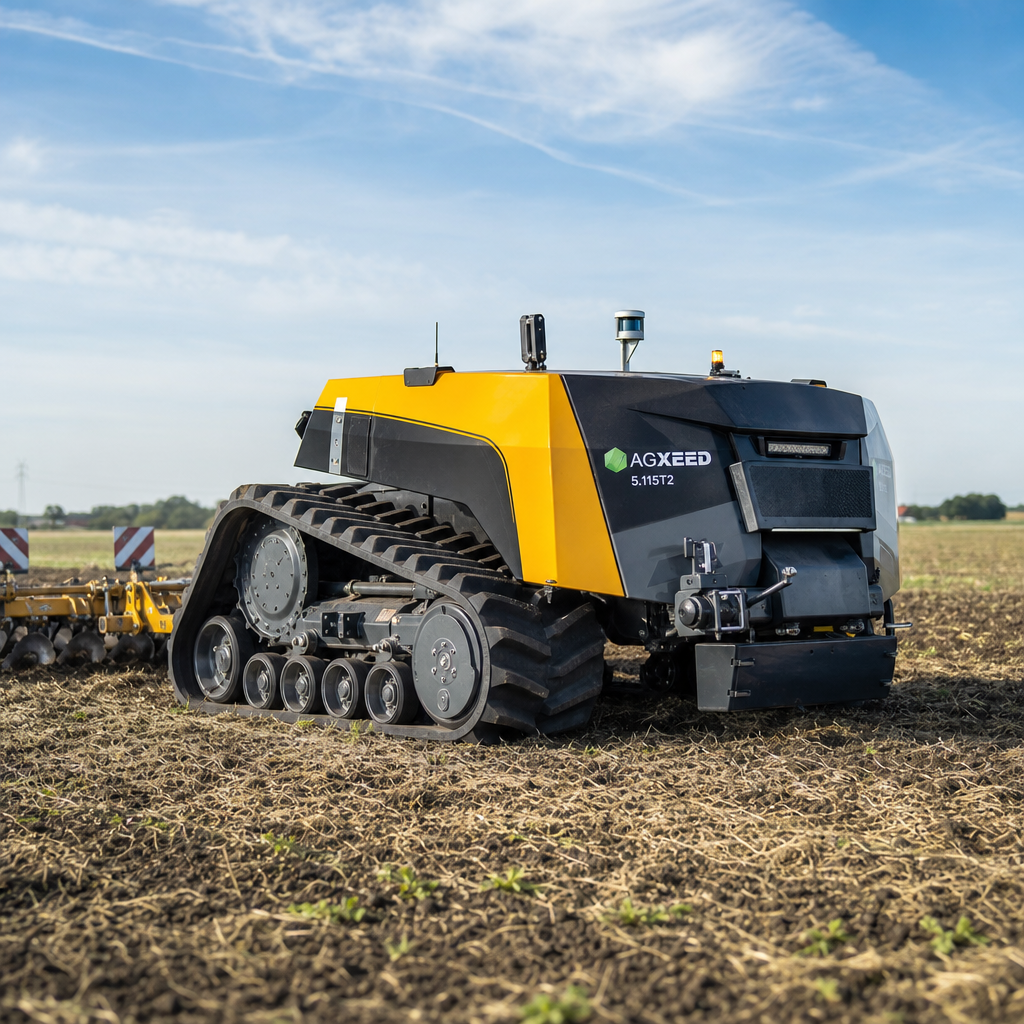
The AgXeed AgBot 5.115T2 is a fully autonomous tracked implement carrier from the Netherlands, commercially deployed across European arable farms. Its rubber tracks distribute weight across a wide footprint, reducing soil compaction significantly compared to wheeled tractors — a critical advantage for intensive cropping rotations. The 156-horsepower engine powers a standard Category 3 three-point hitch and 1000 rpm PTO, meaning the AgBot works with the full range of conventional implements a farmer already owns: ploughs, seed drills, mowers, and more. RTK GPS navigation and sensor fusion enable centimetre-accurate autonomous field operations with automatic headland turns. The AgBot operates under remote supervision via a tablet app, and operators can manage multiple units simultaneously. It has been commercially used by arable contractors in Germany, France, and the Netherlands.
DJI Agras T50
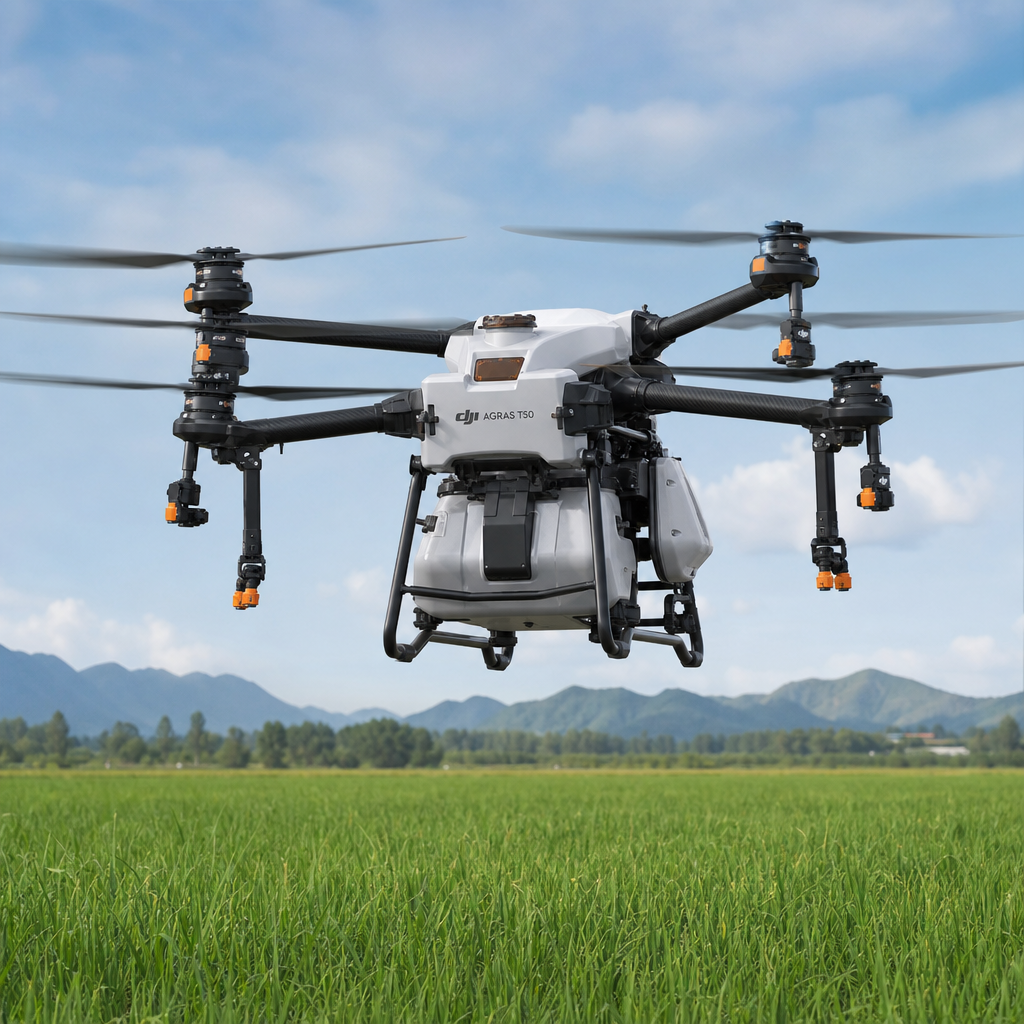
The DJI Agras T50 is DJI's flagship professional agricultural drone, balancing a 40-litre spray tank and 50 kg spread payload in a compact coaxial twin-rotor airframe. Phased-array radar works alongside binocular vision cameras to detect and avoid obstacles in real time, making autonomous field operations safe even near tree lines, power lines, and other hazards. Coverage reaches 20+ hectares per hour in spraying mode, making it one of the fastest agricultural drones available. The T50 supports both liquid spraying and solid spreading (fertiliser, seeds), so a single platform handles multiple seasonal tasks. DJI's fleet management system allows operators to coordinate multiple drones simultaneously, with live telemetry and mission planning from a mobile app. An active dealer and used-market ecosystem means buyers can often source units immediately, and dealer-certified service networks are available in most major agricultural regions.
Greenfield Robotics Weed Cutter
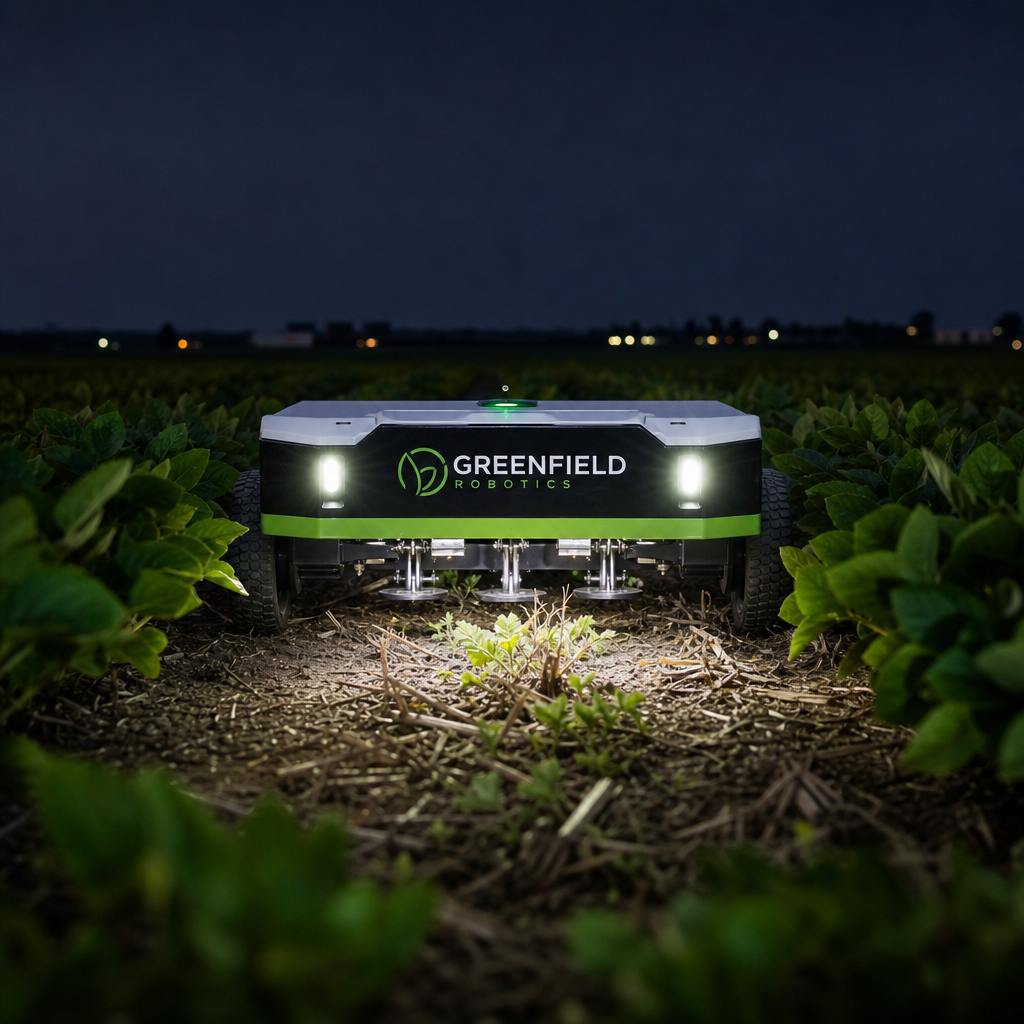
Greenfield Robotics operates a fleet of small autonomous weed-cutting robots as a per-acre service for soybean and specialty-crop growers across the US Great Plains. The robots move between crop rows at night and during low-traffic daytime hours, cutting weeds below the soil surface with mechanical blades — entirely without herbicides. Greenfield's service model means growers pay per acre per pass, with no capital expenditure on equipment, maintenance, or storage. The company focuses on soybean fields where in-row herbicide use is tightly constrained, and where physical removal is the only compliant option in organic or transitional fields. Multiple passes per season can eliminate weed populations over time, reducing the long-term weed seed bank in the soil.
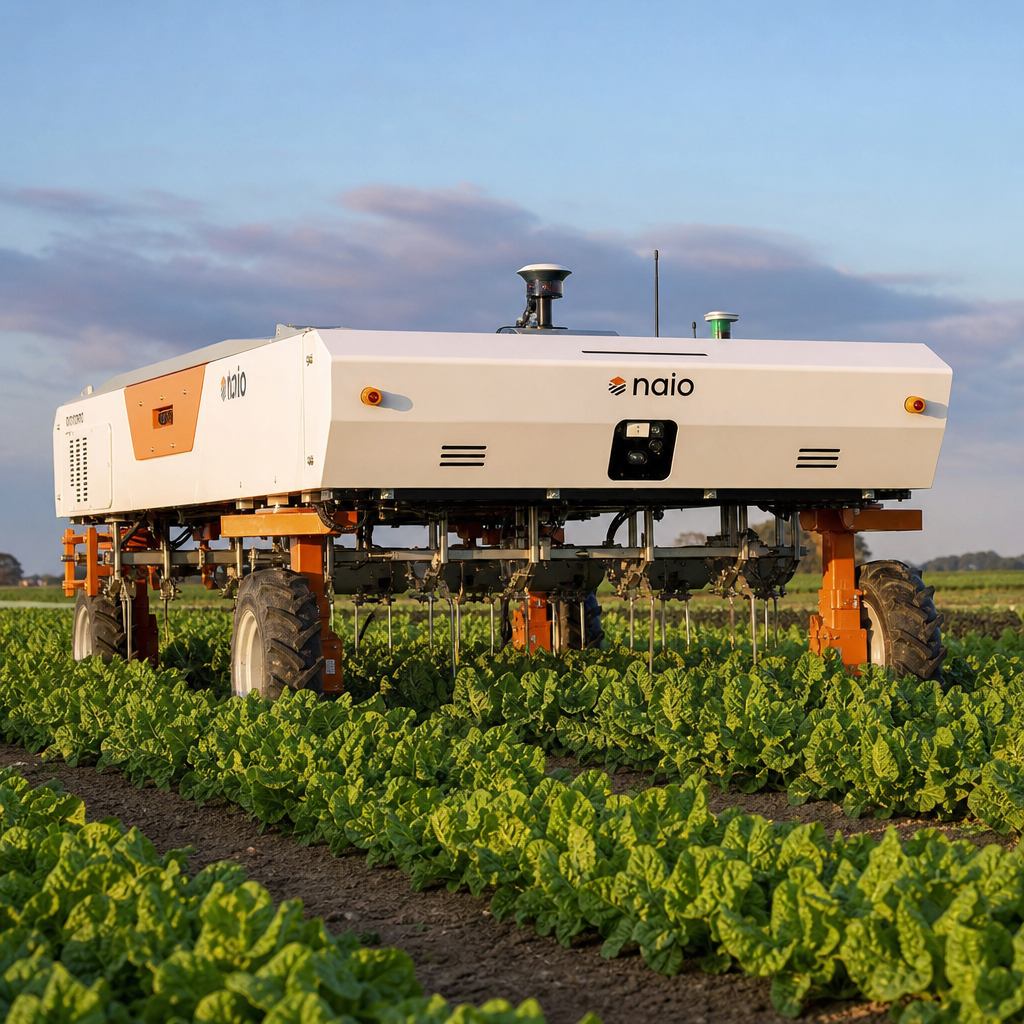
Naio Orio
The Naio Orio is the largest robot in Naio Technologies' lineup, designed to tackle large-scale market garden and vegetable production where smaller robots like the Oz and Dino lack the working width and speed needed to cover significant acreage economically. Built for professional vegetable growers, the Orio navigates crop rows autonomously using RTK GPS and vision guidance, using mechanical inter-row and intra-row weeding tools to clear weeds without chemicals. Its broader working width and faster travel speed compared to the Oz and Dino make it viable for vegetable farms running 10–50+ hectares of intensive production. The Orio is compatible with a range of Naio-developed tooling for different crop row spacings and weed types. As with all Naio robots, it is designed for ease of use by non-technical farm staff.
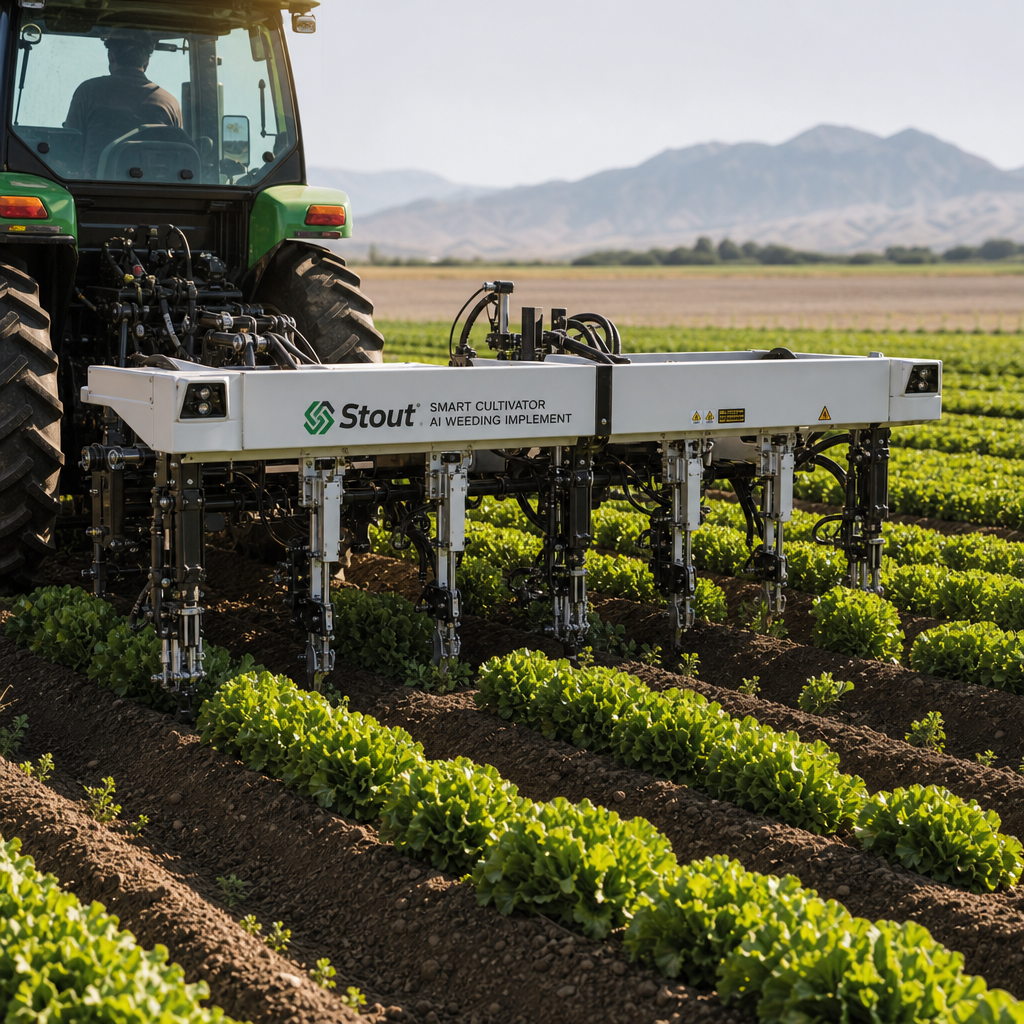
Stout Smart Cultivator
The Stout Smart Cultivator is an AI-driven mechanical weeding implement that attaches to a standard tractor and uses computer vision to guide high-speed rotary cultivation tools precisely between and within crop rows. Unlike autonomous robots, the Stout system works with the tractor the farmer already owns, reducing capital cost and making adoption straightforward. Vision cameras scan ahead of the cultivation tools at 30 frames per second, adjusting tool positioning in real time to avoid crop plants while aggressively removing weeds. The system is particularly well established in lettuce, broccoli, cauliflower, and other brassica crops in California's Salinas Valley, where labour for hand-weeding is both expensive and unreliable. Stout offers the cultivator on a lease-to-own basis as well as outright purchase.
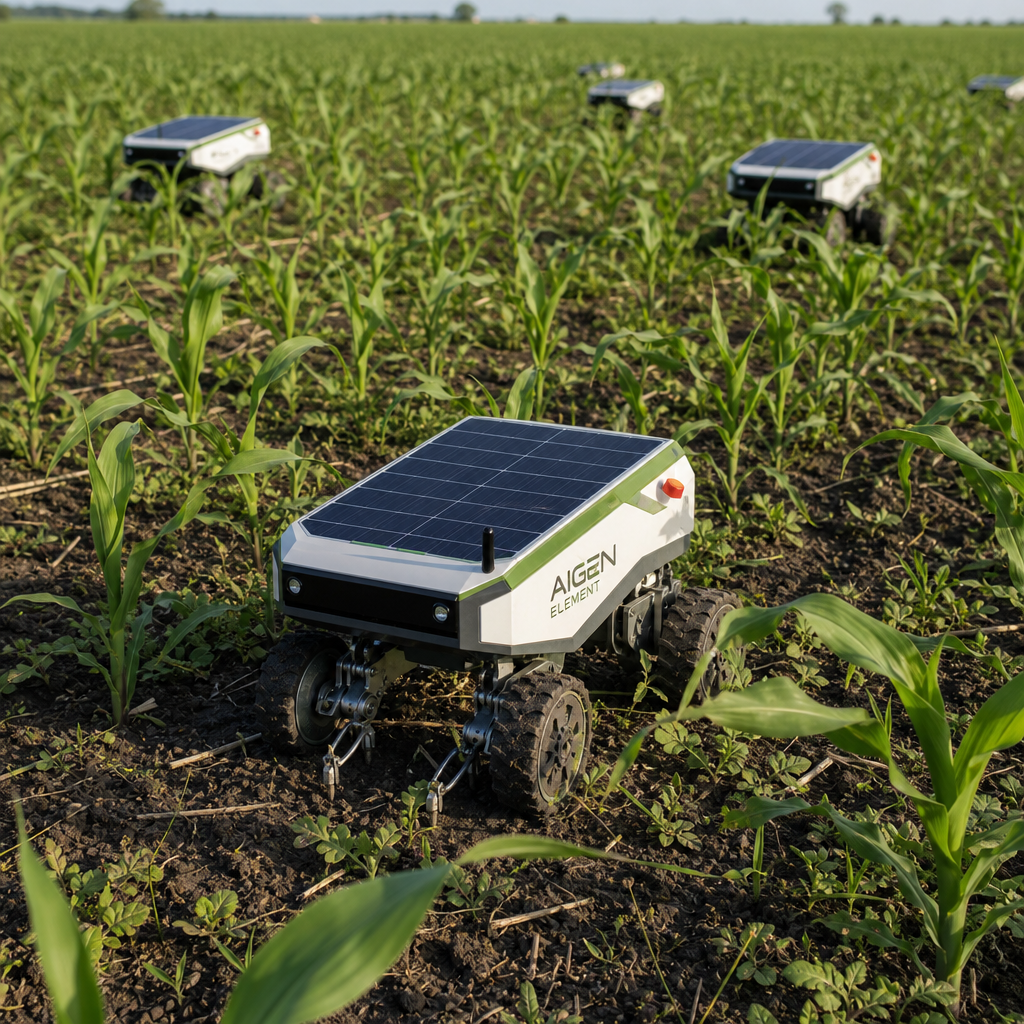
Aigen Element
The Aigen Element is a small, solar-powered robot designed to work in large swarms across broadacre corn and soybean fields, mechanically destroying weeds at the soil surface using high-speed rotary tools. Because each Element charges from onboard solar panels and requires no tethering or manual battery swaps, swarms of dozens of units can operate across large fields continuously during daylight hours. Computer vision running on an edge AI processor identifies weeds versus crop plants at the row level, triggering the mechanical weed-destruction mechanism only when a weed is detected. The swarm approach means that even if individual units require maintenance, the fleet continues operating — a key reliability advantage over single large machines. Aigen is targeting the US Corn Belt, where herbicide resistance is a growing problem and growers are looking for non-chemical weed-management alternatives.
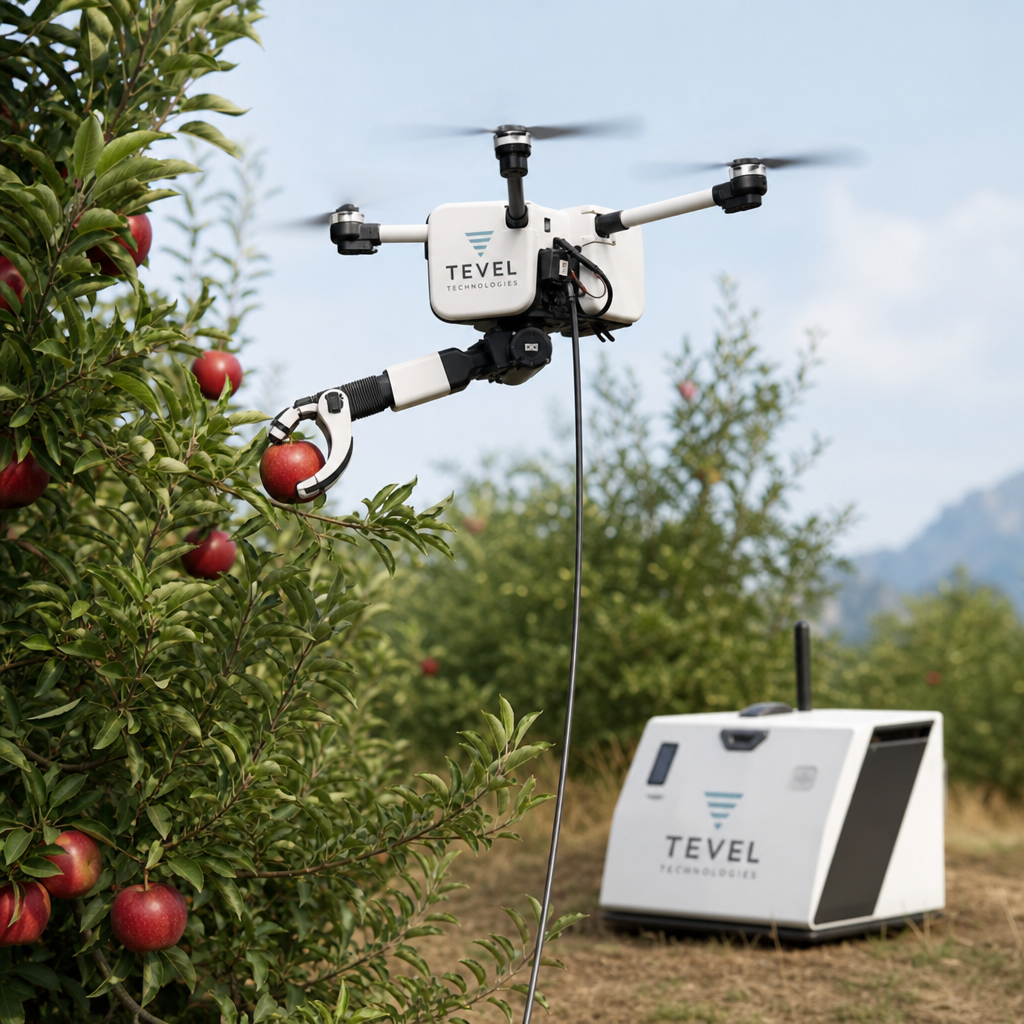
Tevel Flying Autonomous Picker
Tevel's Flying Autonomous Picker uses a fleet of tethered UAVs — each carrying a robotic arm and AI vision system — to harvest apples, peaches, plums, and other tree fruit from orchard canopies. Each drone is tethered to a ground unit that supplies continuous power and handles fruit transport, removing the battery-life constraint that limits free-flying harvest drones. The AI vision system evaluates fruit colour, size, and position in real time, picking only ripe fruit and leaving under-ripe fruit to mature further — reducing wastage and the need for multiple passes. Multiple flying units operate from each ground unit simultaneously, enabling meaningful throughput at commercial scale. Tevel is in pilot and early-commercial deployments with orchard operators in Europe, North America, and the Middle East, focusing initially on apple and stone-fruit varieties.
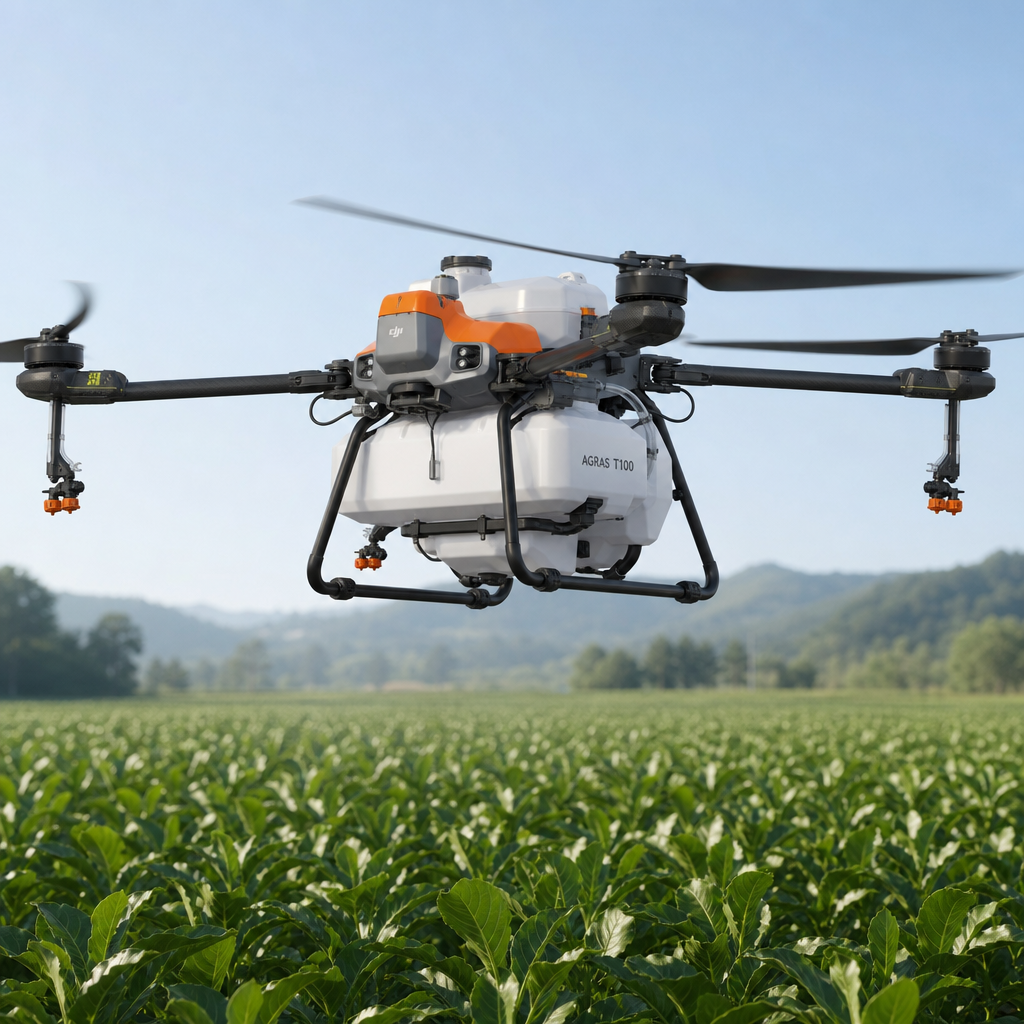
DJI Agras T100
The DJI Agras T100 is the largest model in DJI's Agras agricultural drone line, designed for large-scale farming operations that demand the highest throughput. With approximately 100 litres of spray-class payload capacity, the T100 dramatically reduces the number of refill trips required per field, making it especially cost-effective on sprawling row-crop or paddy operations. The platform inherits the twin-rotor architecture and intelligent obstacle avoidance of its smaller siblings, while adding the sheer payload volume needed by large-acreage operators. Like all Agras models, it integrates with DJI's fleet management ecosystem and supports swarm coordination for multi-drone operations. Pricing is estimated based on market data; dealers should be contacted for current quotes.
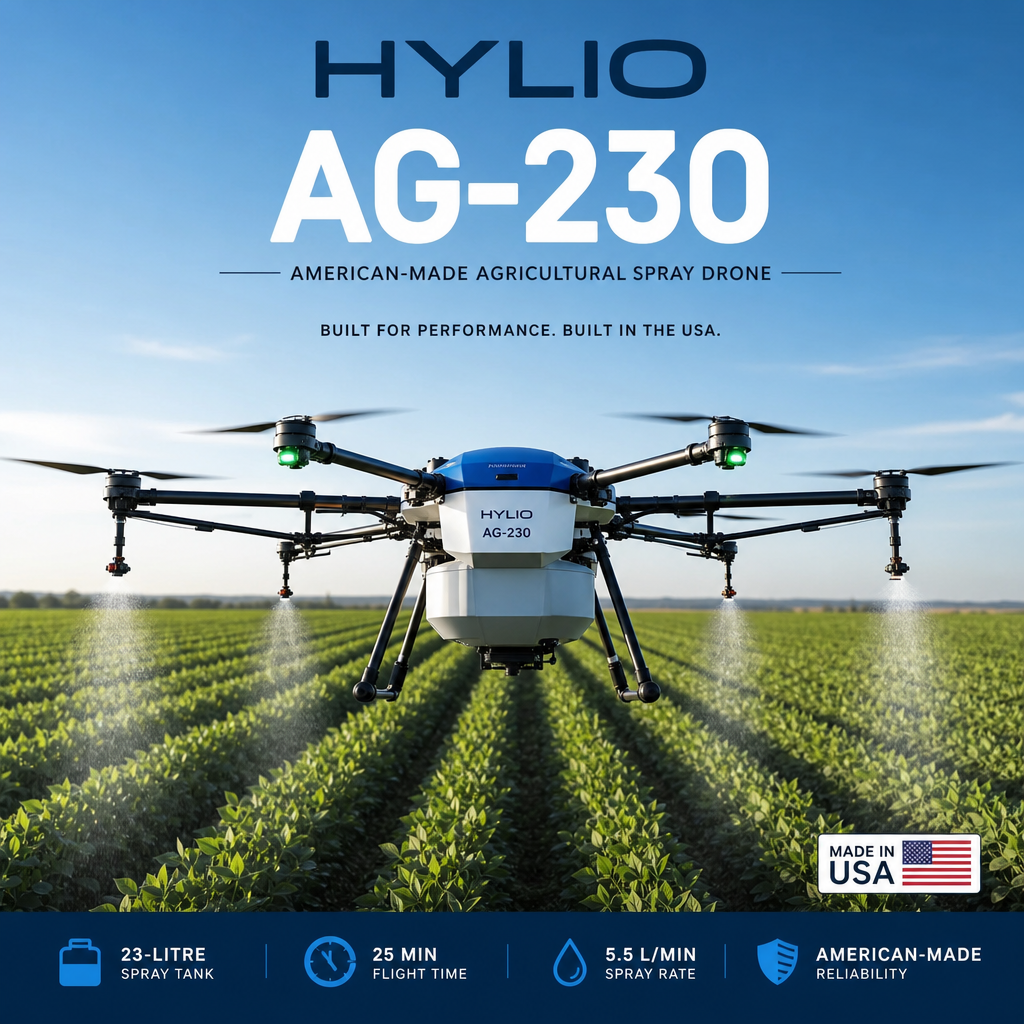
Hylio AG-230
The Hylio AG-230 is a professional-grade agricultural spray drone manufactured entirely in the United States, making it one of the few American-built alternatives to Chinese-manufactured ag drones. Carrying a 23-litre spray tank, the AG-230 covers approximately 12–15 acres per hour in standard spraying operations. Hylio's AG-PILOT flight management system handles autonomous route planning, terrain following, and return-to-home with automatic refill notifications. The US-manufactured status is significant for government farms, defence-adjacent operations, and growers who prefer to avoid platforms with foreign supply-chain exposure. Hylio offers a full service and training programme through its dealer network.

ProTube Prime
The ProTube Prime is a cutting-edge distribution head designed for the precise dosing of liquid manure streams, enhancing consistency in fertilization even at low flow rates. This innovation aims to improve efficiency in crop management and address the growing demand for precision fertilization techniques.

TerraScout
The TerraScout is an autonomous robot designed for field scouting, capturing ultra-high-resolution imagery to enhance precision farming. It provides farmers with detailed data that can transform their approach to crop monitoring and decision-making.

Harvester
The Harvester is a fully autonomous robot designed specifically for harvesting truss cocktail tomatoes. It operates independently, allowing one robot to effectively manage up to a hectare of crops, thereby reducing labor dependency in the agricultural sector.
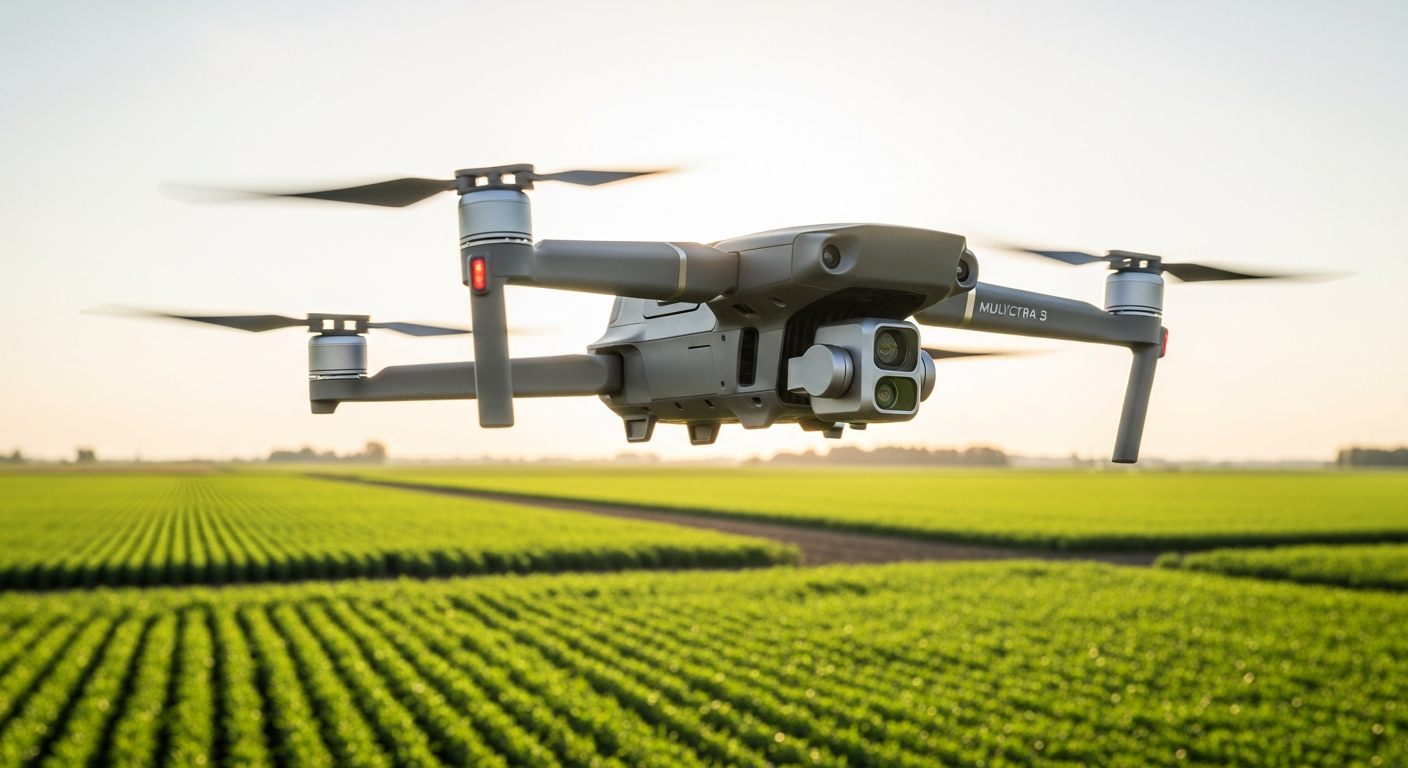
DJI Mavic 3 Multispectral
The DJI Mavic 3 Multispectral is a compact survey drone equipped with a multispectral imaging system for precision crop scouting and health monitoring. It carries four multispectral cameras (green, red, red edge, near-infrared) plus an RGB camera, enabling NDVI mapping and detailed crop stress analysis. With 43-minute flight time and 2 cm/pixel GSD at 100m altitude, it can survey 200 hectares in a single flight. The drone generates prescription maps that guide variable-rate application of fertilizers and pesticides, optimizing input costs. Widely adopted by agronomists and precision agriculture consultants worldwide for field scouting, drainage analysis, and yield prediction.
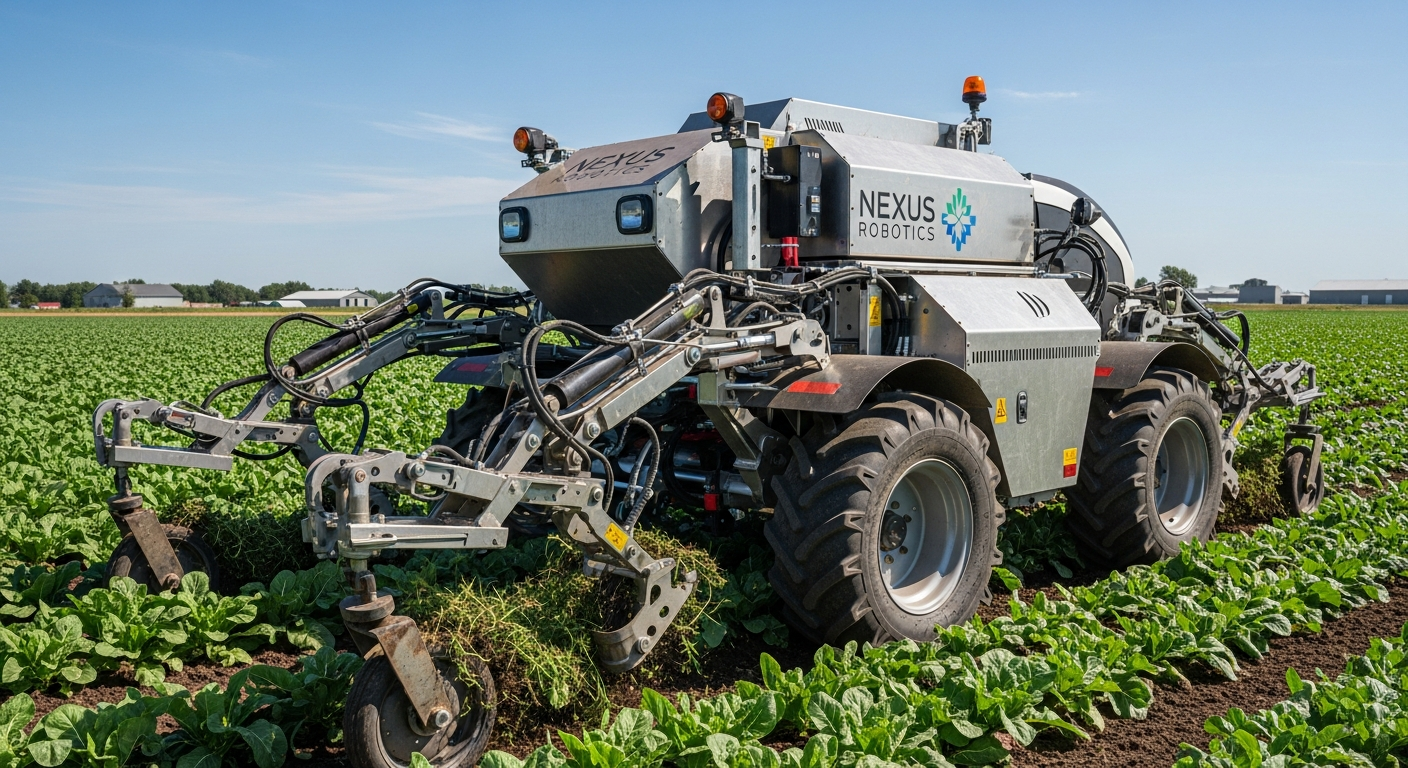
Nexus LaserBot
The Nexus LaserBot is a fully autonomous weeding robot that uses mechanical removal instead of chemicals or lasers, physically extracting weeds from vegetable crop rows. Using advanced deep learning vision running on edge processors, it identifies weeds at 99% accuracy and removes them with precision mechanical tools at speeds up to 3 mph. The robot is designed for organic farmers who need zero-chemical weed control without any soil disturbance or thermal damage to nearby crops. Weighing 2,000 lbs and powered by a diesel-electric hybrid system, it operates for 12+ hours per charge cycle. Commercially deployed in Quebec and expanding across North American organic vegetable operations.
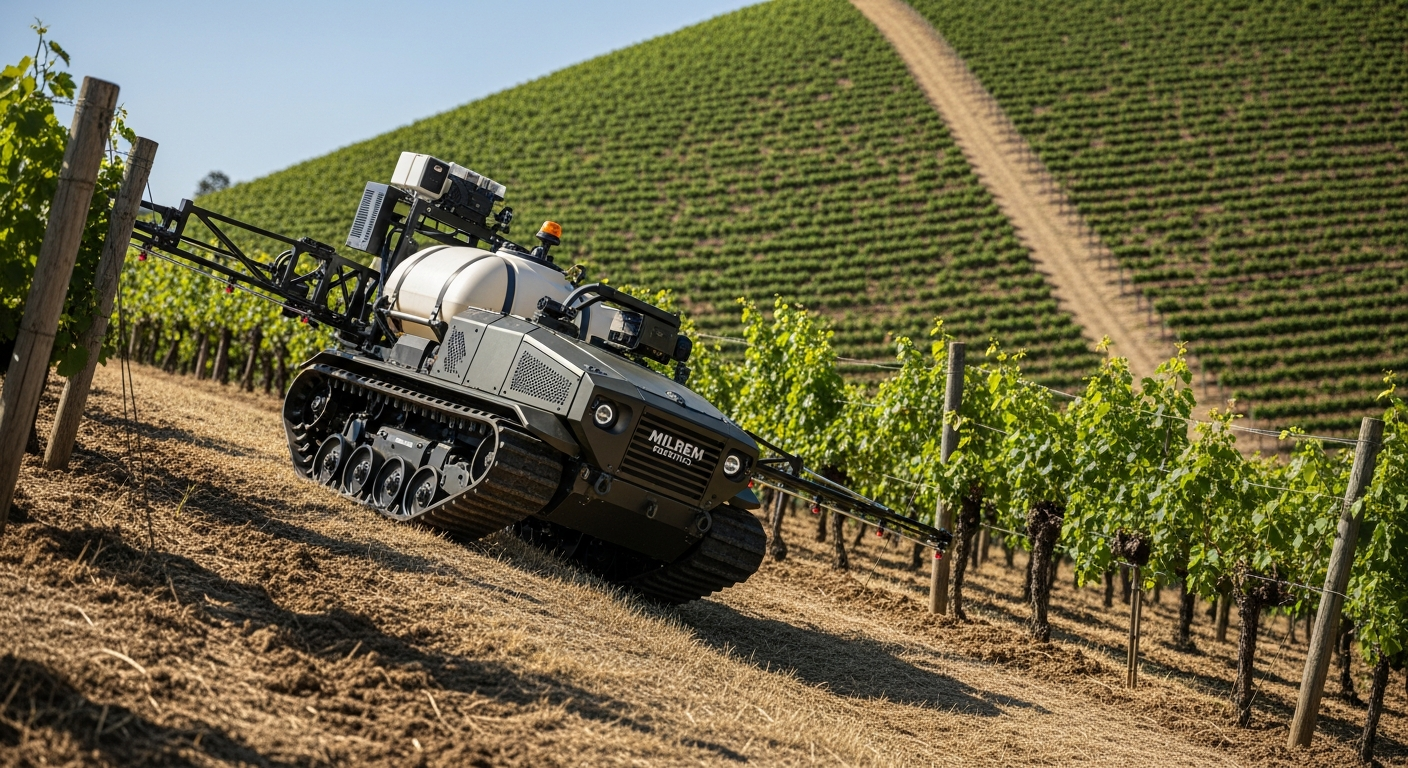
Milrem Robotics MR-10 Ag
The Milrem MR-10 Ag is a compact autonomous unmanned ground vehicle adapted from military technology for agricultural applications. The tracked all-terrain platform weighs 1,200 kg and can carry 1,000 kg of payload while navigating difficult terrain including steep hillsides, muddy fields, and forested orchards. Its modular design accepts various agricultural implements including sprayers, mowers, seeders, and sensor arrays. Originally developed for defense applications, the MR-10 Ag excels in hazardous or inaccessible terrain where conventional tractors cannot safely operate. Deployed in Nordic and Baltic forestry-agriculture operations and hillside vineyards.
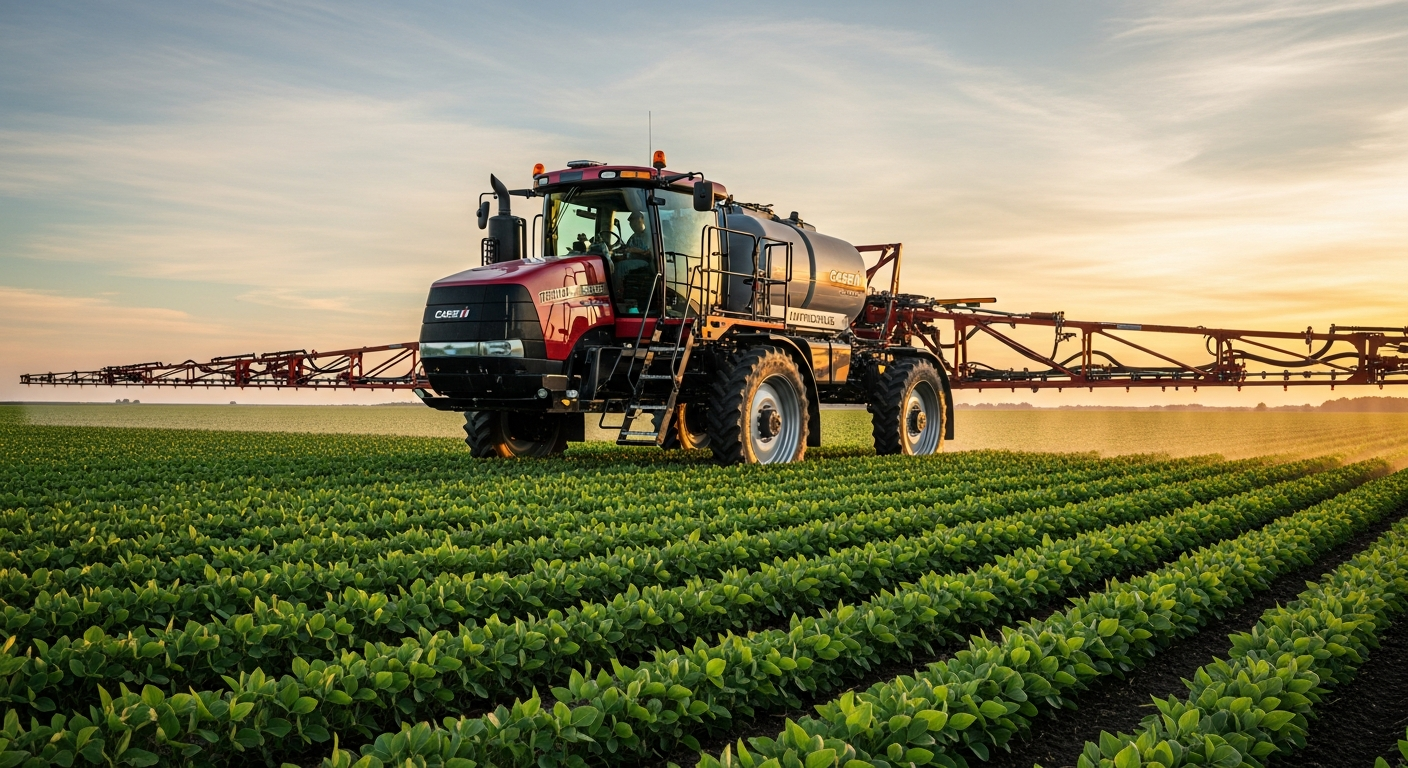
CNH Case IH Trident 5550
The Case IH Trident 5550 is a liquid applicator equipped with Raven's autonomous technology for precision fertilizer and pesticide application. With a 200-foot boom and 1,200-gallon tank, it combines massive field capacity with section-by-section spray control guided by prescription maps. The autonomous driving system navigates fields on pre-planned routes with RTK GPS accuracy, automatically adjusting speed and application rates based on field conditions. Individual nozzle control eliminates overlap in headlands and irregular field boundaries, reducing input waste by up to 15%. Commercially available through Case IH dealers, it represents one of the first production autonomous application vehicles from a major equipment manufacturer.
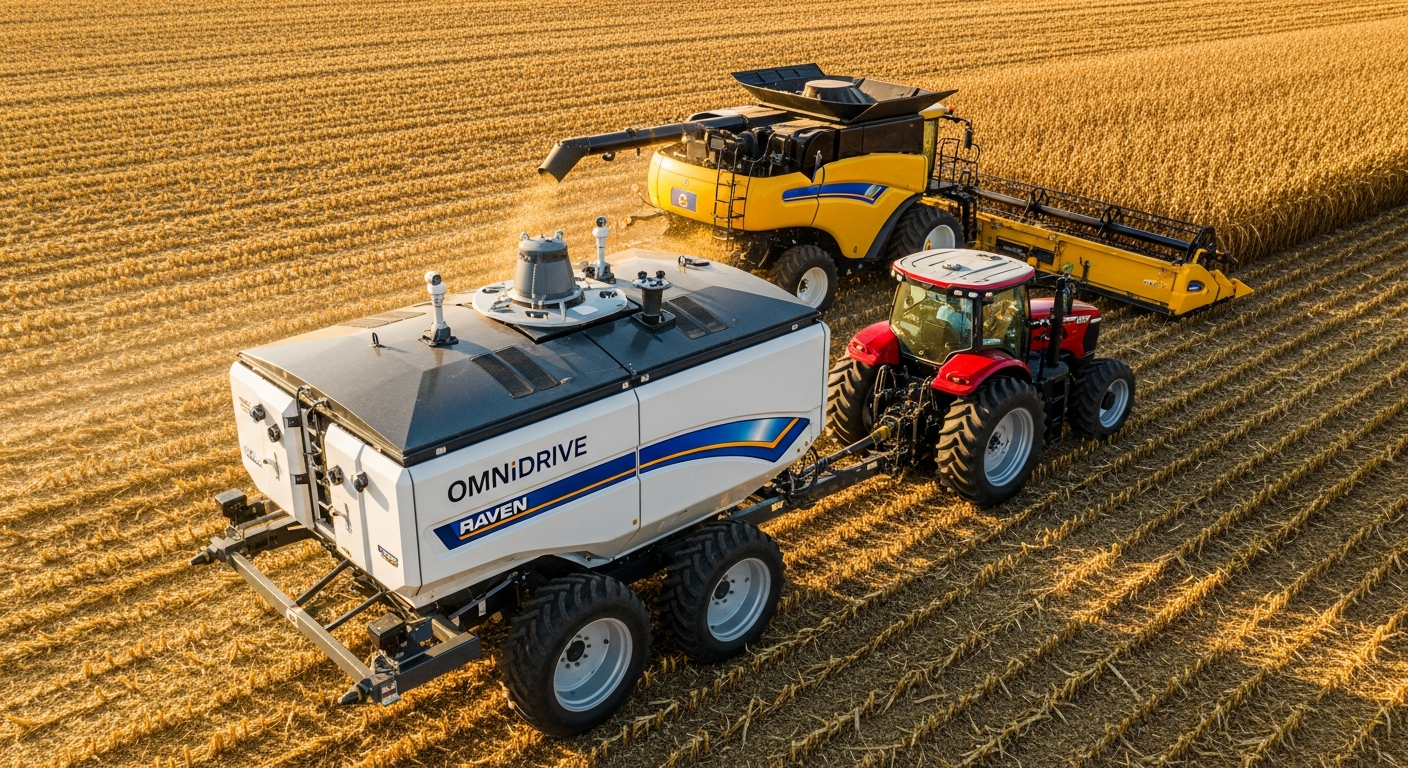
Raven OMNiDRIVE
The Raven OMNiDRIVE is an autonomous grain cart system that turns any standard tractor-grain cart combination into a driverless harvest support vehicle. Using RTK GPS and sophisticated path planning, the system coordinates with an active combine harvester, positioning the grain cart alongside the combine for on-the-go unloading without any driver in the tractor cab. This eliminates the need for a second skilled equipment operator during harvest, saving $30,000-50,000 per season in labor costs. The system handles headland turns, field boundaries, and obstacle avoidance autonomously. Deployed across large grain operations in the US Midwest and Northern Plains.
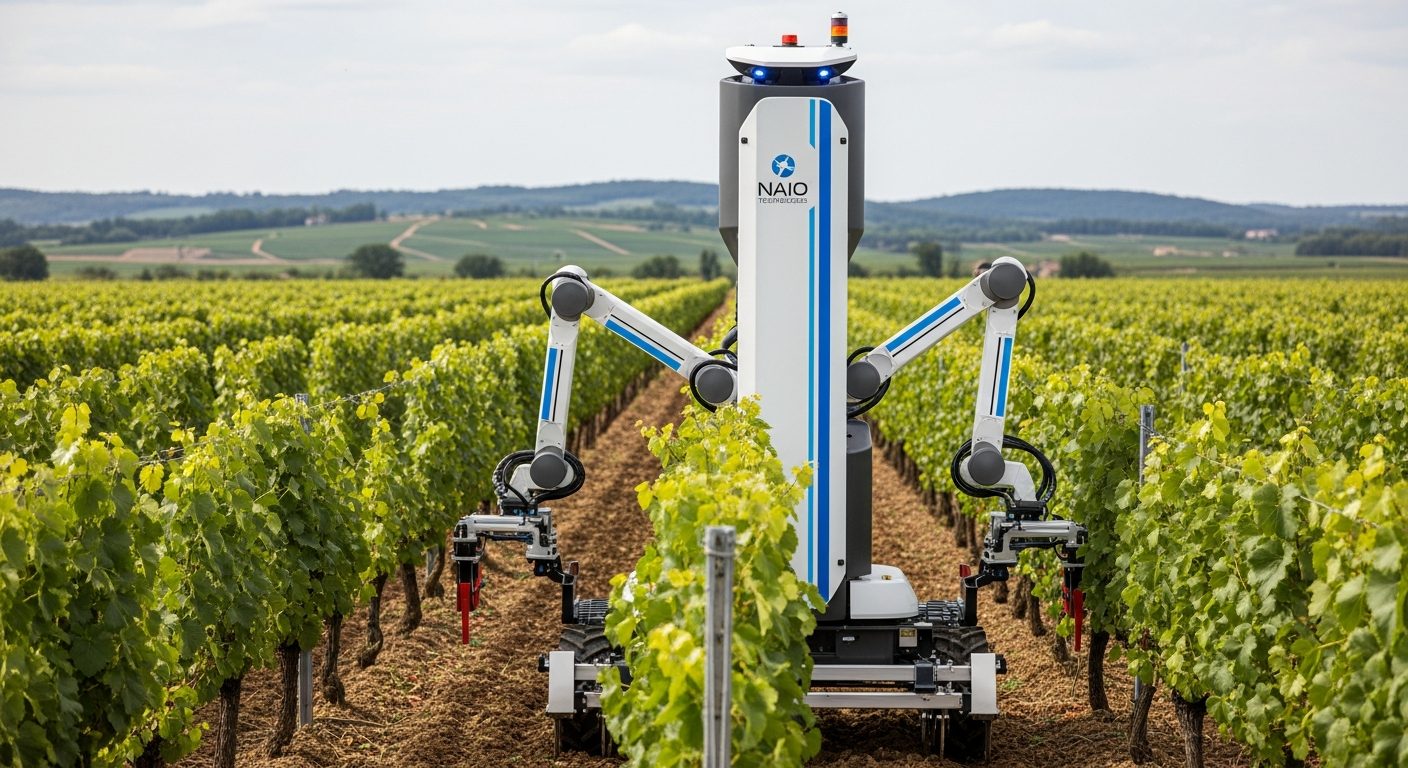
Naio Ted Vineyard Robot
Naio Ted is a fully autonomous vineyard weeding robot that straddles grape vine rows, performing mechanical weeding both between and under the vines. Standing 2 meters tall with adjustable width, it navigates autonomously through vineyard rows using RTK GPS and camera-based vine detection. Its intercep tools work the soil surface around vine trunks while its inter-row tools manage the row middles, all without any chemical inputs. The electric-powered Ted operates silently and emission-free, making it suitable for organic and biodynamic wine producers. Deployed across French, Spanish, and Italian vineyards, it has become a leading solution for Europe's growing organic viticulture sector.
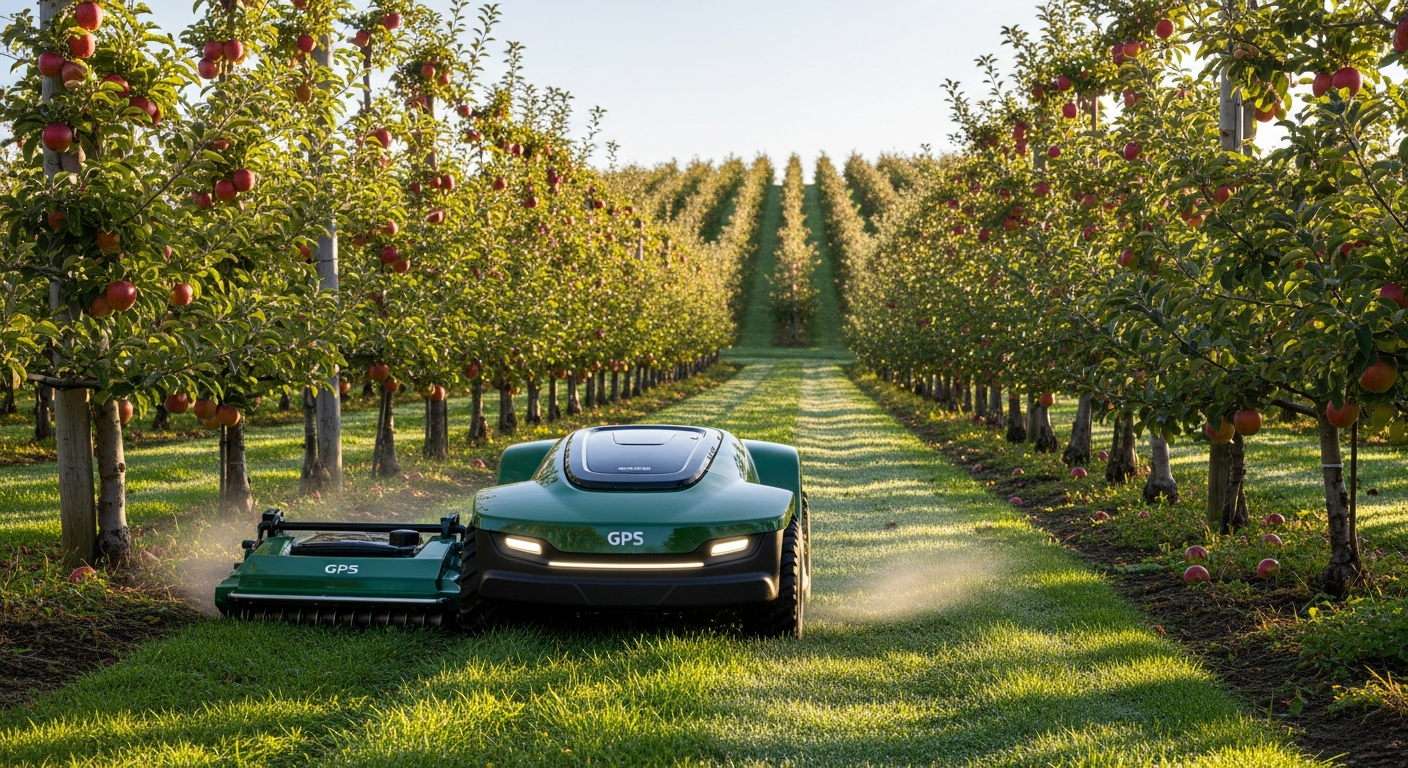
GreenBot Semi-Autonomous Mower
The GreenBot is a semi-autonomous GPS-guided mowing robot designed for orchards, vineyards, and large turf operations. Using RTK GPS positioning and programmable mowing patterns, it navigates between tree rows and around obstacles while maintaining precise cut height. The electric-powered unit operates quietly, produces zero emissions, and can mow for 8+ hours on a single charge. Its compact 50-inch cutting deck fits between tight orchard rows while its low center of gravity handles slopes up to 20 degrees. Particularly popular in organic orchards and vineyards where regular mowing replaces herbicide-based weed management in row middles.
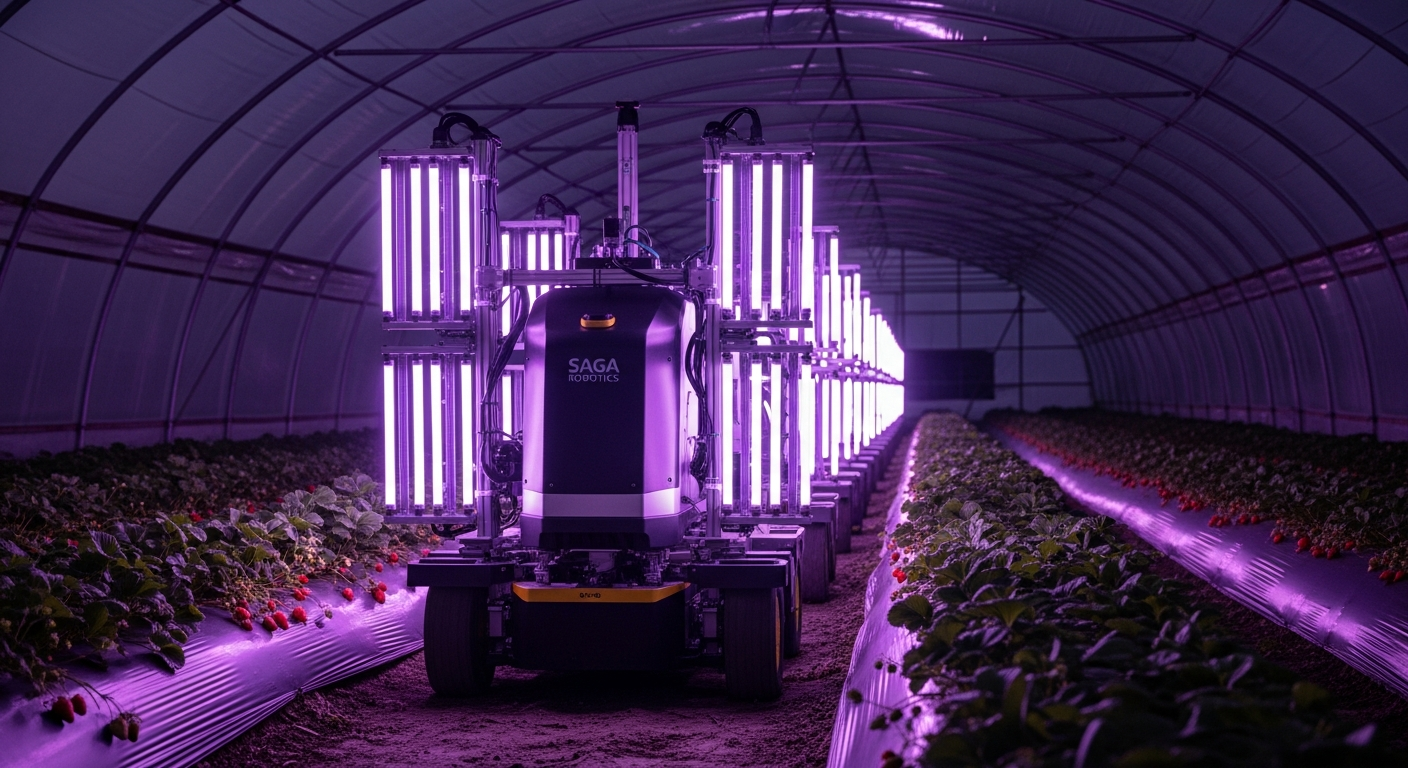
Saga Robotics Thorvald
Thorvald by Saga Robotics is a modular autonomous robot platform that uses UV-C light treatment to kill fungal pathogens on strawberry plants, eliminating the need for chemical fungicides. Operating at night when UV exposure is most effective and safe, Thorvald navigates polytunnel rows treating plants with calibrated UV-C doses that destroy mildew, botrytis, and other fungal diseases. The platform is fully modular, accepting different tool attachments for spraying, data collection, and crop monitoring. Deployed across UK and European strawberry farms, Thorvald has demonstrated 50-80% reduction in fungicide use while maintaining crop quality.
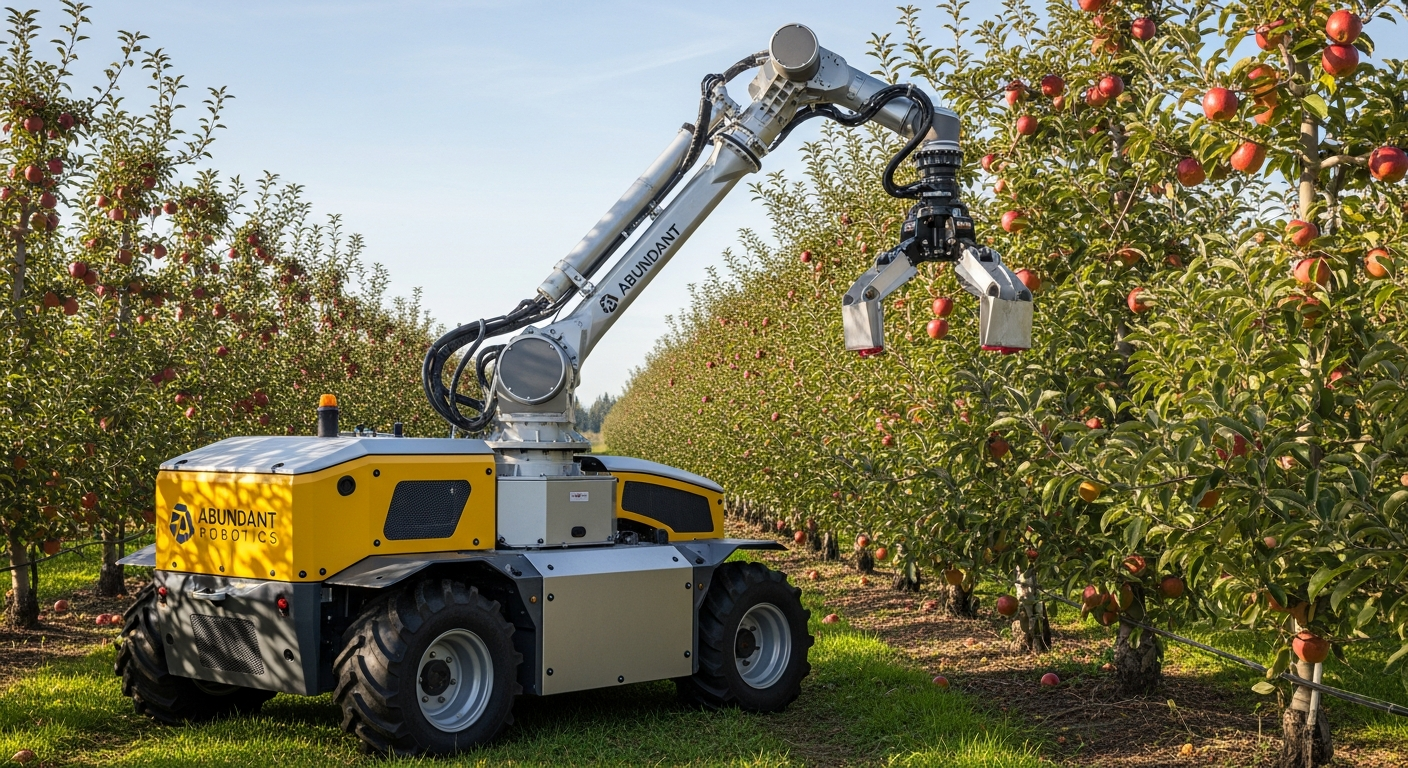
Abundant Robotics Apple Harvester
The Abundant Robotics apple harvester was a pioneering autonomous fruit picking system that used vacuum-based suction to gently detach ripe apples from trees. Using LIDAR and computer vision to identify pickable fruit, the system's suction cups applied calibrated negative pressure to detach apples without bruising or stem damage. The robot navigated autonomously between orchard rows on a self-propelled platform, picking at rates comparable to human workers. Though the company later pivoted, its technology demonstrated that autonomous tree fruit harvesting was technically achievable and influenced numerous subsequent harvest robotics ventures. The technology was trialed in Washington State apple orchards.
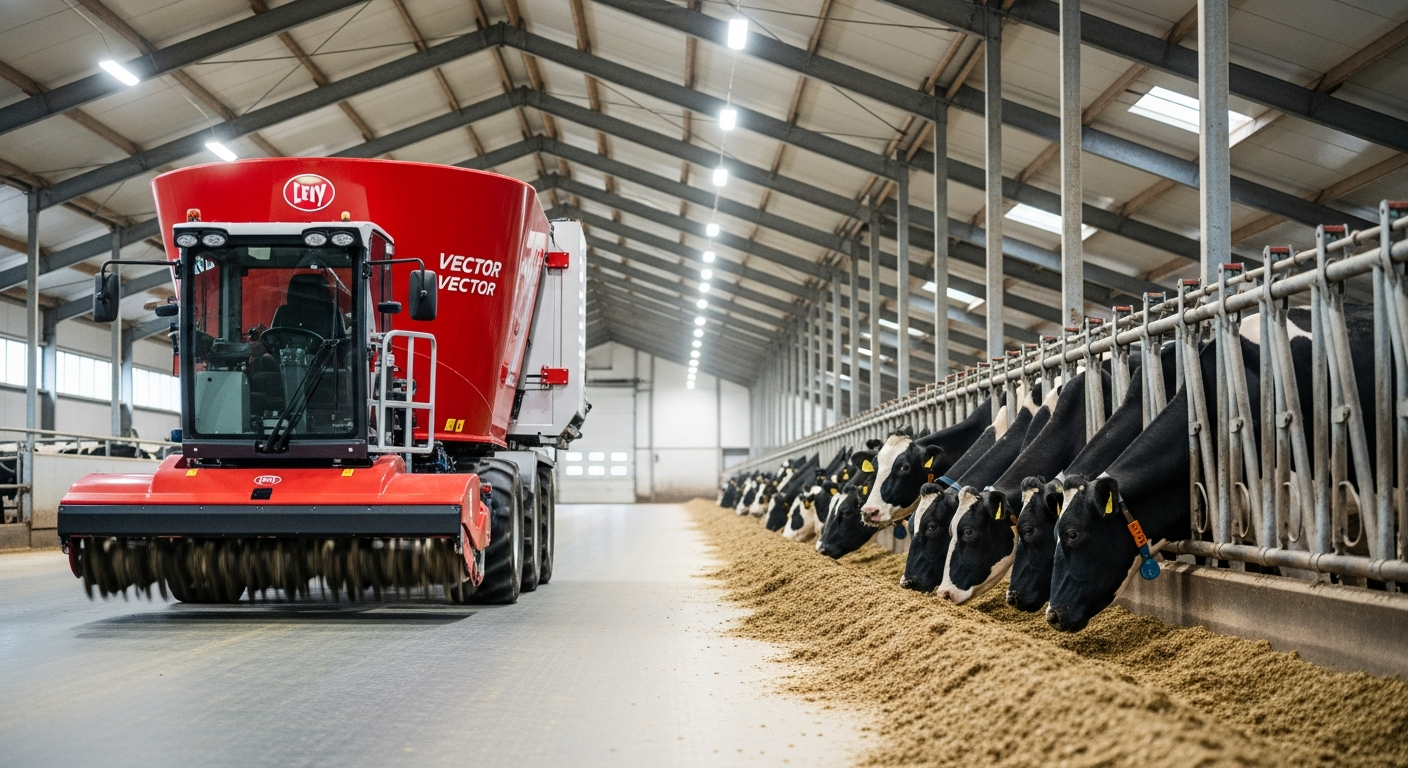
Lely Vector Feed Mixer
The Lely Vector is a fully autonomous feed mixing and distribution system for dairy farms. It automatically loads roughage, concentrates, and minerals from storage, mixes them according to individual ration recipes, and distributes fresh feed to different cow groups throughout the day. Operating 24/7 without any human intervention, it can deliver up to 20 feedings per day, providing cows with consistently fresh feed that stimulates intake and improves milk production by 5-8%. The system's kitchen unit stores and processes feed components while the autonomous feeding wagon navigates barn alleys using sensors and route memory. Over 1,500 units are deployed on dairy farms worldwide.
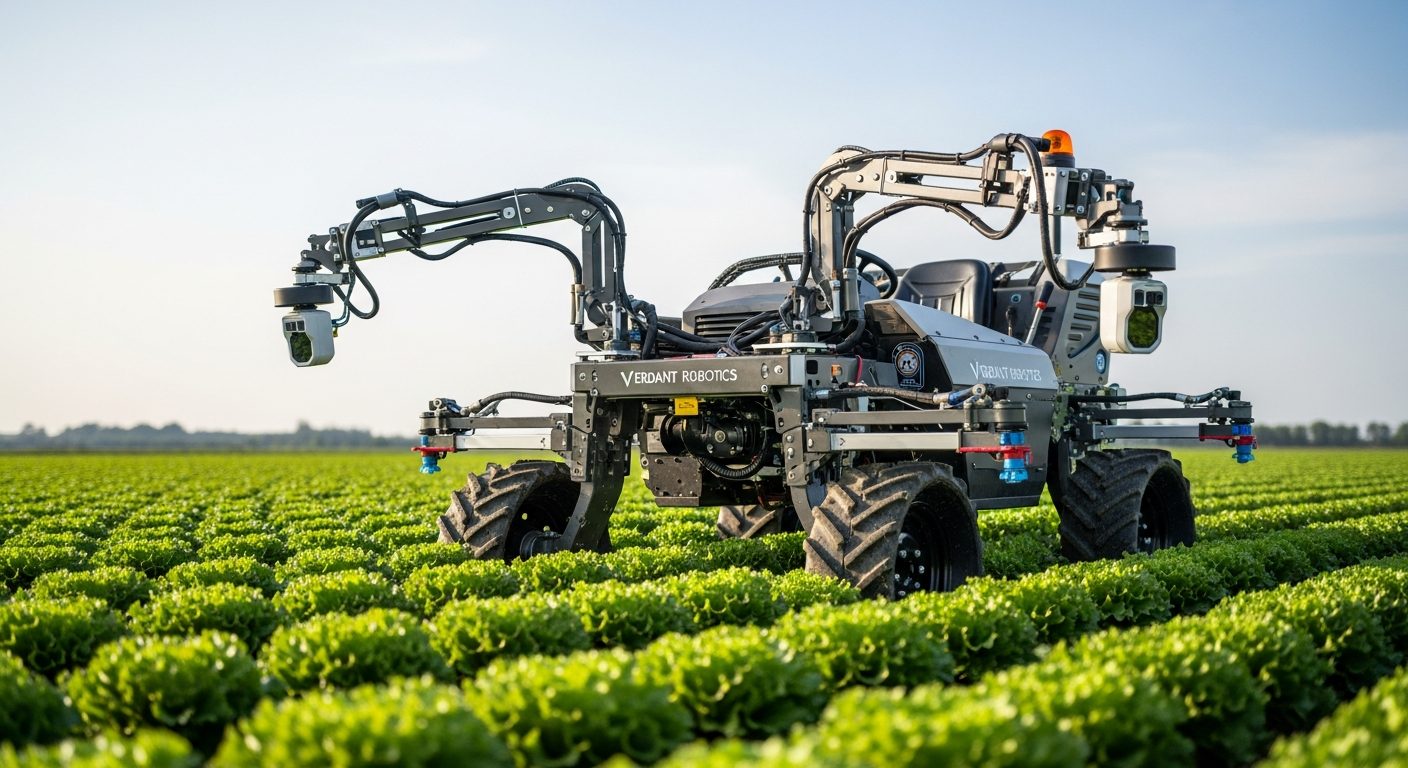
Verdant Robotics Sharpshooter
The Verdant Sharpshooter is a multi-action robotic platform that combines AI-powered plant identification with precision micro-spraying, mechanical thinning, and targeted fertilization. Using millimeter-accurate computer vision running at 20 frames per second, it distinguishes crops from weeds and applies micro-doses of herbicide only where needed, reducing chemical use by up to 95%. The platform operates autonomously through crop rows at speeds up to 5 mph, handling lettuce, broccoli, cauliflower, and other specialty crops. Each Sharpshooter can cover 15-25 acres per day and integrates multiple farming operations into a single pass, saving both time and labor. Deployed across major California growing regions, it represents a breakthrough in multi-action autonomous farming.
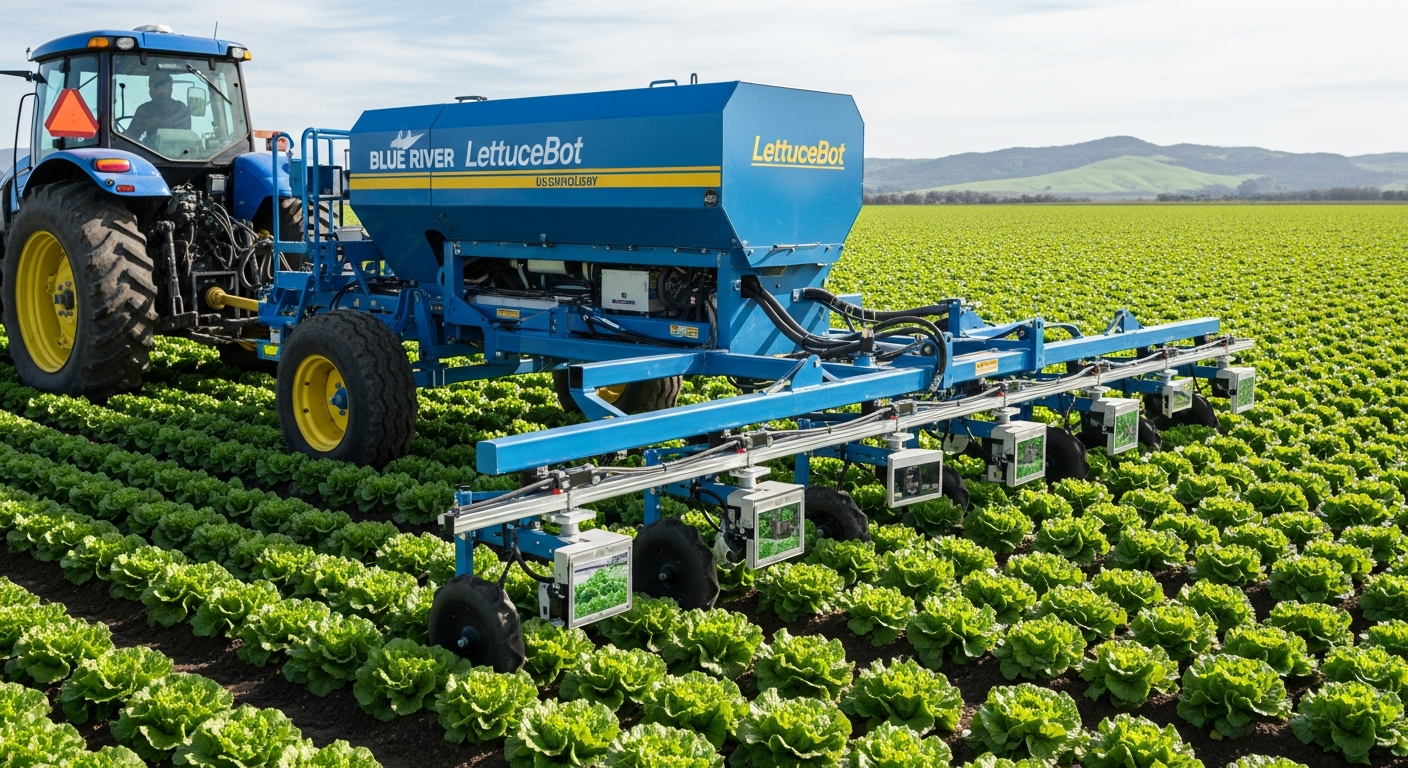
Blue River LettuceBot
The LettuceBot by Blue River Technology (now part of John Deere) was one of the first commercially successful AI-powered agricultural robots. It uses machine learning vision to distinguish lettuce seedlings from weeds at thinning stage, automatically thinning excess plants and removing weeds in a single pass at speeds up to 4 mph. Processing over 5,000 individual plant decisions per minute, it achieves precision that matches or exceeds skilled hand-labor crews. The technology significantly reduces the need for manual hand-weeding crews while improving plant spacing uniformity, leading to more consistent head sizes and higher pack-out rates. Widely deployed across Arizona and California lettuce operations.
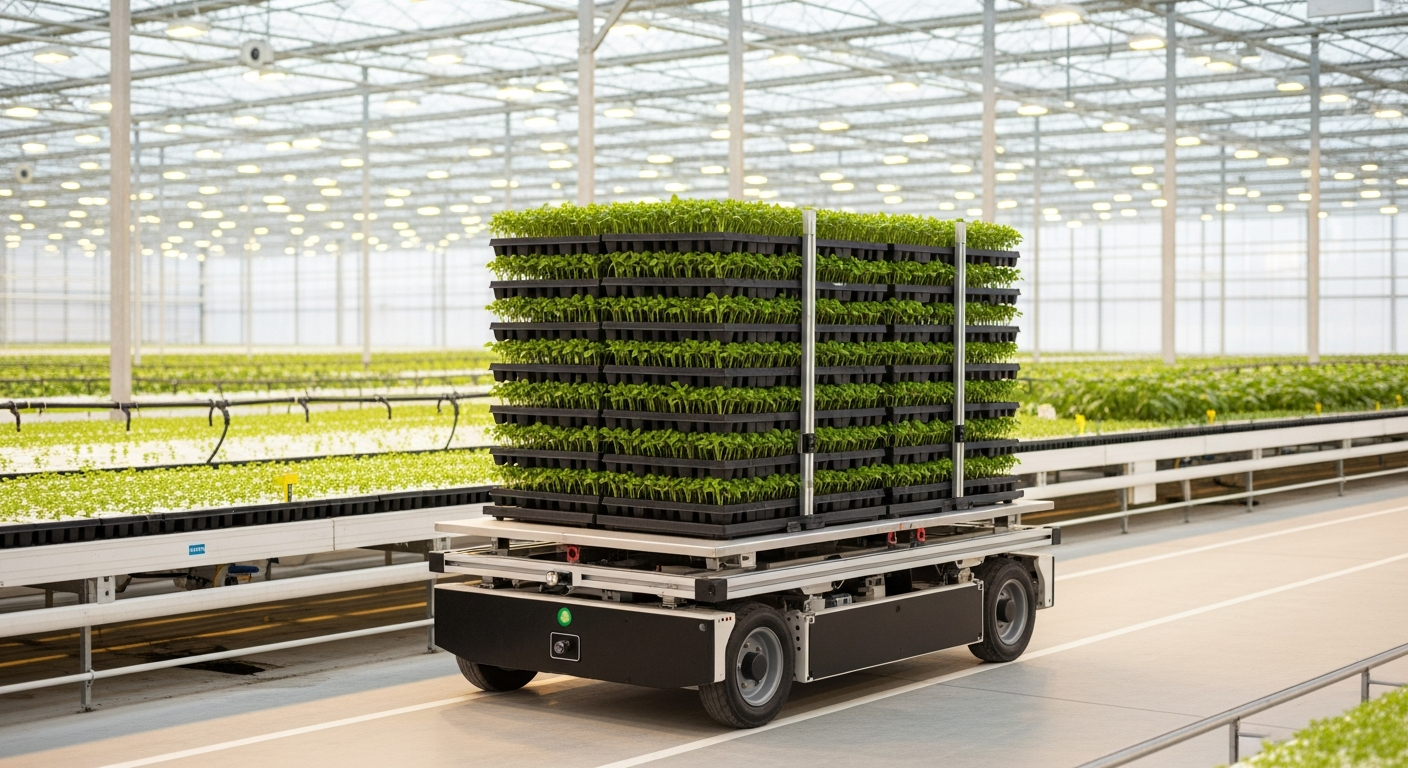
Naandanjain ReBot Greenhouse
The ReBot is an autonomous greenhouse logistics robot that handles the heavy labor of moving plant trays and growing containers within large commercial greenhouses. Using magnetic floor guides and RFID plant tracking, it transports growing modules weighing up to 500 lbs between germination areas, growing zones, and harvest stations. The system integrates with greenhouse management software to optimize plant spacing, ensure uniform light exposure, and schedule harvests at peak quality. Each ReBot can replace 3-4 manual laborers for internal transport tasks, operating continuously through multiple shifts. Deployed in commercial greenhouses growing lettuce, herbs, and ornamental plants across North America.
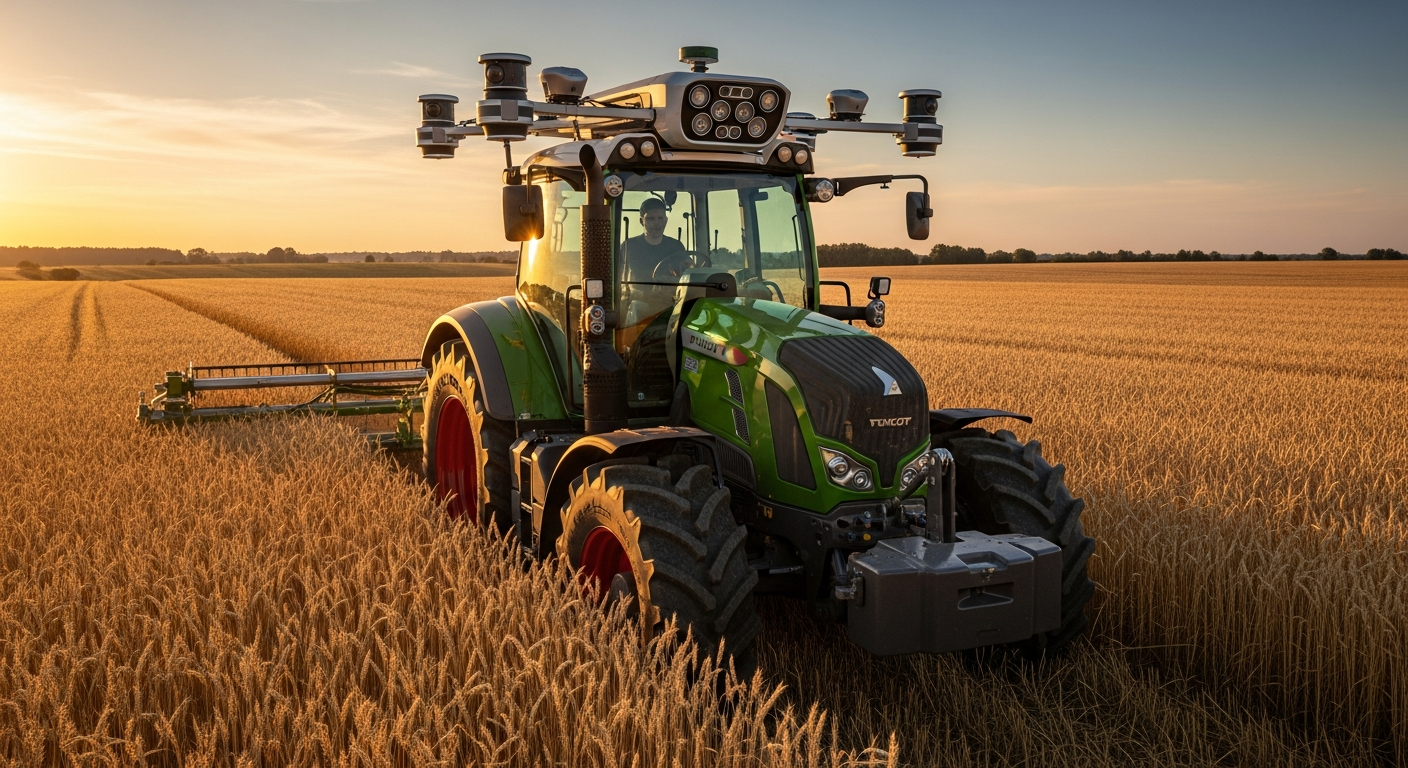
AGCO Outrun Retrofit Kit
The AGCO Outrun autonomous retrofit kit transforms existing Fendt and Massey Ferguson tractors into fully autonomous machines. Using a combination of LIDAR, stereo cameras, and RTK GPS sensors installed on the tractor, the system enables driverless operation for tillage, seeding, spraying, and mowing tasks. Farmers set up field boundaries and task parameters through a tablet app, then the tractor operates autonomously while the farmer monitors from home or works on other tasks. Safety systems include 360-degree obstacle detection that brings the tractor to a safe stop within 2 seconds of detecting people, animals, or unexpected objects. Available through AGCO's premium dealer network as a factory-certified autonomous upgrade.
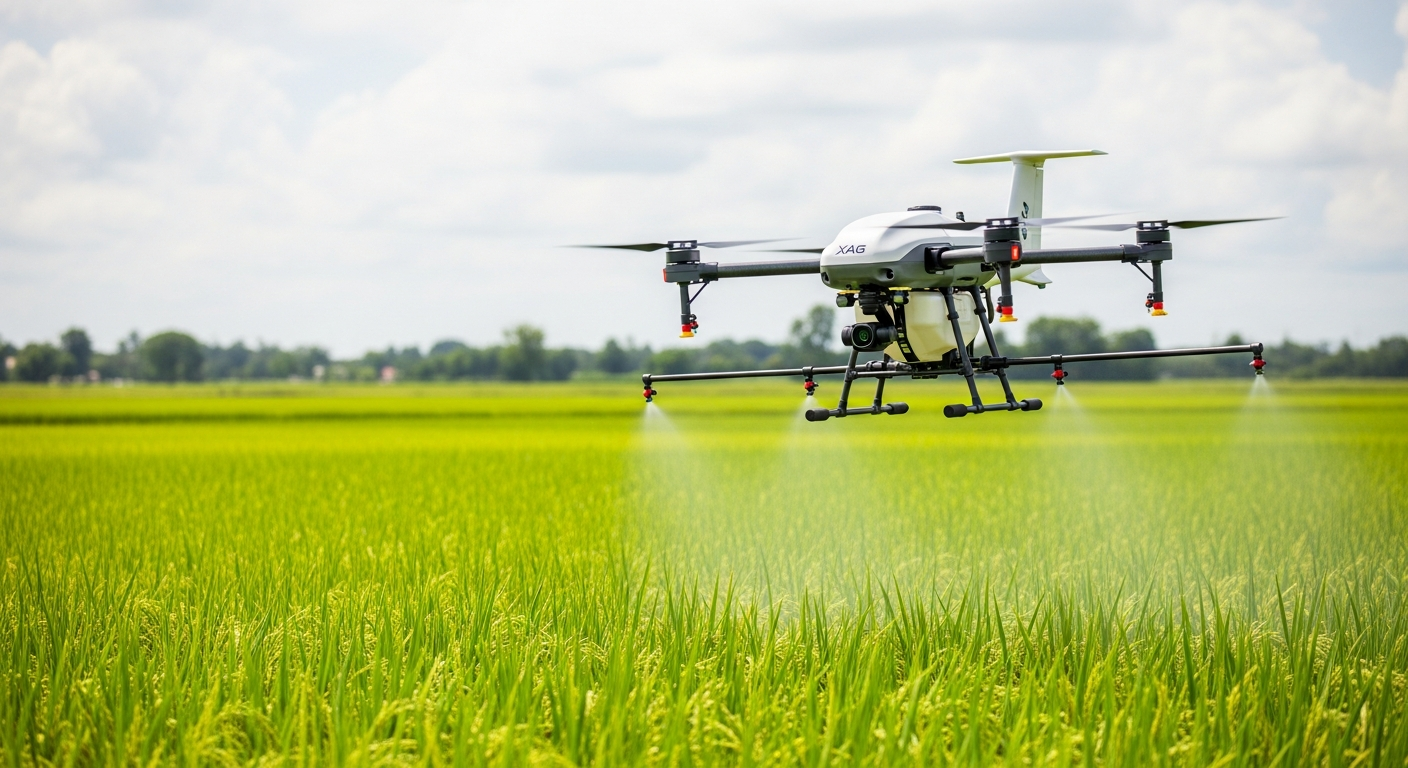
XAG V40 Agricultural Drone
The XAG V40 is a next-generation agricultural drone combining both spraying and surveying capabilities in a single compact platform. With a 20-liter spray tank and integrated multispectral camera, it can scout fields for crop health issues and immediately treat problem areas in the same flight session. The drone features XAG's SuperX 4 Pro flight controller with terrain-following radar and centimeter-level RTK positioning. Its dual atomized spray system produces ultra-fine droplets for superior canopy penetration, particularly effective in dense crops like rice and fruit trees. Widely deployed across Southeast Asian rice-growing regions and African smallholder farms as part of XAG's mission to make precision agriculture accessible to farmers of all sizes.
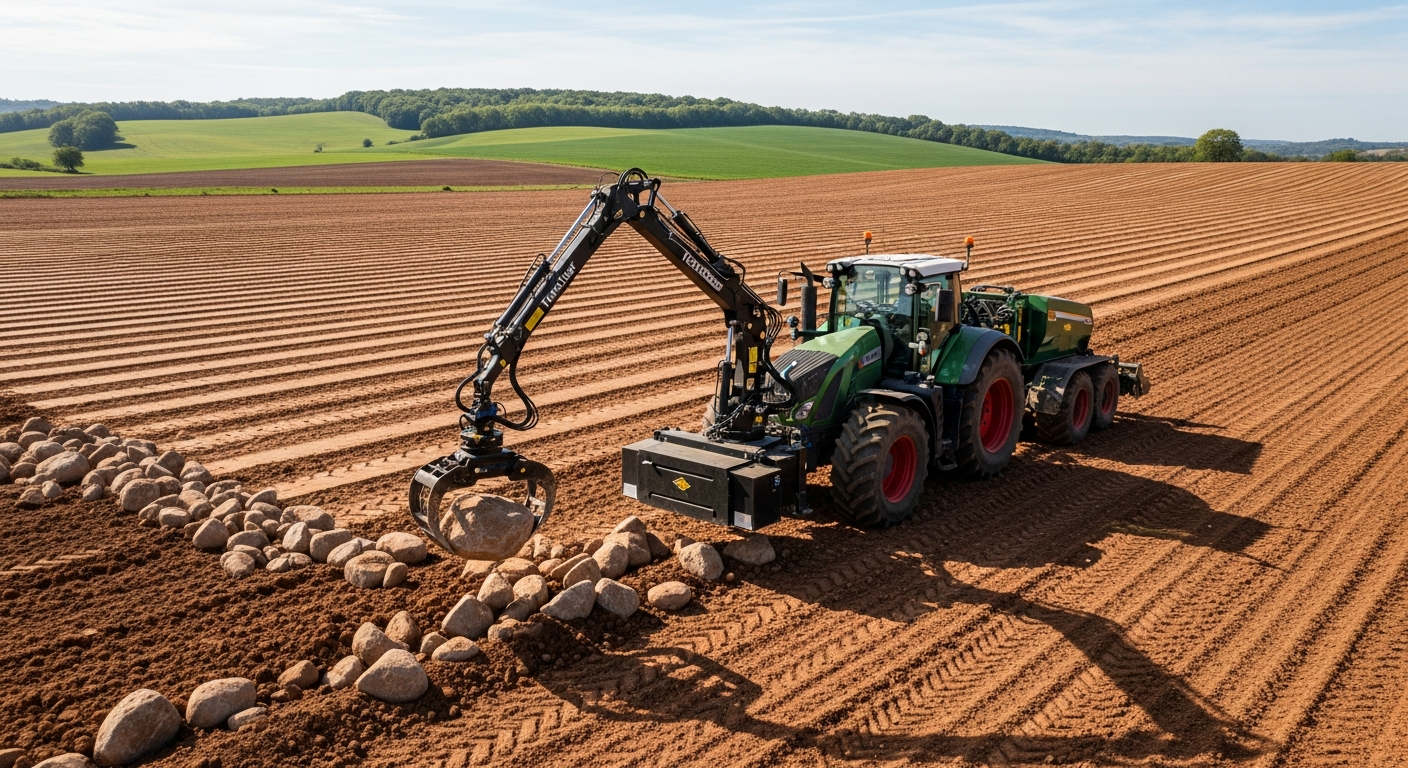
TerraClear Rock Picker
The TerraClear Rock Picker is an AI-powered autonomous rock clearing system that identifies and removes rocks from agricultural fields, protecting equipment and improving field quality. The system starts with drone-based aerial survey using computer vision to map every rock in the field, then deploys a tractor-mounted robotic arm to autonomously pick rocks at a rate of 400+ rocks per hour. This process prevents combine and tillage equipment damage, reduces crop loss around rock obstacles, and saves hundreds of labor hours per season. The system has been deployed across the Pacific Northwest and Midwest, clearing thousands of acres of farmland.
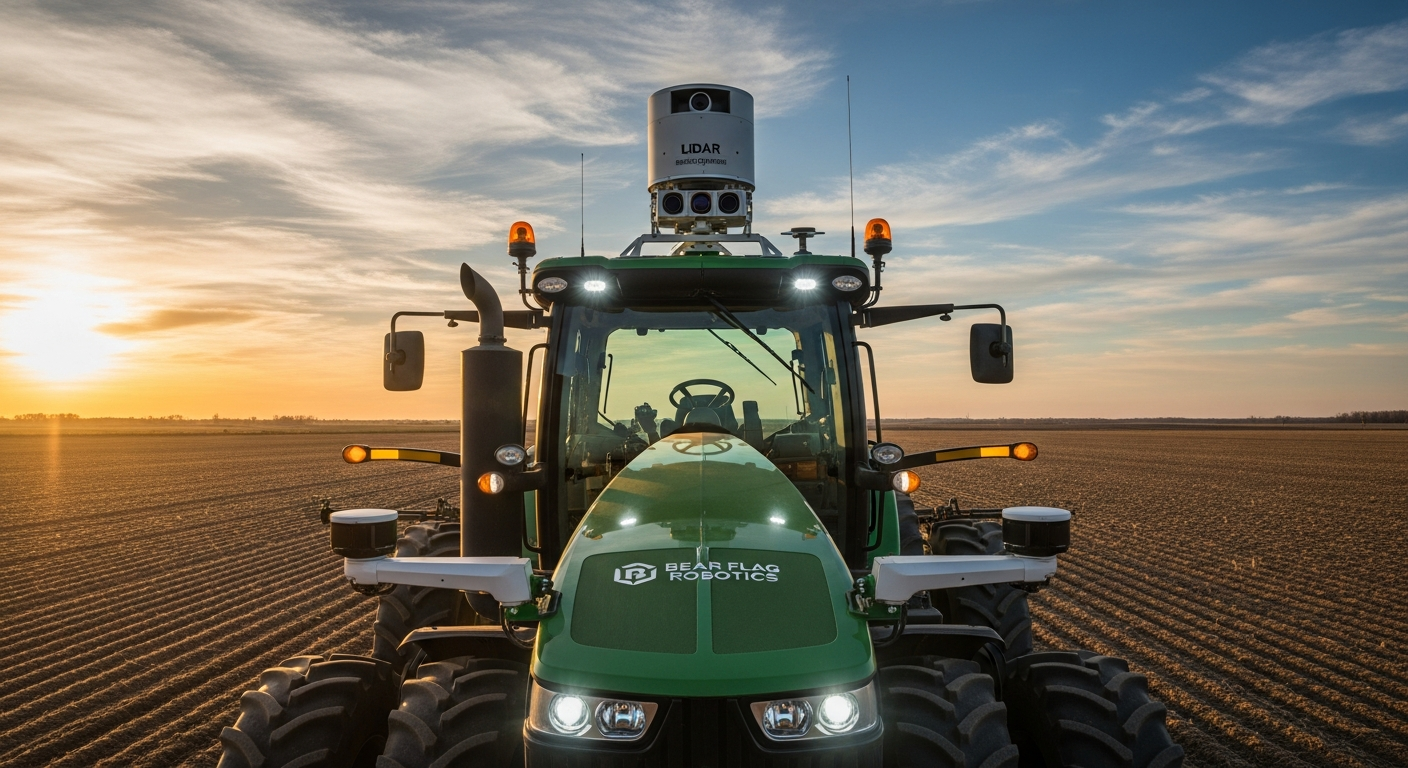
Bear Flag AutoTractor
The Bear Flag AutoTractor is a retrofit autonomous driving system that converts existing standard tractors into driverless machines. By installing a sensor suite including cameras, radar, and GPS receivers onto any compatible tractor, it enables fully autonomous field operations including tillage, mowing, and implement work without a driver in the cab. The system's cloud-based fleet management platform allows farmers to monitor and control multiple autonomous tractors from a single dashboard. Acquired by John Deere in 2021, the technology represents a cost-effective path to autonomy by leveraging farmers' existing equipment investments rather than requiring entirely new tractor purchases.
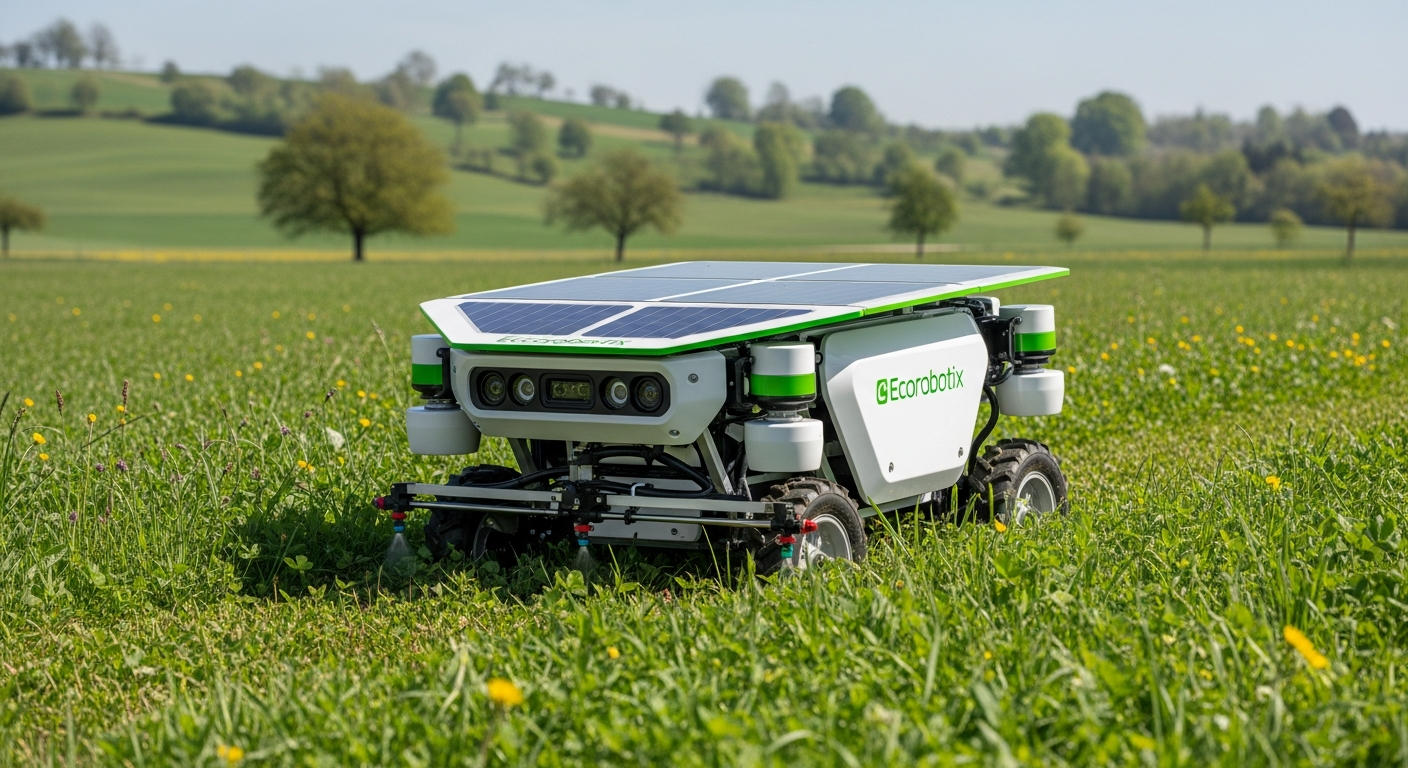
Ecorobotix SPOT Sprayer
The Ecorobotix SPOT is a lightweight, solar-powered autonomous robot designed for ultra-precise spot spraying of weeds in pastures, meadows, and crop fields. Weighing just 130 kg, it roams fields autonomously using GPS navigation and solar panel power, identifying weeds with dual cameras and applying micro-doses of herbicide only to individual weed plants. This spot-treatment approach reduces herbicide use by up to 95% while covering 10+ acres per day. The SPOT is particularly valued by livestock farmers managing large pastures where manual weed control is impractical, and by farmers seeking to meet increasingly strict European pesticide reduction regulations. It operates fully autonomously, returning to charge stations when needed.
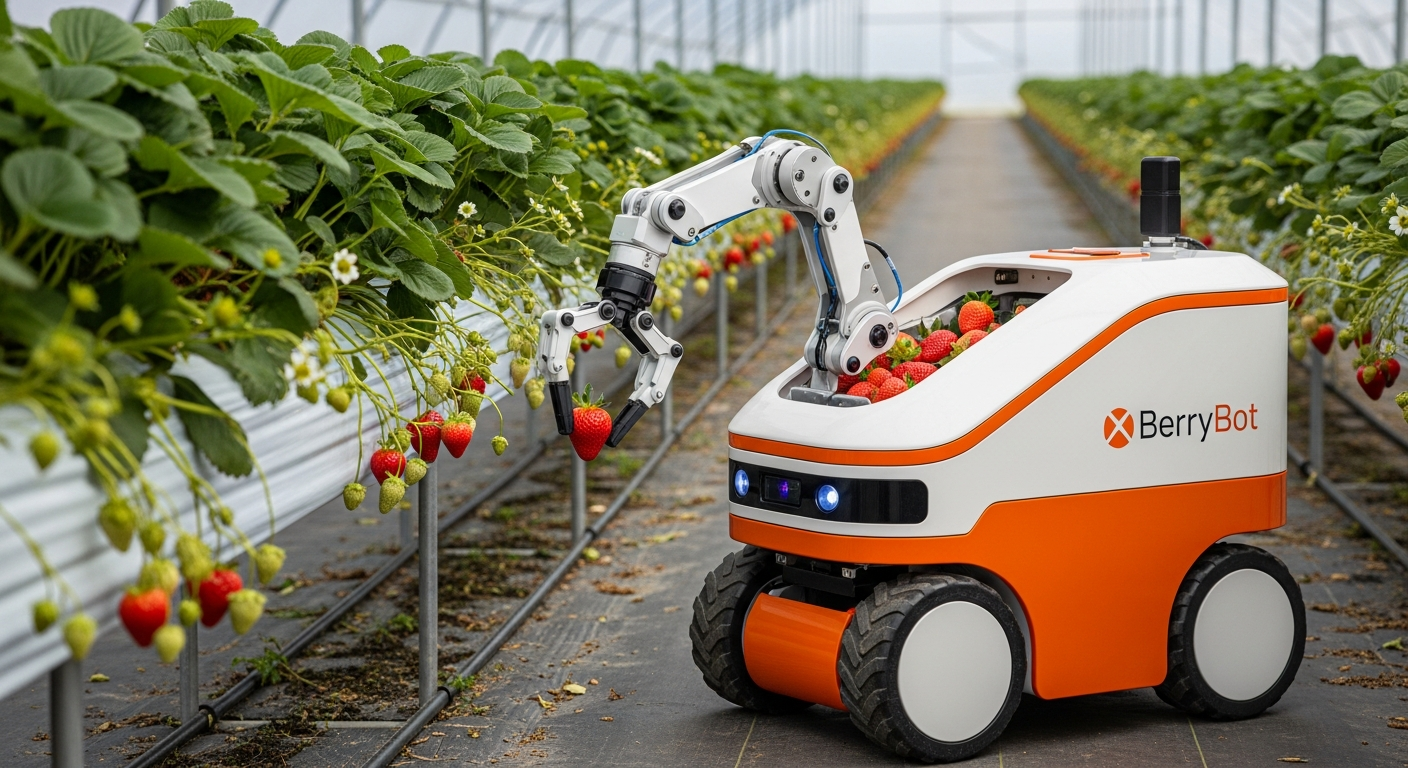
Dogtooth H1 Strawberry Picker
The Dogtooth H1 is an autonomous strawberry harvesting robot developed at Cambridge University that uses advanced AI vision and custom-designed soft grippers to pick ripe strawberries without bruising. The robot navigates polytunnel rows, scanning plants with multi-spectral cameras to assess ripeness by color, size, and shape. Its specially developed compliant gripper mimics the gentle touch of human fingers, picking only market-ready berries and leaving unripe fruit for later harvest. Each unit can operate continuously through day and night shifts, addressing the critical seasonal labor shortage in UK and European berry farms. The H1 has been trialed across multiple UK commercial strawberry farms.
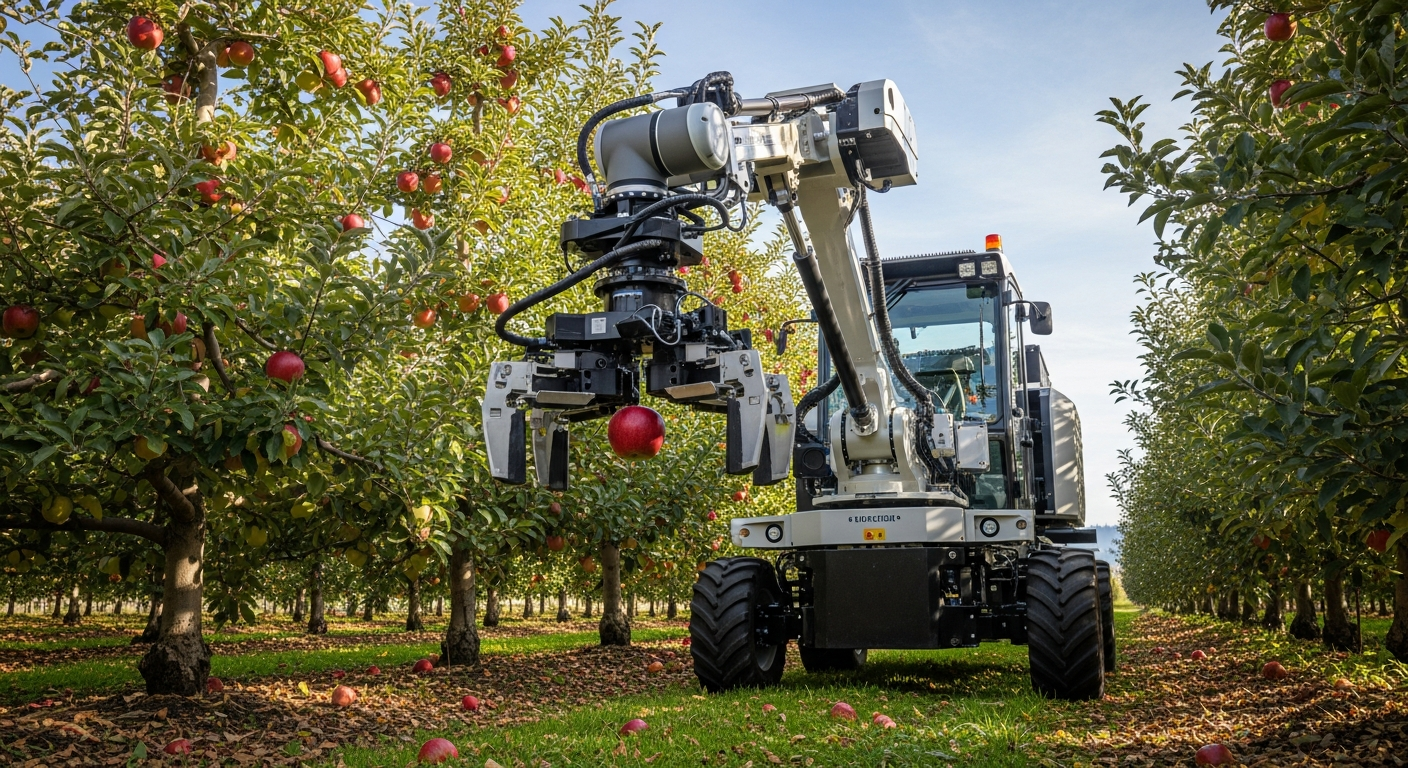
Advanced Farm T-22 Apple Harvester
The Advanced Farm T-22 is an autonomous apple harvesting robot designed to work alongside human pickers in commercial orchards. Using 3D vision and AI fruit detection, it identifies ripe apples on the tree, determines optimal pick sequences, and harvests fruit using a gentle vacuum-grip end effector that prevents bruising. The T-22 navigates autonomously between tree rows and can harvest at a rate approaching 50% of an experienced human picker's speed, operating 24/7 without breaks. It has been deployed in Washington State apple orchards, the world's largest apple-growing region, helping growers address critical labor shortages during harvest season.
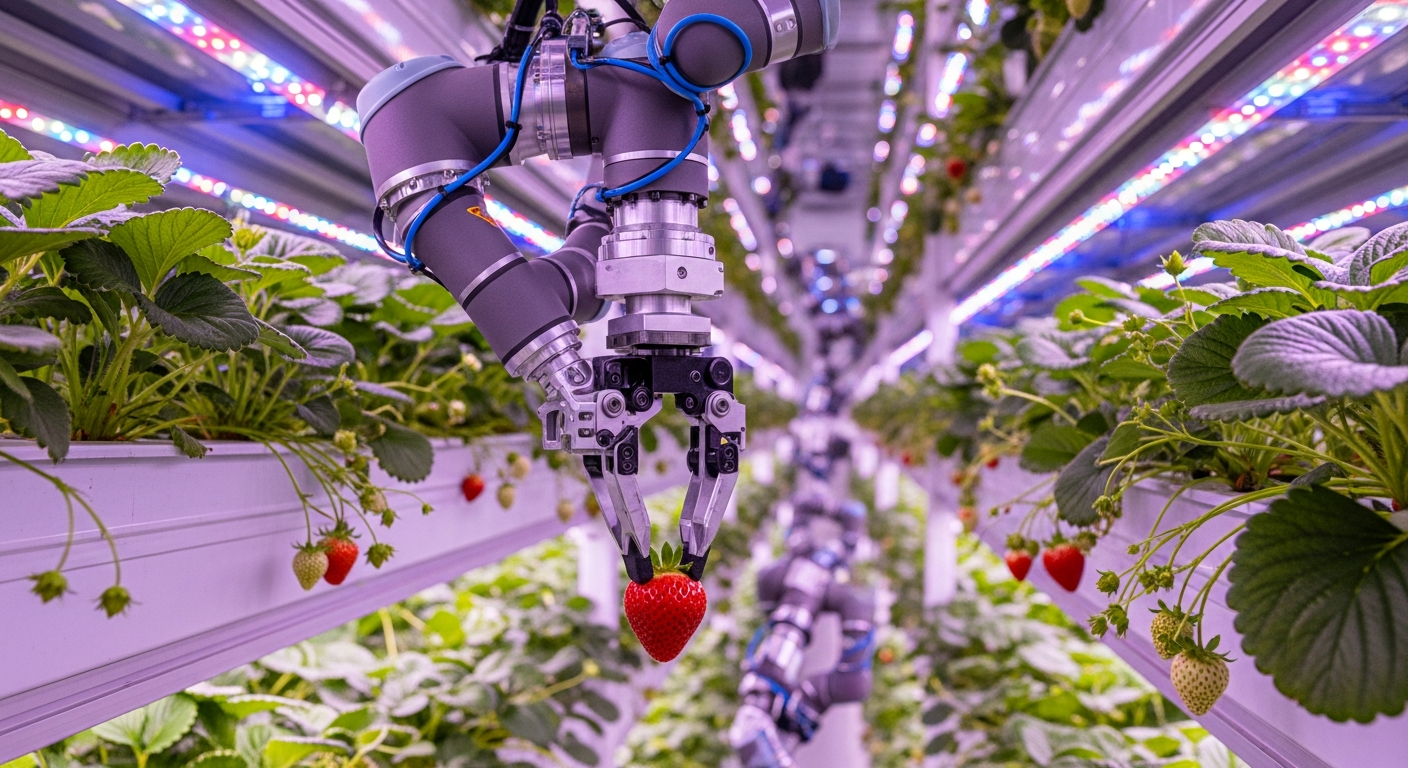
Tortuga Autonomous Strawberry Picker
The Tortuga autonomous strawberry picker is designed specifically for indoor vertical farms and controlled-environment agriculture facilities. Using AI-powered computer vision trained on millions of strawberry images, it identifies ripe berries on tabletop growing systems and picks them with a precision robotic arm. The system integrates with indoor farm management software to optimize harvest timing and reduce waste. Working 20+ hours per day with minimal maintenance, it addresses the labor challenges that make indoor strawberry production economically difficult. Tortuga's technology has been deployed in commercial indoor farms across Colorado and the eastern United States.
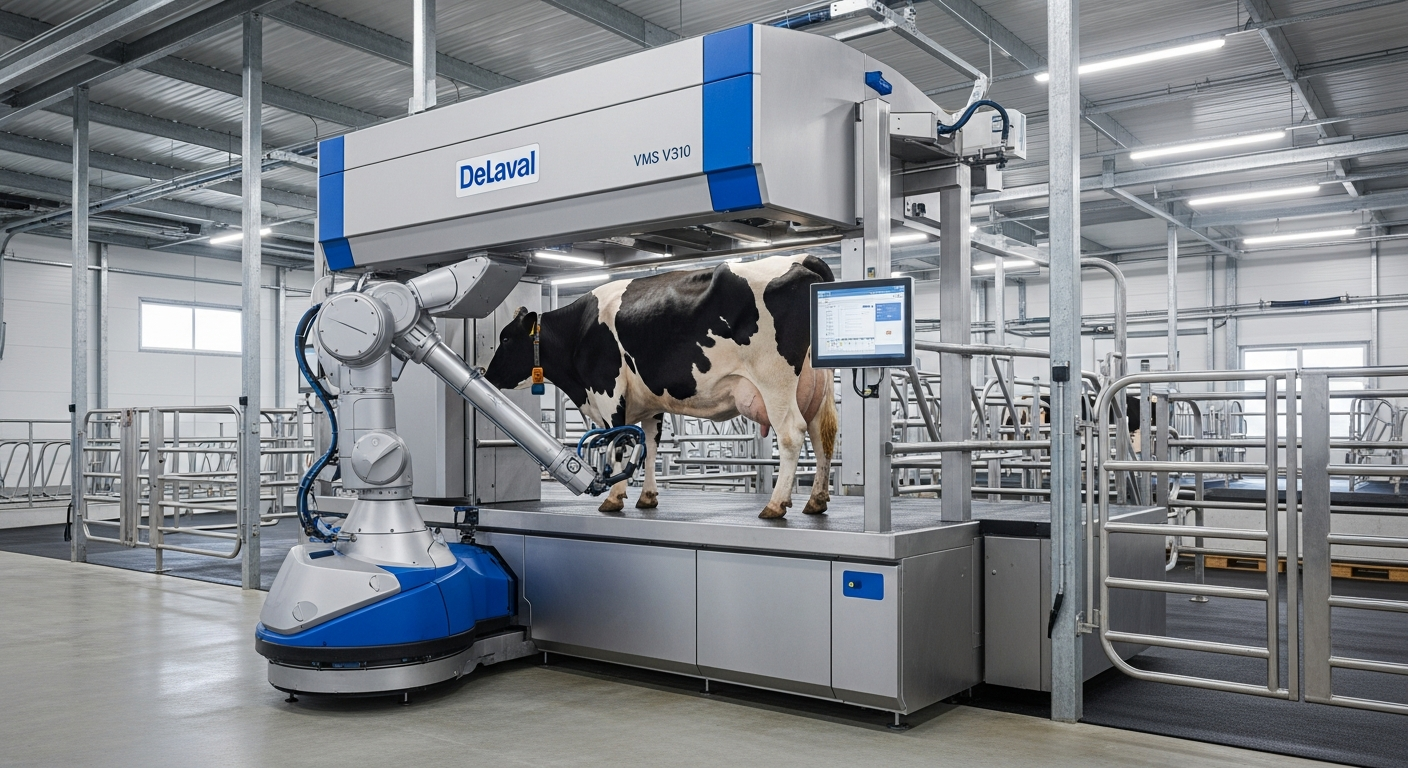
DeLaval VMS V310
The DeLaval VMS V310 is a voluntary milking system that allows cows to choose when they want to be milked, combining robotic milking with comprehensive herd management. Its InControl system uses 3D teat detection cameras and automated cup attachment to milk cows efficiently, achieving attachment success rates above 99%. The system monitors milk quality through cell count sensors, blood detection, and conductivity measurement, automatically diverting abnormal milk. Individual cow production tracking enables precision feeding and early disease detection, improving both yield and animal welfare. With over 50,000 robotic milking installations globally, DeLaval is one of the two dominant players in automatic milking alongside Lely.
Burro Grande
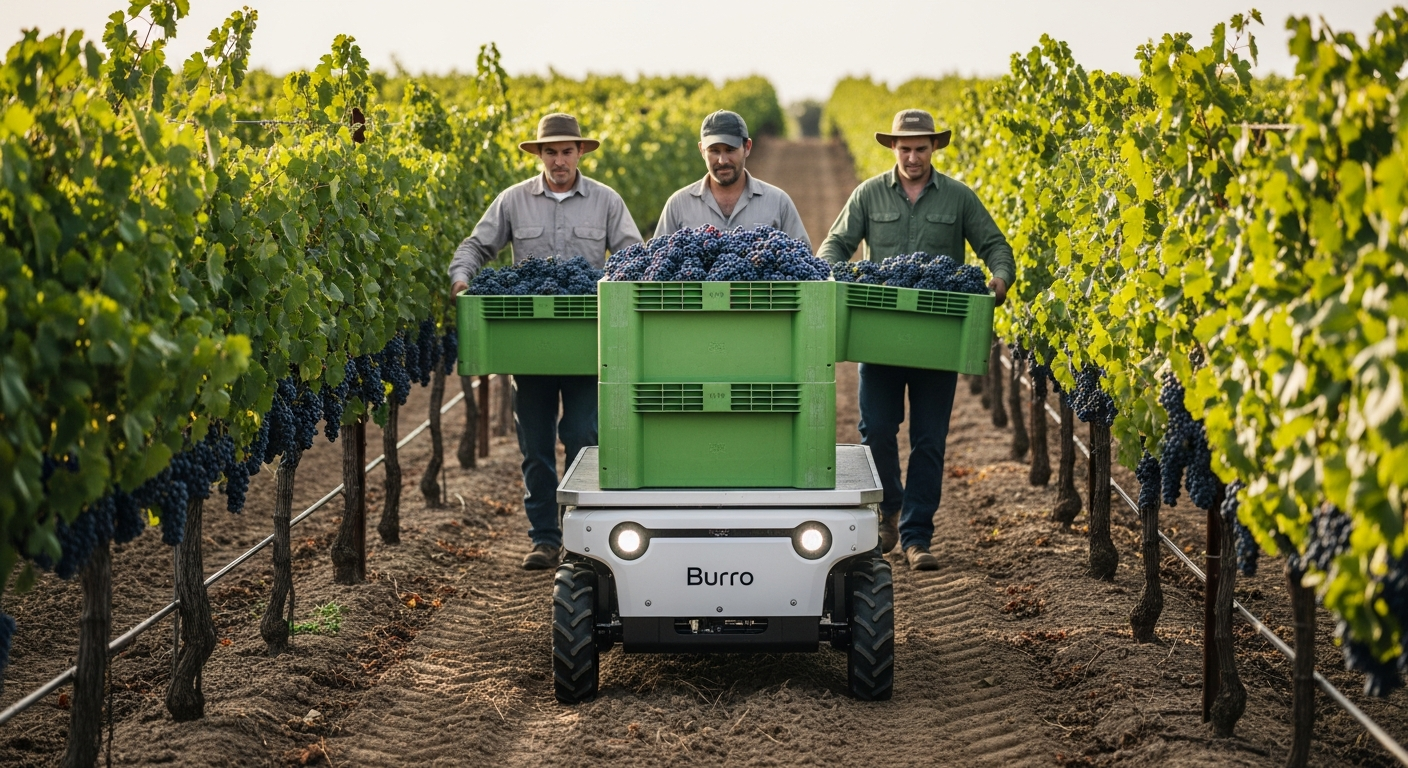
The Burro Grande is an autonomous mobile robot designed to follow farm workers through fields, hauling harvested produce without any human driving. Using LIDAR and visual sensors, it autonomously follows pickers through crop rows, learns the farm layout over time, and returns loaded bins to collection points. With a 500 lb payload capacity and all-terrain capability, it eliminates the need for manual cart pushing that causes worker fatigue and injury. The Burro operates in diverse crops including table grapes, citrus, nursery plants, and berries across hundreds of commercial farms in the United States.
 Discontinued
Iron Ox Ada
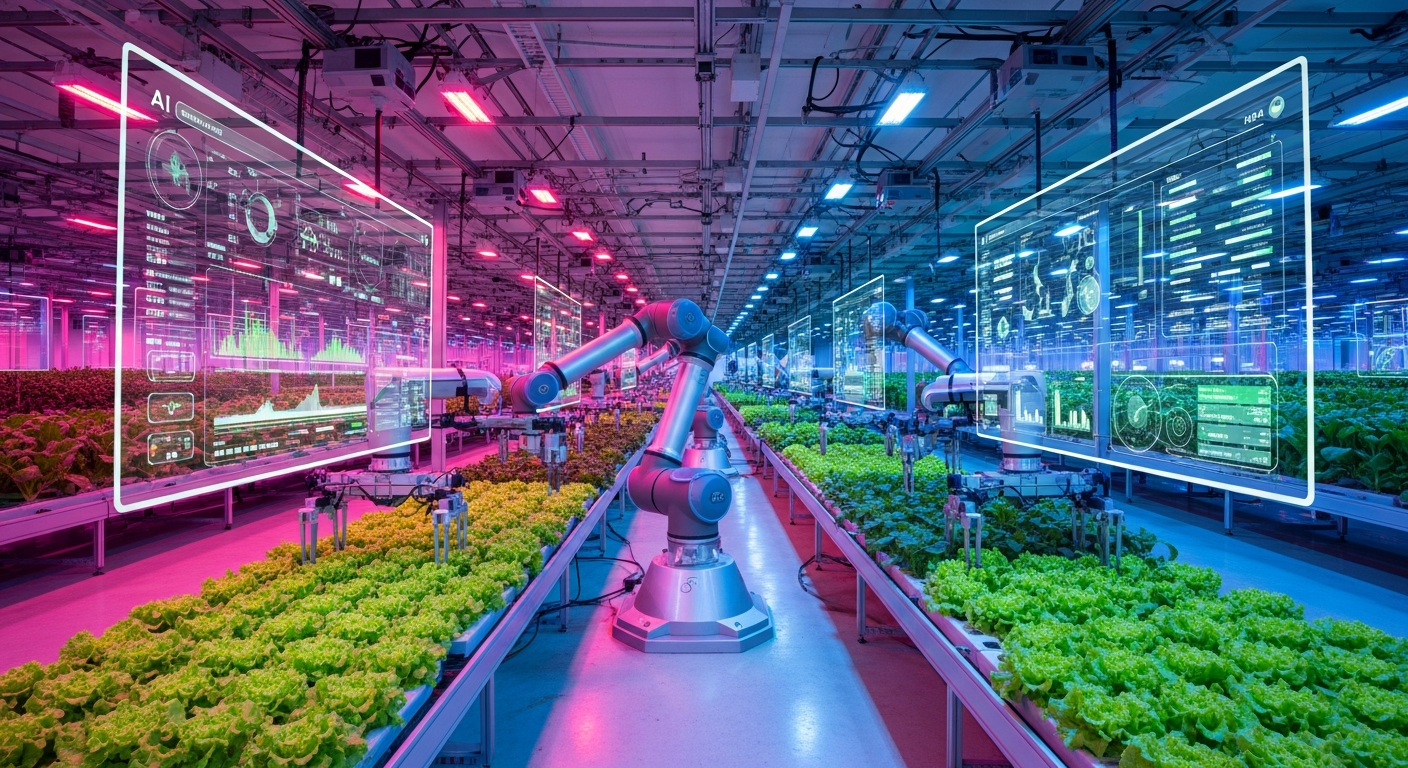
Iron Ox Ada is the AI brain behind Iron Ox's fully autonomous greenhouse operations, managing every aspect of controlled environment agriculture from planting to harvest. Ada continuously analyzes data from thousands of sensors monitoring light, temperature, humidity, CO2, nutrient levels, and individual plant health to make real-time growing decisions. The system coordinates with physical robots that move plant modules, adjust growing conditions, and harvest crops at optimal ripeness. Ada's machine learning algorithms improve with every growing cycle, optimizing yields while using 90% less water and zero pesticides compared to conventional field farming. The system manages production of leafy greens, herbs, tomatoes, and strawberries in Iron Ox's commercial greenhouse facilities in Texas and California.
SwarmFarm SwarmBot
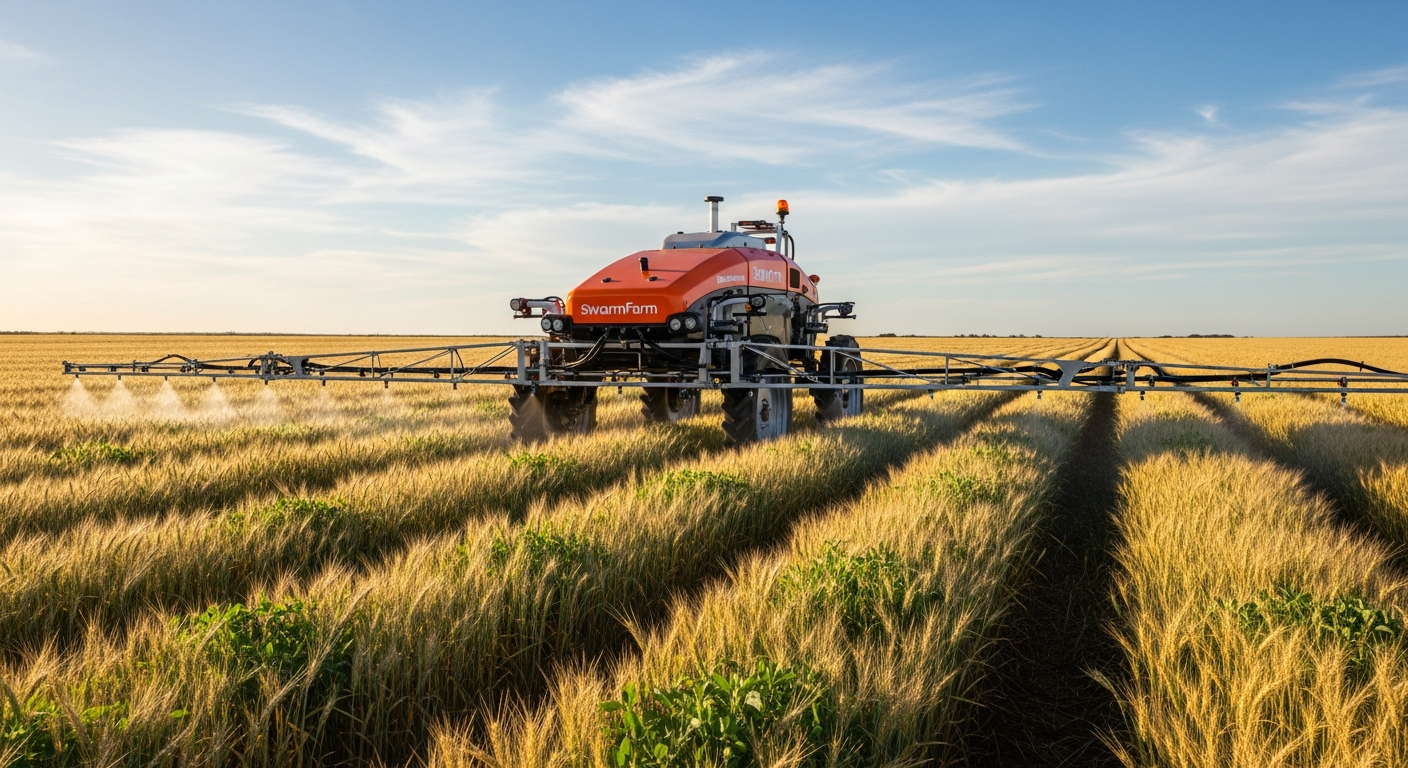
The SwarmFarm SwarmBot is an autonomous weed management robot designed for Australian broadacre farming operations. These lightweight robots work individually or in coordinated swarms to perform targeted spot-spraying of weeds across vast grain and cotton fields. Using real-time AI weed detection cameras, each SwarmBot identifies weeds and applies micro-doses of herbicide only to weed targets, reducing chemical use by 80-90% compared to blanket spraying. The platform's open architecture allows farmers to customize tools and spray configurations for their specific crops and conditions. Commercially deployed across Queensland and New South Wales grain farms.
 Discontinued
FarmWise Titan
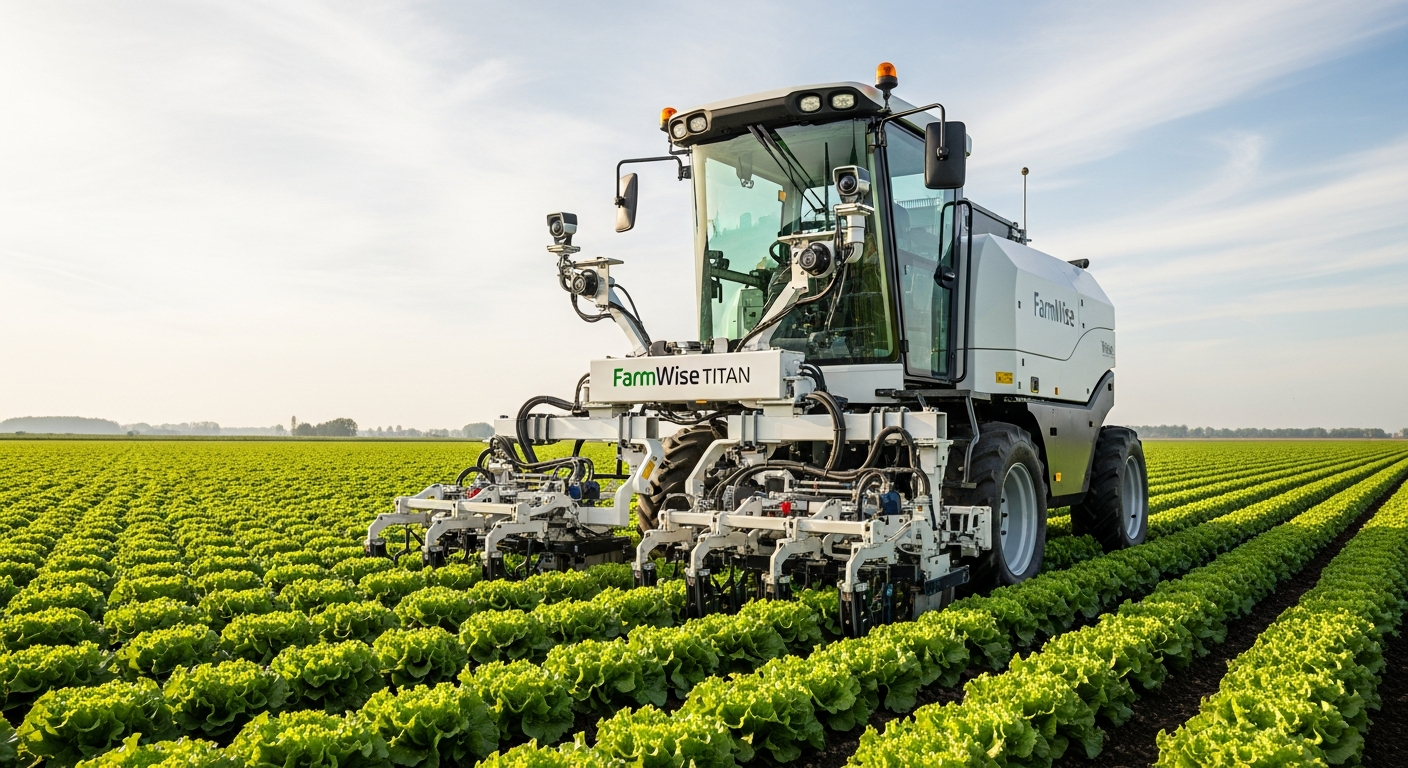
The FarmWise Titan is an autonomous weeding robot built specifically for specialty crop fields such as lettuce, broccoli, cauliflower, and celery. Using advanced AI-powered camera vision, it identifies individual plants and distinguishes crops from weeds in real time, then mechanically removes weeds without any chemical herbicides. The Titan navigates autonomously through crop rows at speeds of 1-3 mph, covering 15-20 acres per day with minimal human oversight. Its chemical-free approach has made it especially popular with organic growers and farms looking to reduce input costs by up to 90%. The robot has been commercially deployed across major growing regions in California's Salinas Valley and Arizona.
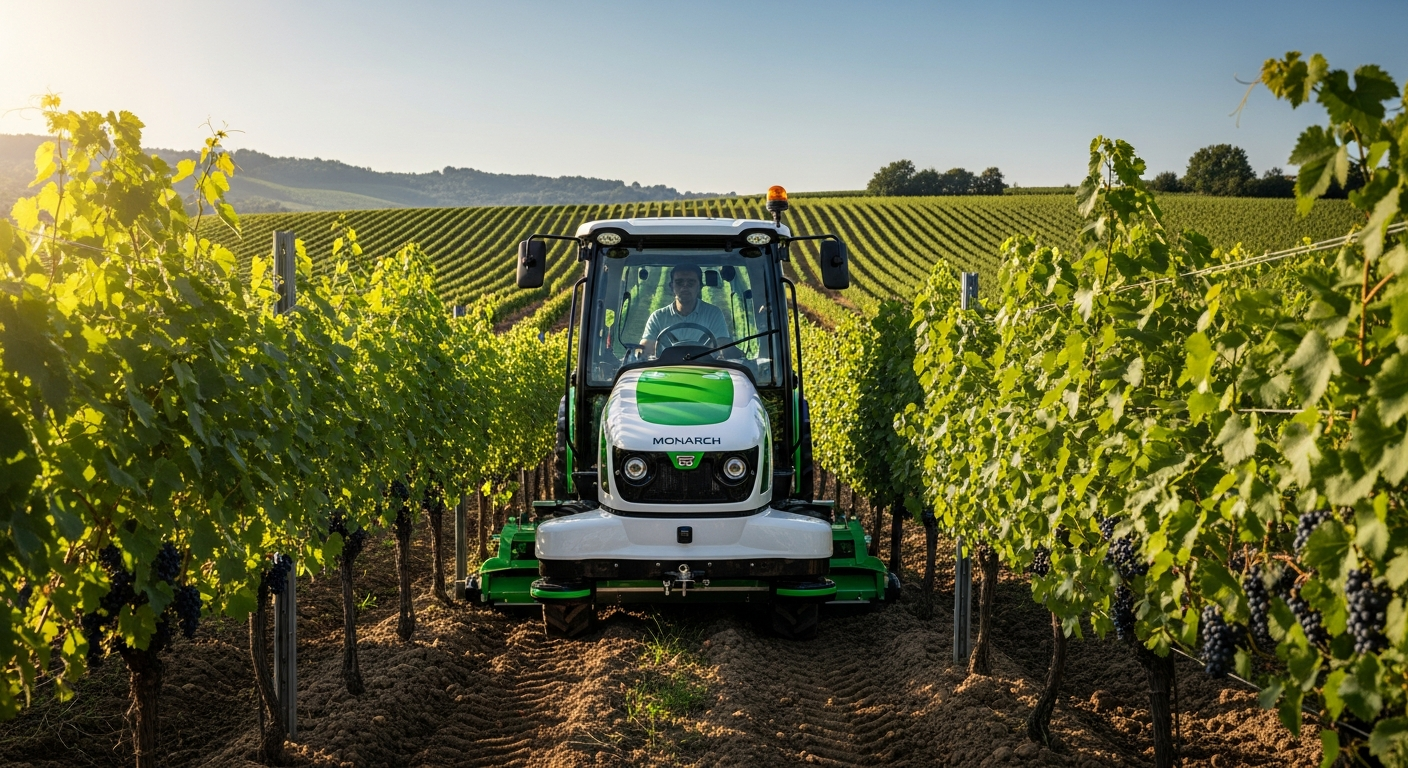
Monarch MK-V Electric Tractor
The Monarch MK-V is a groundbreaking all-electric, driver-optional smart tractor designed for vineyards, orchards, and specialty crop operations. It combines zero-emission electric power with AI-driven machine vision to operate autonomously or with a driver, adapting to the needs of the operation. The tractor continuously collects data on crop health, soil conditions, and implement performance, turning every pass through the field into actionable intelligence. With over 8 hours of battery runtime and 70 HP equivalent power, it handles mowing, spraying, and tillage tasks while reducing operating costs by up to 30% compared to diesel equivalents. The MK-V has been adopted by leading sustainable vineyards and organic farms across California.
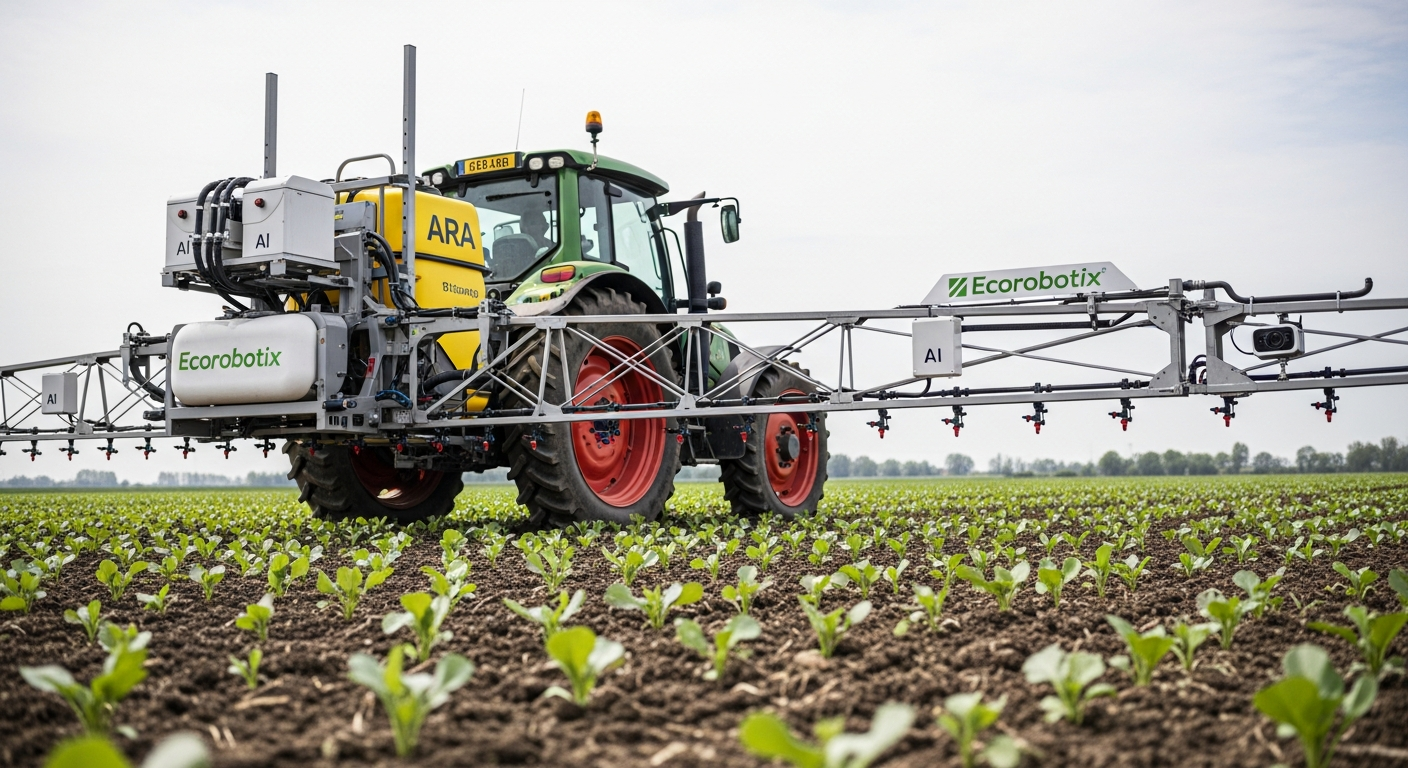
Ecorobotix ARA
The Ecorobotix ARA is a tractor-mounted precision spot-spraying system that uses AI-powered plant recognition to reduce herbicide use by up to 95%. With 16 high-resolution cameras and 156 individually controlled nozzles across a 6-meter working width, it identifies weeds at a resolution of just 4 cm² and applies micro-doses of herbicide only where needed. This ultra-targeted approach dramatically cuts chemical costs and environmental impact while maintaining effective weed control in sugar beets, rapeseed, cereals, and sunflowers. The ARA can cover approximately 30 acres per day and integrates seamlessly with standard three-point hitch tractors. Developed in Switzerland, it has been commercially deployed across European farms seeking to meet increasingly strict herbicide reduction regulations.
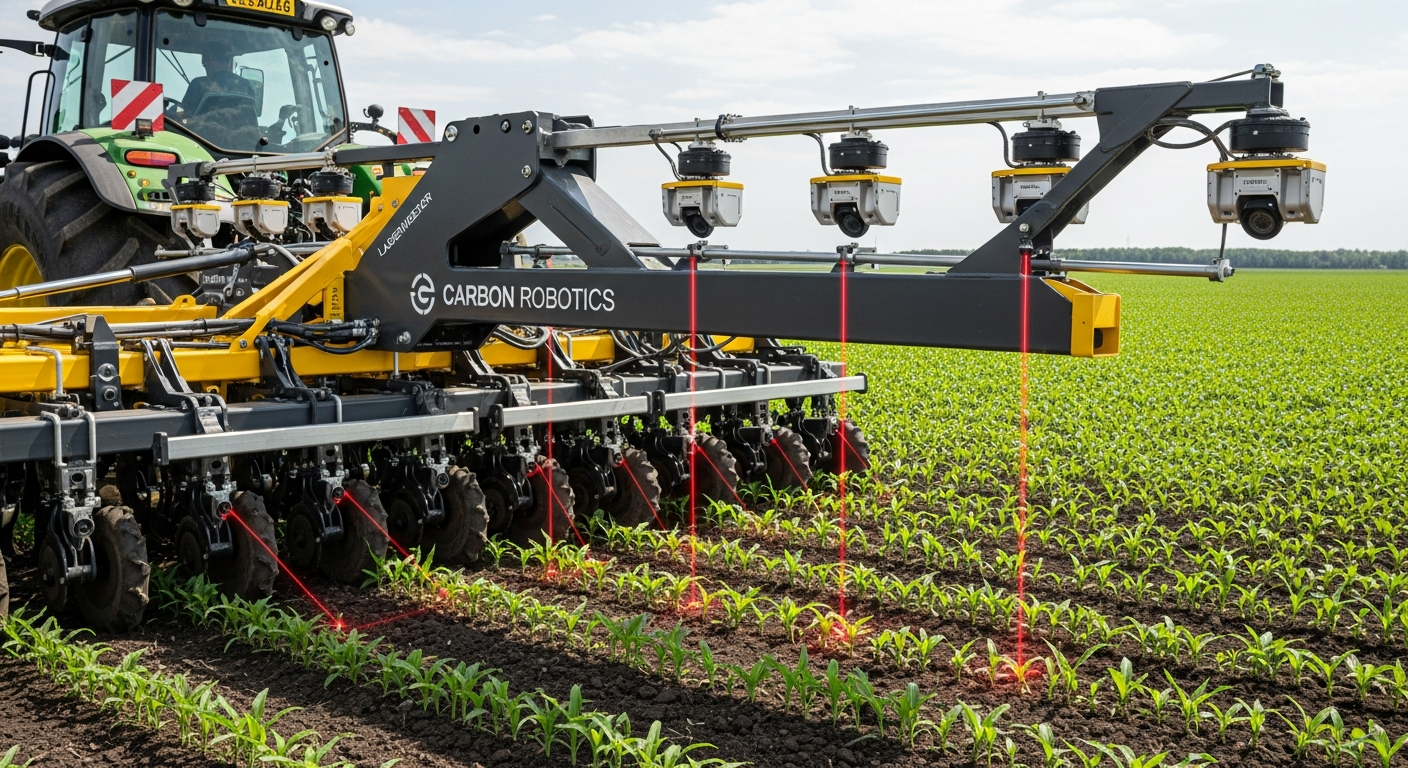
Carbon Robotics LaserWeeder
The Carbon Robotics LaserWeeder is a cutting-edge agricultural implement that uses 30 high-power CO2 lasers to eliminate weeds with millimeter precision, achieving a kill rate of 200,000 weeds per hour. The system is pulled behind a standard tractor and uses 12 high-resolution cameras paired with deep-learning AI to distinguish weeds from crops in real time, even at speeds up to 6 mph. Because it uses thermal energy rather than chemicals, it delivers 100% chemical-free weed control, making it ideal for both organic and conventional operations. The LaserWeeder can operate day and night, with its computer vision system performing equally well in darkness using its own lighting array. It has seen rapid commercial adoption across onion, carrot, broccoli, and cotton farms in the western United States.
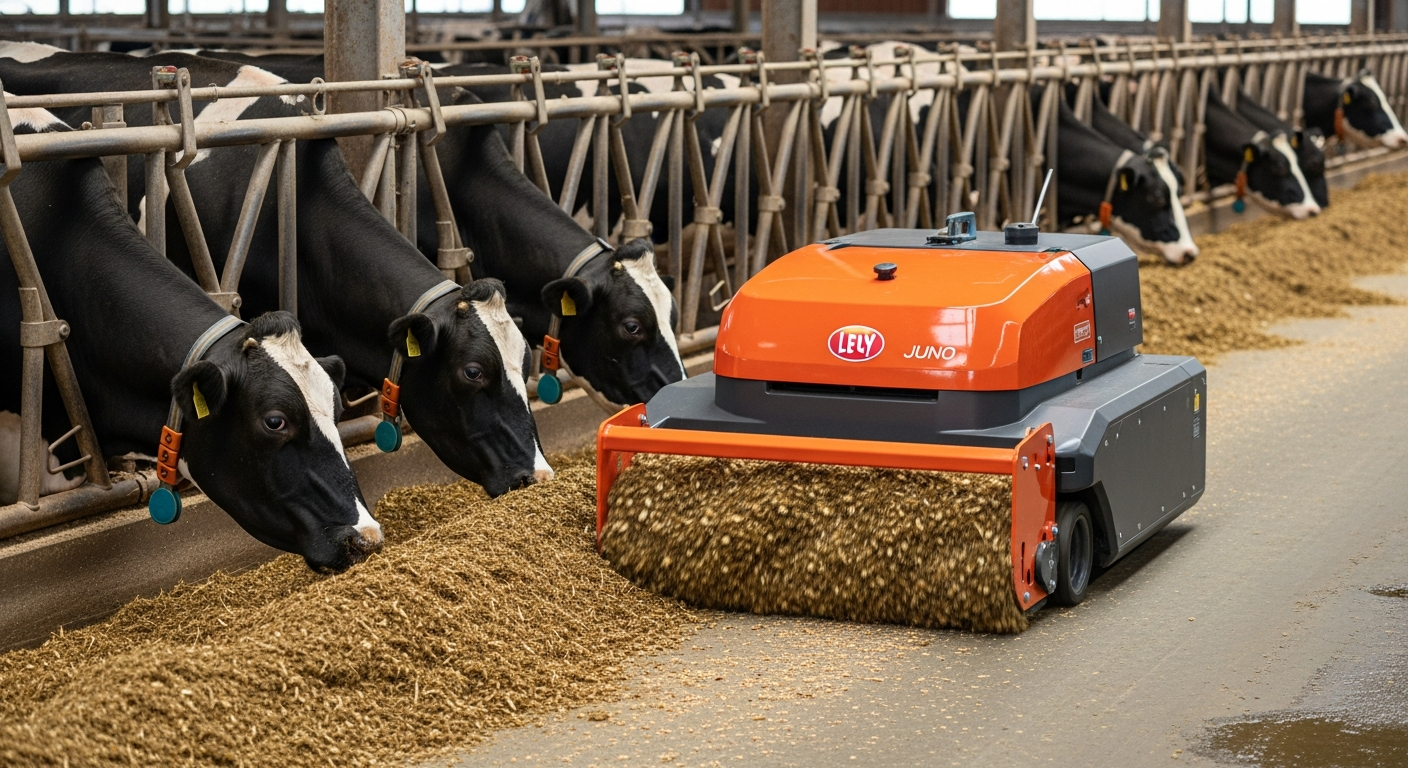
Lely Juno Feed Pusher
The Lely Juno is an autonomous feed-pushing robot that continuously keeps fresh feed within reach of dairy cows, stimulating feed intake and boosting milk production. Operating on a programmed schedule throughout the day and night, it navigates the feed alley using route memory and obstacle detection sensors to push scattered feed back toward the feeding fence. The battery-powered unit runs for 8-12 hours per charge and weighs 340 kg, with a push width of 1.8 meters suited for standard dairy barn layouts. Studies have shown that more frequent feed pushing increases dry matter intake by 3-5%, which translates directly to higher milk yields and healthier cows. The Juno is one of the simplest and most cost-effective dairy automation investments, typically paying for itself within 18 months through labor savings and production gains.
Naio Oz
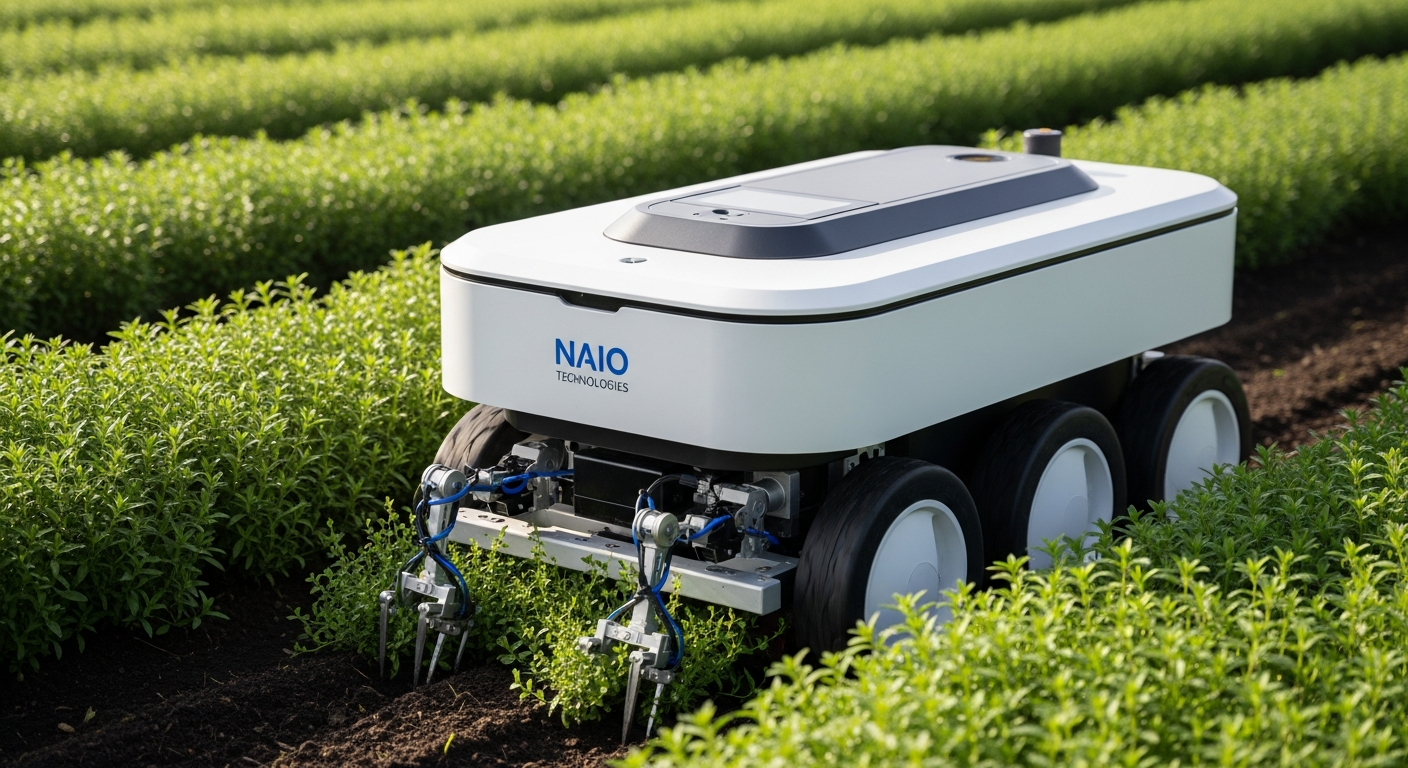
The Naio Oz is a compact, fully electric autonomous weeding robot purpose-built for market gardens, small farms, and diversified vegetable operations. Weighing just 150 kg with adjustable row spacing, it is easy to transport and set up, making it accessible to farmers who may be new to agricultural robotics. The Oz performs mechanical weeding and hoeing between crop rows using interchangeable tools, delivering 100% chemical-free weed control for herbs, salads, vegetables, and flower crops. Its battery provides 3-4 hours of continuous operation, enough to cover 3-5 acres per day on a typical market garden schedule. Developed by Naio Technologies in France, the Oz has been embraced by hundreds of small-scale growers across Europe and North America as an affordable entry point into robotic farming.
 Discontinued
AppHarvest Virgo Robot
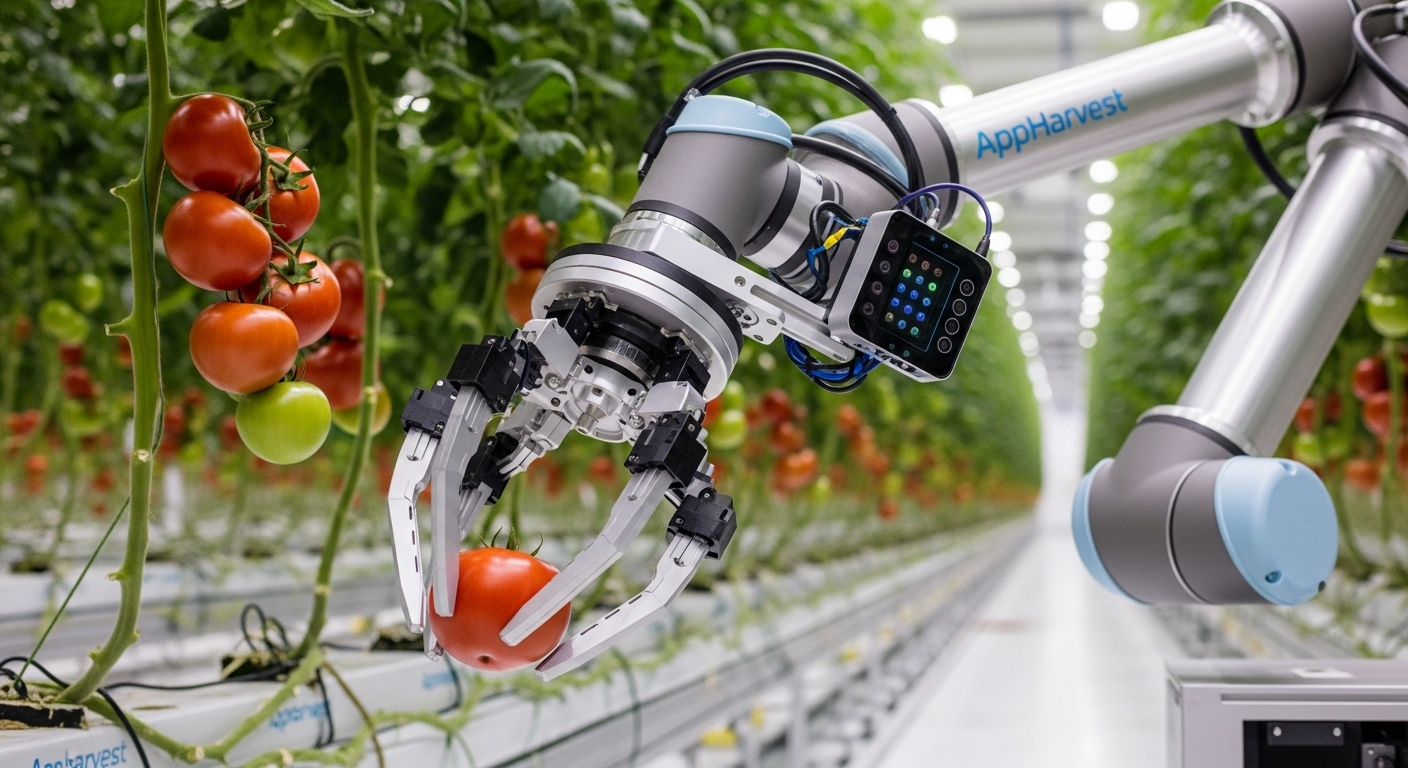
The AppHarvest Virgo is an AI-powered harvesting robot designed for high-tech indoor farms, specializing in picking tomatoes with human-like dexterity and care. It uses 3D and multi-spectral vision systems to assess each fruit's ripeness, size, and quality before deciding whether to pick it, leaving unripe produce on the vine for later harvest. The robot's soft pneumatic gripper handles tomatoes gently enough to prevent bruising, a critical requirement for fresh market produce. Virgo continuously learns from each harvest cycle, improving its speed and accuracy over time through machine learning algorithms trained on millions of picking events. Developed for AppHarvest's large-scale indoor farms in Kentucky, it represents a key step toward fully automated indoor agriculture that can produce food year-round regardless of weather or season.
 Discontinued
Iron Ox Grover
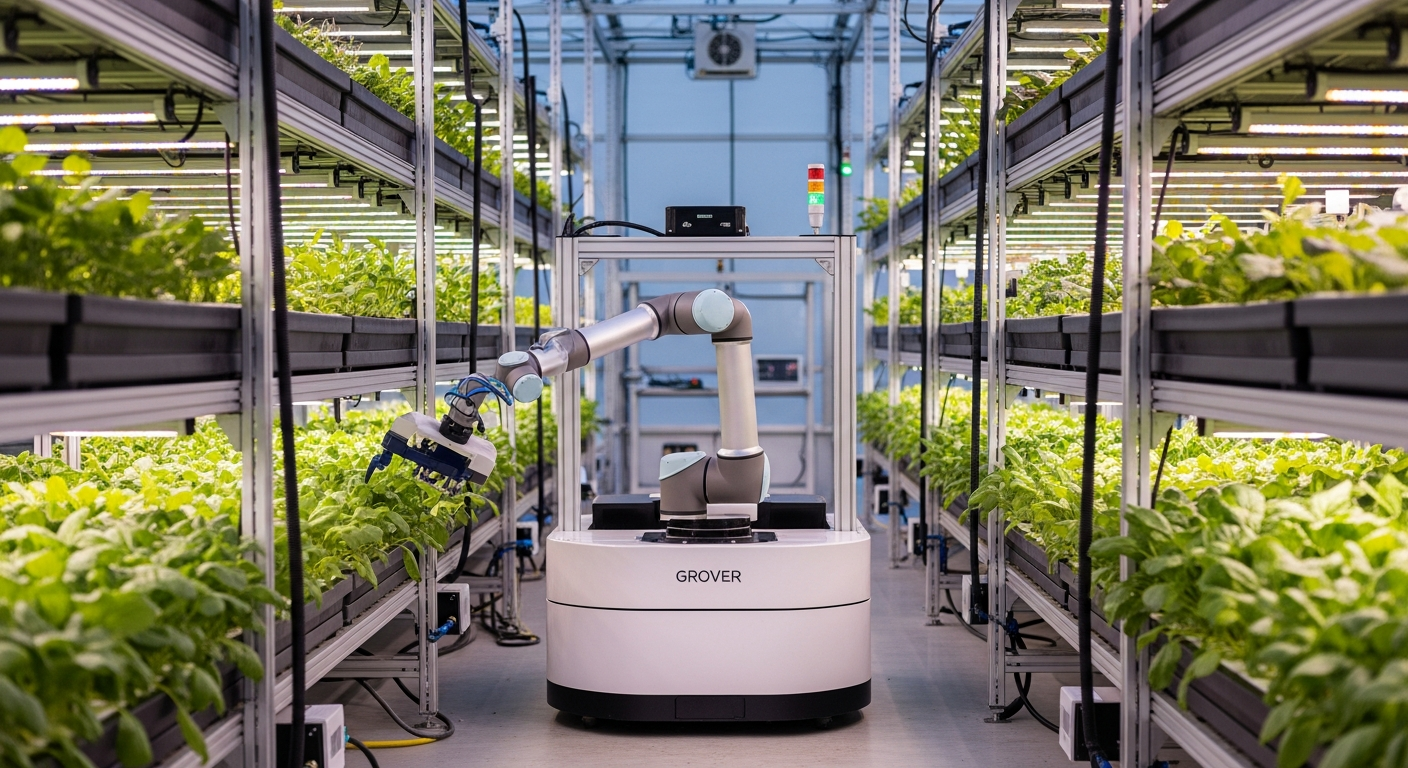
Iron Ox Grover is an AI-driven autonomous greenhouse robot that manages plant care from seed to harvest in controlled environment agriculture facilities. Using computer vision and machine learning, Grover monitors each individual plant's health, growth rate, and nutrient needs, making real-time adjustments to optimize yields. The robot works within Iron Ox's fully integrated greenhouse system, which combines robotics with AI-controlled climate, irrigation, and nutrient delivery to produce crops using 90% less water than conventional field farming. Grover can handle tomatoes, leafy greens, peppers, herbs, and strawberries, achieving yield improvements of up to 30% compared to traditional greenhouse operations. Iron Ox's technology represents the cutting edge of indoor agriculture, targeting urban food production and year-round supply chain reliability.
XAG P100 Pro
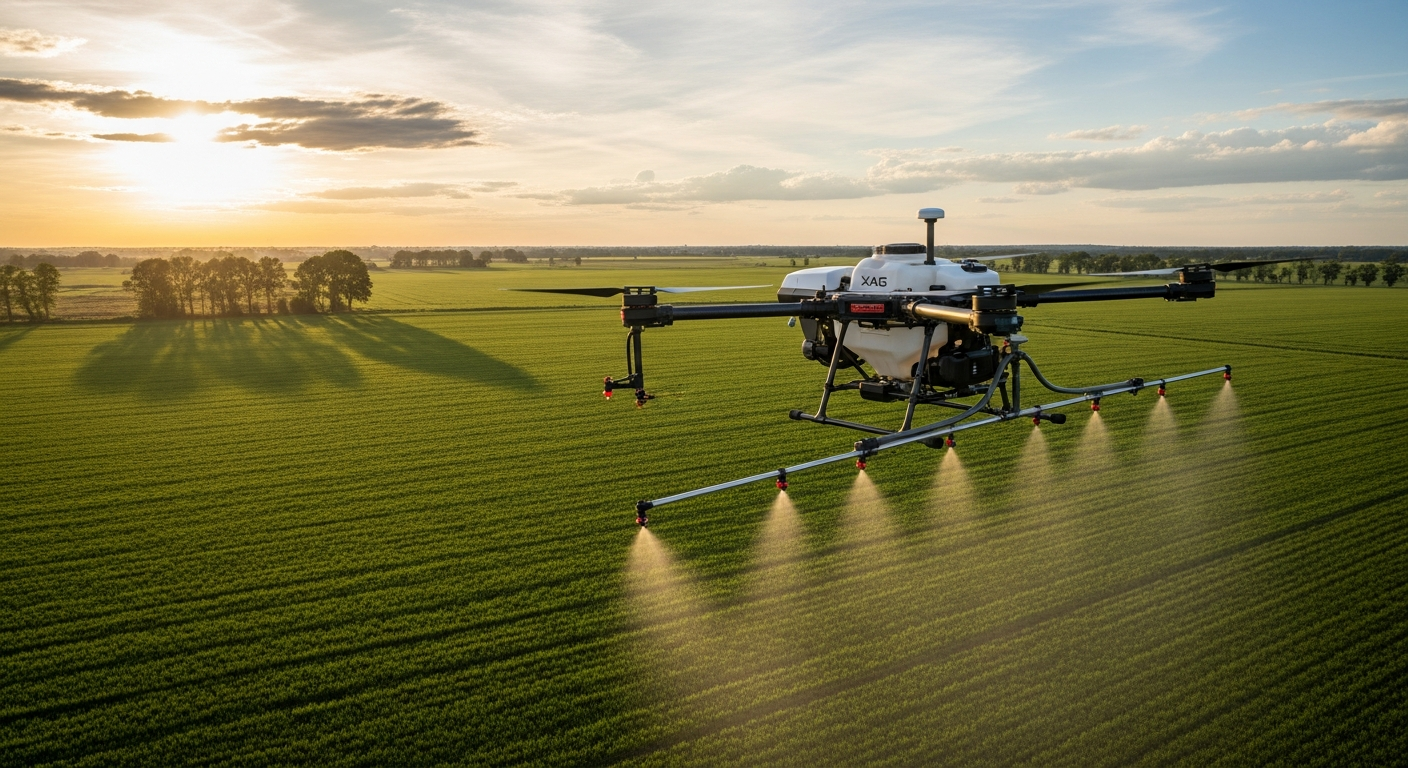
The XAG P100 Pro is an autonomous agricultural drone featuring a 40-liter spray tank and XAG's proprietary RevoPump precision spraying system for uniform droplet distribution. Its AI-powered crop prescription mapping analyzes field data to create variable-rate application plans, applying more product where pest or weed pressure is highest and less where it isn't needed. The drone supports fully autonomous flight with RTK and visual positioning, enabling centimeter-level accuracy even in GPS-challenged environments. With Level 5 wind resistance and a flow rate of 12 liters per minute, it can operate reliably in conditions that would ground lesser drones. Deployed across over 50 countries, the P100 Pro is a cornerstone of XAG's mission to make precision agriculture accessible to smallholder farmers as well as large commercial operations.
 Discontinued
Small Robot Company Tom
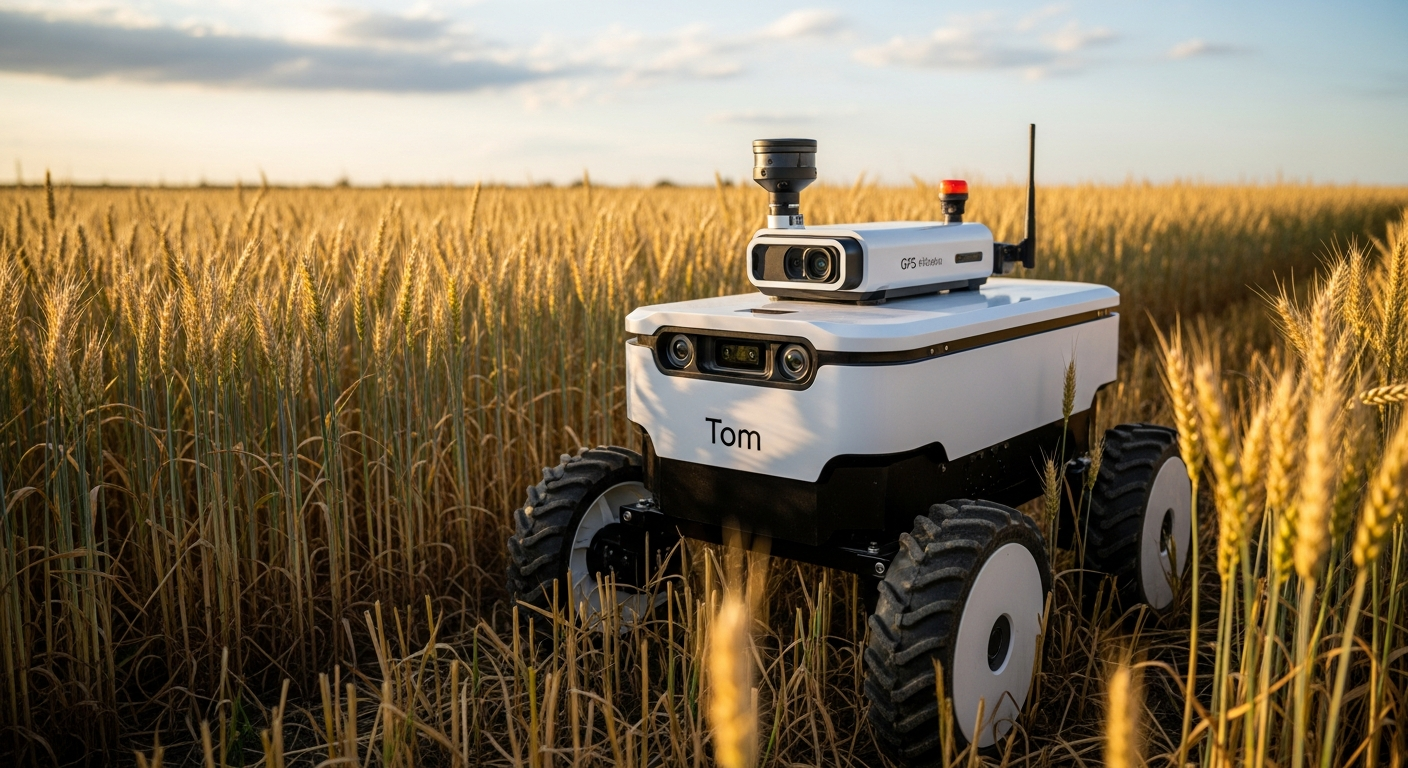
Tom by Small Robot Company is a lightweight, autonomous per-plant farming robot designed specifically for wheat and cereal crop production. Weighing just 30 kg, it navigates fields at 2 km/h, mapping every individual plant at sub-centimeter resolution to build detailed digital field maps. These maps enable precision micro-spraying that targets only the weeds surrounding each crop plant, reducing chemical use by up to 90% compared to blanket spraying. The robot's small size and light weight means it causes virtually zero soil compaction, preserving soil structure and long-term field health. Developed in Salisbury, UK, Tom represents a fundamentally different approach to arable farming — treating each plant as an individual rather than managing fields as uniform blocks.
Agrobot E-Series
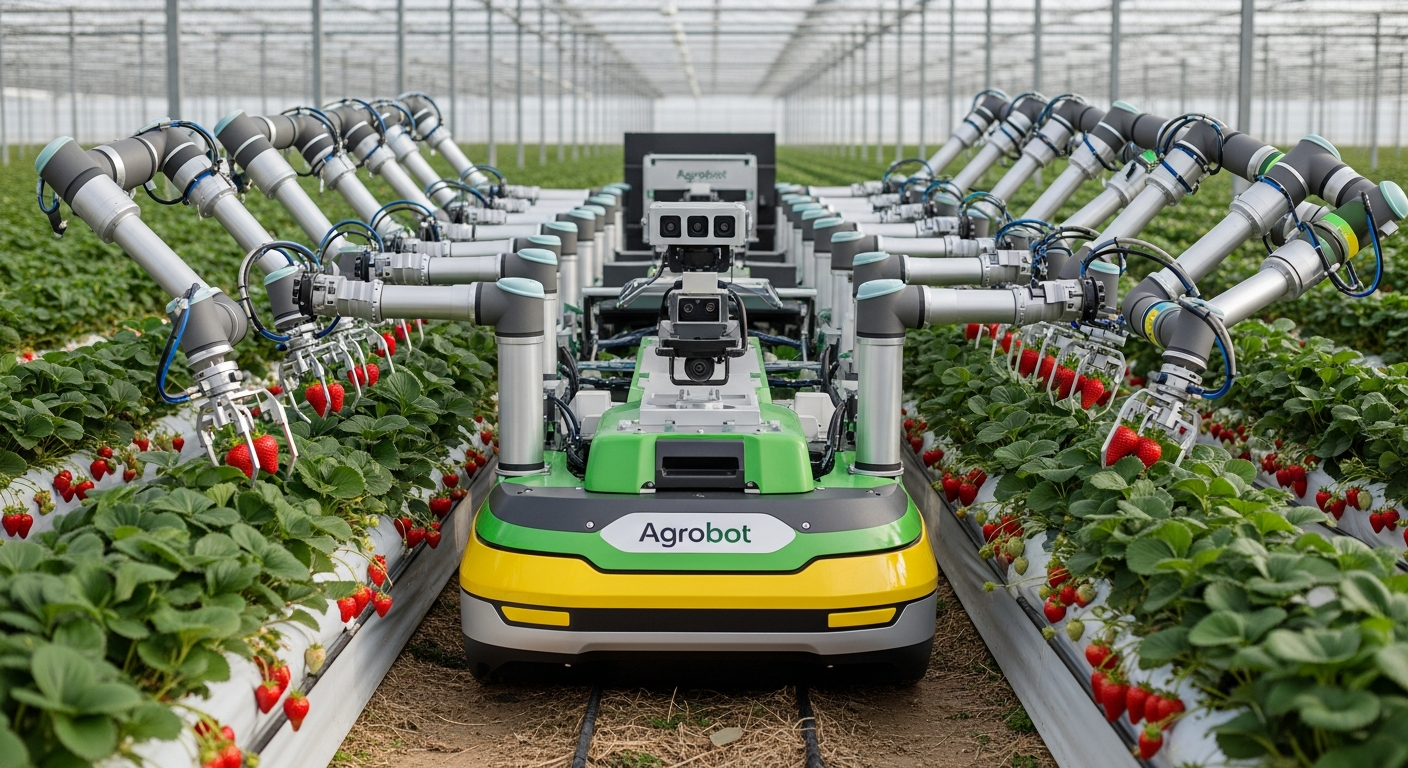
The Agrobot E-Series is an autonomous strawberry harvester from Spain that uses 24 independent robotic arms to identify and pick ripe fruit with human-like gentleness. Each arm is equipped with machine vision sensors that assess berry ripeness by analyzing color, shape, and size, ensuring only market-ready fruit is harvested. The system's gentle pneumatic grippers handle delicate strawberries without bruising, maintaining the high quality standards required for fresh market sales. Operating across a 3.5-meter working width, the E-Series can harvest 1-2 acres per day while working 24/7 without fatigue or breaks. Developed by Agrobot in Huelva, Spain — one of Europe's largest strawberry-growing regions — it has been commercially deployed to help growers cope with rising labor costs and seasonal worker shortages.
Lely Astronaut A5
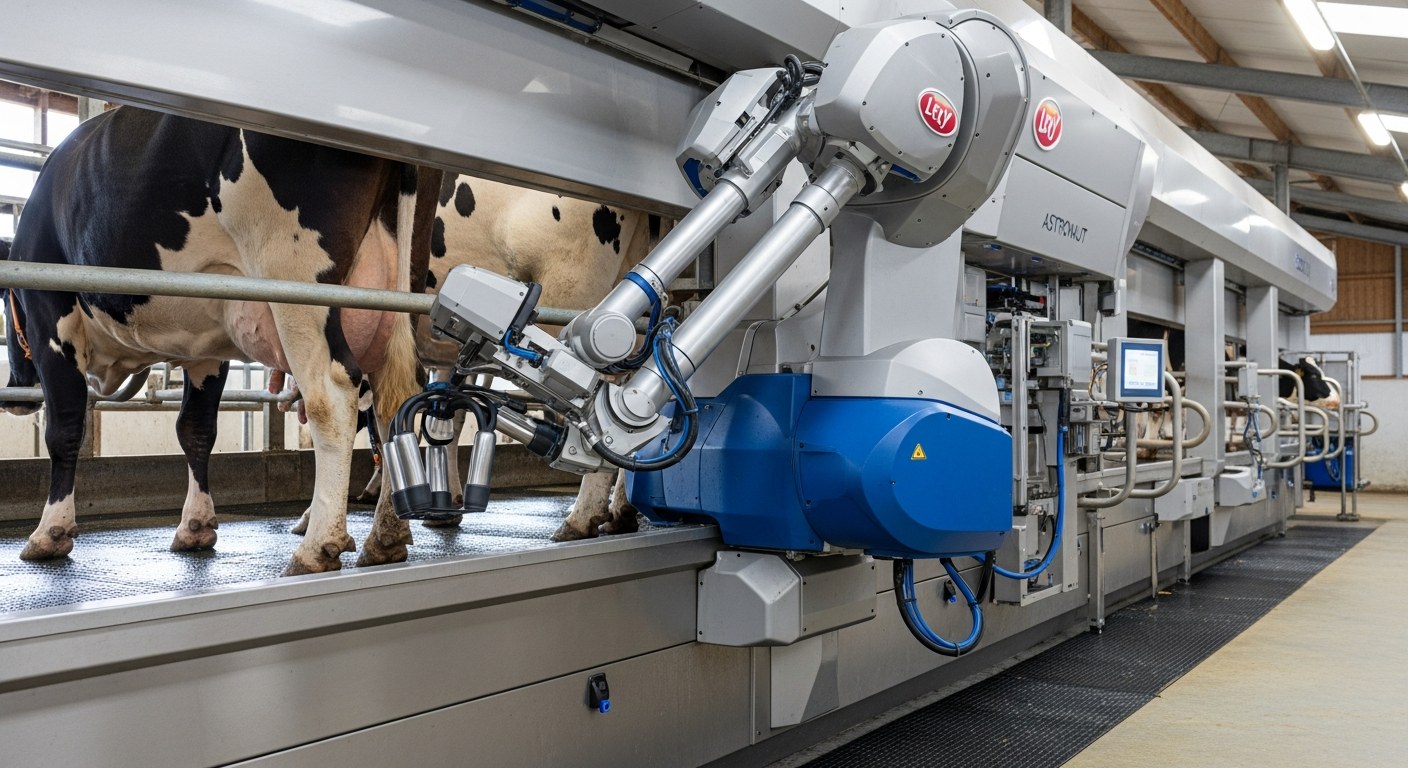
The Lely Astronaut A5 is a fully automatic robotic milking system that allows dairy cows to choose when they want to be milked, improving animal welfare and increasing milk production by up to 12%. The system identifies each cow individually, attaches the milking cups automatically using 3D camera technology, and monitors milk quality in real time by measuring color, conductivity, and temperature. Each A5 unit can handle 60-70 cows with an average of 2.5-3 milkings per day per cow, significantly reducing the daily labor burden on dairy farmers. The automatic cleaning cycle between each cow ensures hygiene standards exceed manual milking, reducing mastitis rates and improving overall herd health. With over 40,000 units installed worldwide, the Astronaut A5 is the most widely deployed robotic milking system in the dairy industry.
DJI Agras T25
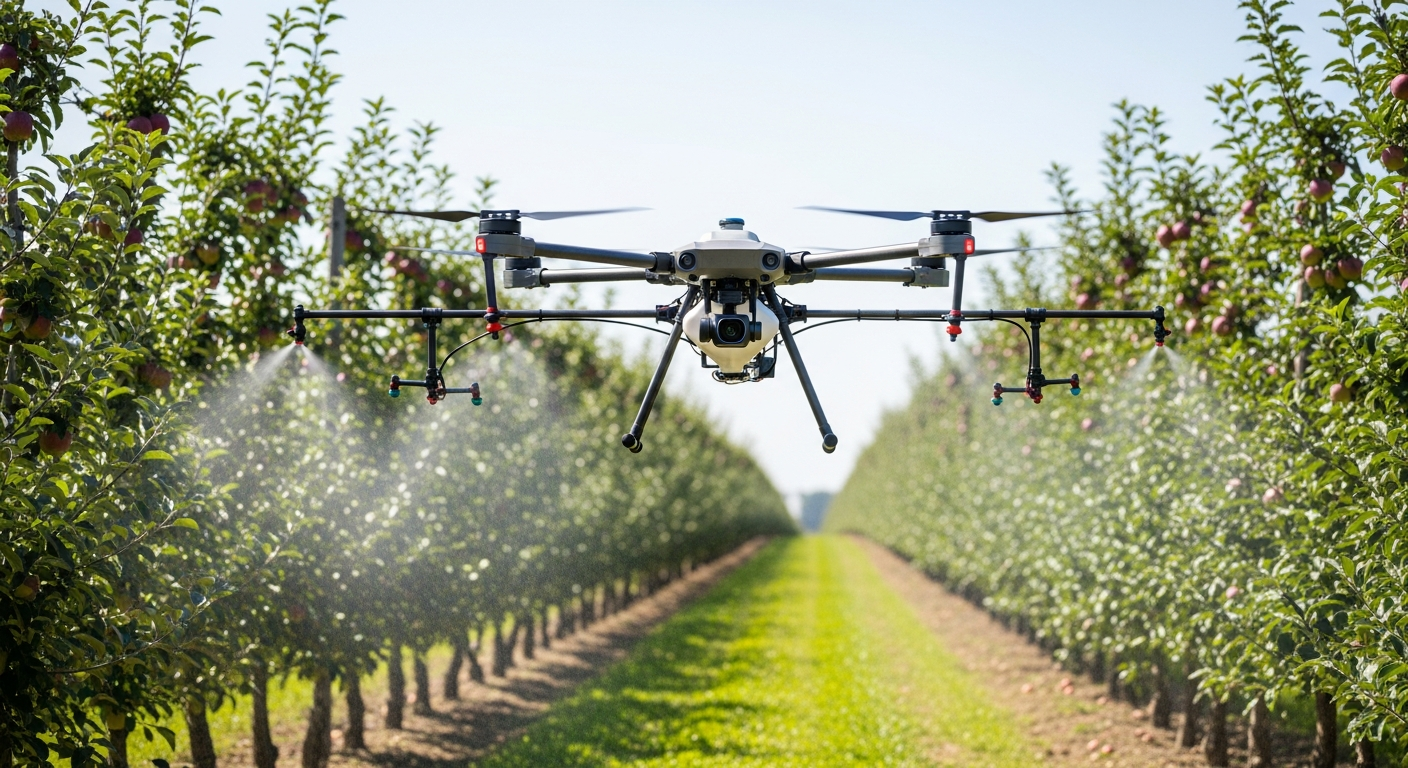
The DJI Agras T25 is a compact agricultural drone specifically designed for orchards, vineyards, and hilly terrain where larger drones cannot safely operate. With a 25 kg spray capacity and dual phased-array radar for advanced obstacle avoidance, it can navigate between tree canopies and along hillside contours with precision. The T25's smaller footprint makes it ideal for fragmented farmland and smaller operations that need professional-grade spraying capabilities at a lower price point. Its terrain-mapping system creates 3D models of orchards and hillsides to optimize spray routes and ensure complete coverage. Popular among tea plantation operators in Asia and vineyard managers in Europe, the T25 has proven especially effective in areas where ground-based spraying equipment cannot easily access.
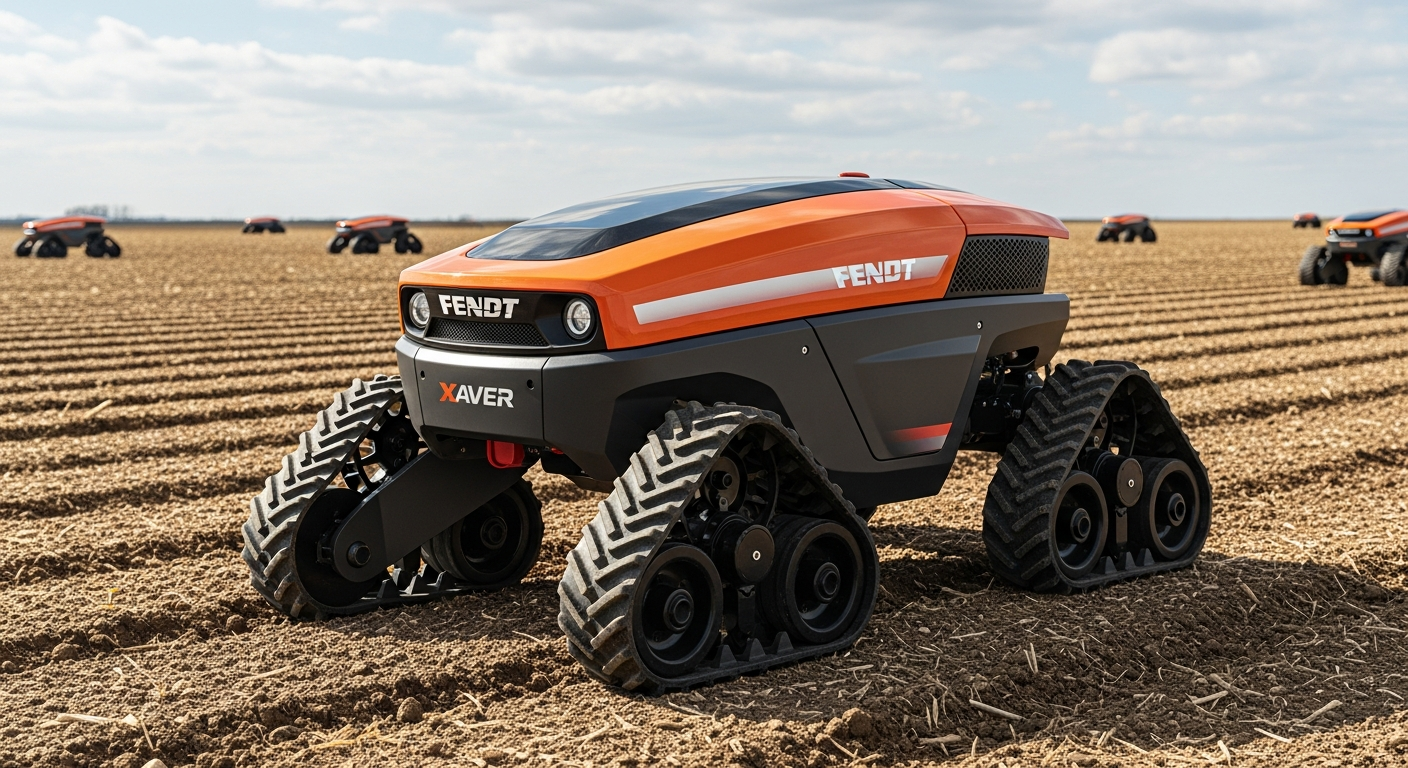
AGCO Fendt Xaver
The AGCO Fendt Xaver is a revolutionary swarm robotics concept that reimagines field operations using small, lightweight autonomous units instead of a single large machine. Each Xaver robot weighs just 50 kg and works in coordinated swarms of up to 12 units to perform precision seeding across large acreages. The robots communicate via cloud-based fleet management, automatically distributing work and optimizing routes for maximum efficiency. Their small size dramatically reduces soil compaction compared to conventional heavy tractors, which can improve long-term soil health and yields by up to 8%. Currently in advanced pilot programs with select European farms, the Xaver system represents AGCO's vision for the future of scalable, sustainable precision agriculture.
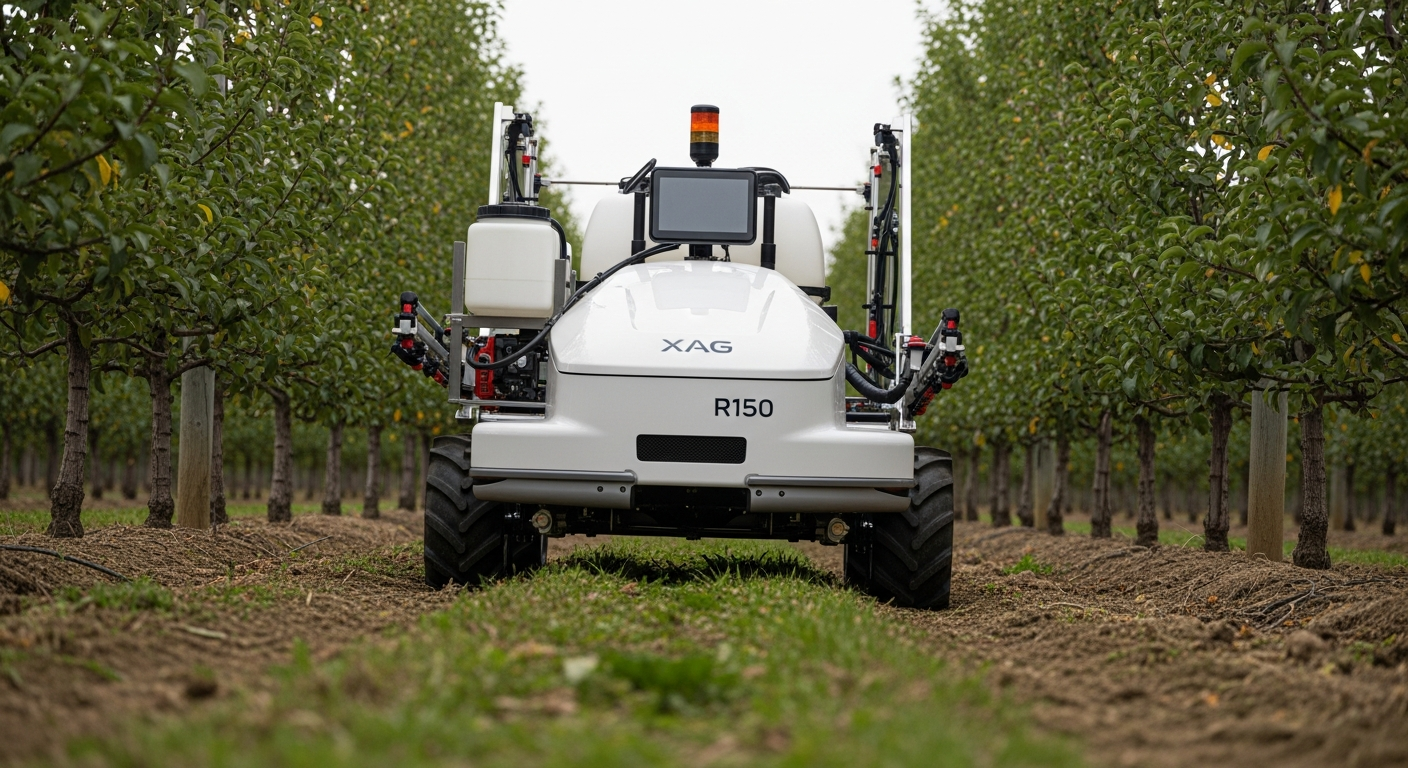
XAG R150 Ground Robot
The XAG R150 is an autonomous unmanned ground vehicle built for precision spraying, seeding, and crop surveying in orchards, vineyards, and vegetable fields. With a 150 kg payload capacity and a 120-liter tank, it can handle substantial workloads while its narrow 950mm width allows it to navigate tight row spacings that would be impassable for standard tractors. The R150 uses a combination of RTK GPS and visual sensors for autonomous navigation, following pre-programmed routes with centimeter-level precision. Its all-terrain chassis handles muddy fields, slopes, and uneven ground, making it suitable for a wide range of growing environments from flat rice paddies to terraced orchards. As part of XAG's integrated ecosystem, it can work in coordination with XAG drones to provide complete ground-and-air coverage of farm operations.
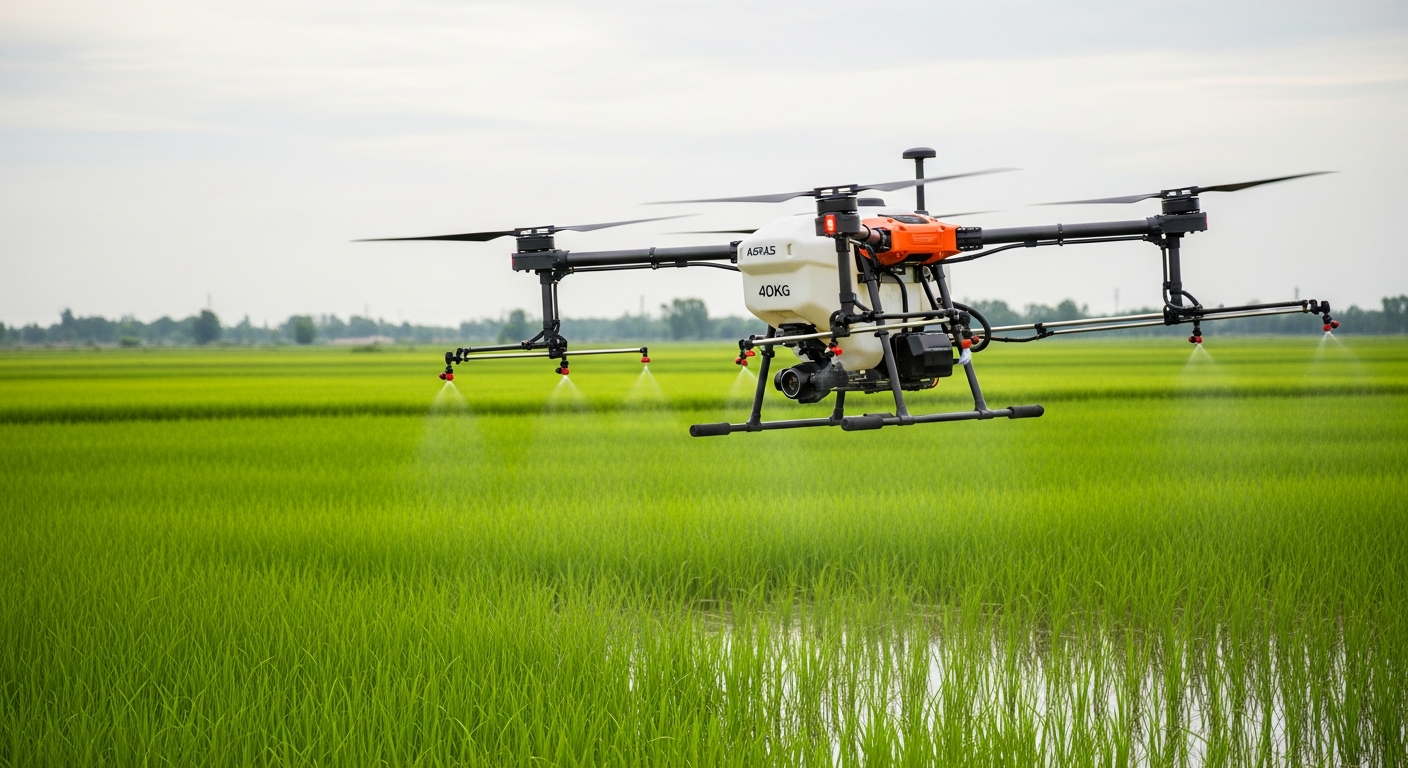
DJI Agras T40
The DJI Agras T40 is a professional-grade agricultural drone with an industry-leading 40 kg spray payload and 50 kg spread payload, making it one of the most capable crop spraying drones on the market. It features dual atomized spraying systems and a coaxial twin-rotor design that generates a powerful downdraft for even chemical distribution across crop canopies. The T40's terrain-following radar automatically adjusts altitude over hills and uneven terrain, ensuring consistent spray coverage even in challenging topography. With intelligent route planning and swarm operation support, multiple T40 drones can work together to cover up to 53 acres per hour in spraying mode. Widely adopted across rice paddies in Asia, cotton fields in the Americas, and fruit orchards worldwide, it has become the go-to drone for large-scale precision agriculture.
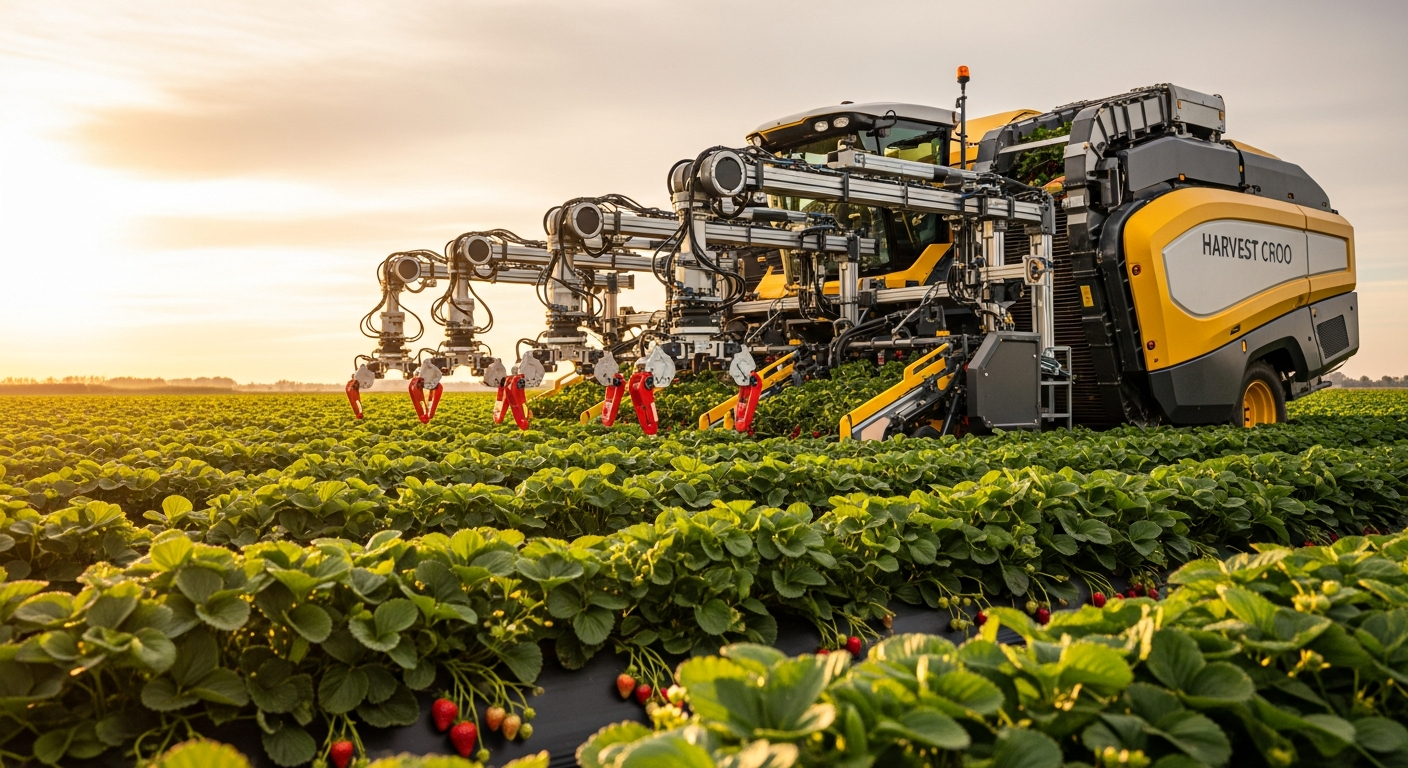
Harvest CROO Berry Harvester
The Harvest CROO Berry Harvester is an autonomous strawberry harvesting robot developed to address the critical labor shortage facing berry growers across the United States. Using multi-spectral camera vision, it identifies ripe strawberries by color, size, and ripeness level, then gently picks them with 16 robotic arms at a rate of up to 8 berries per second. The robot operates autonomously across strawberry fields, navigating rows without damaging plants or unripe fruit. Each unit can harvest approximately one acre per day, working around the clock to ensure berries are picked at peak ripeness. The system has been commercially deployed in Florida and California, where it helps growers maintain harvest schedules despite increasingly difficult seasonal labor recruitment.
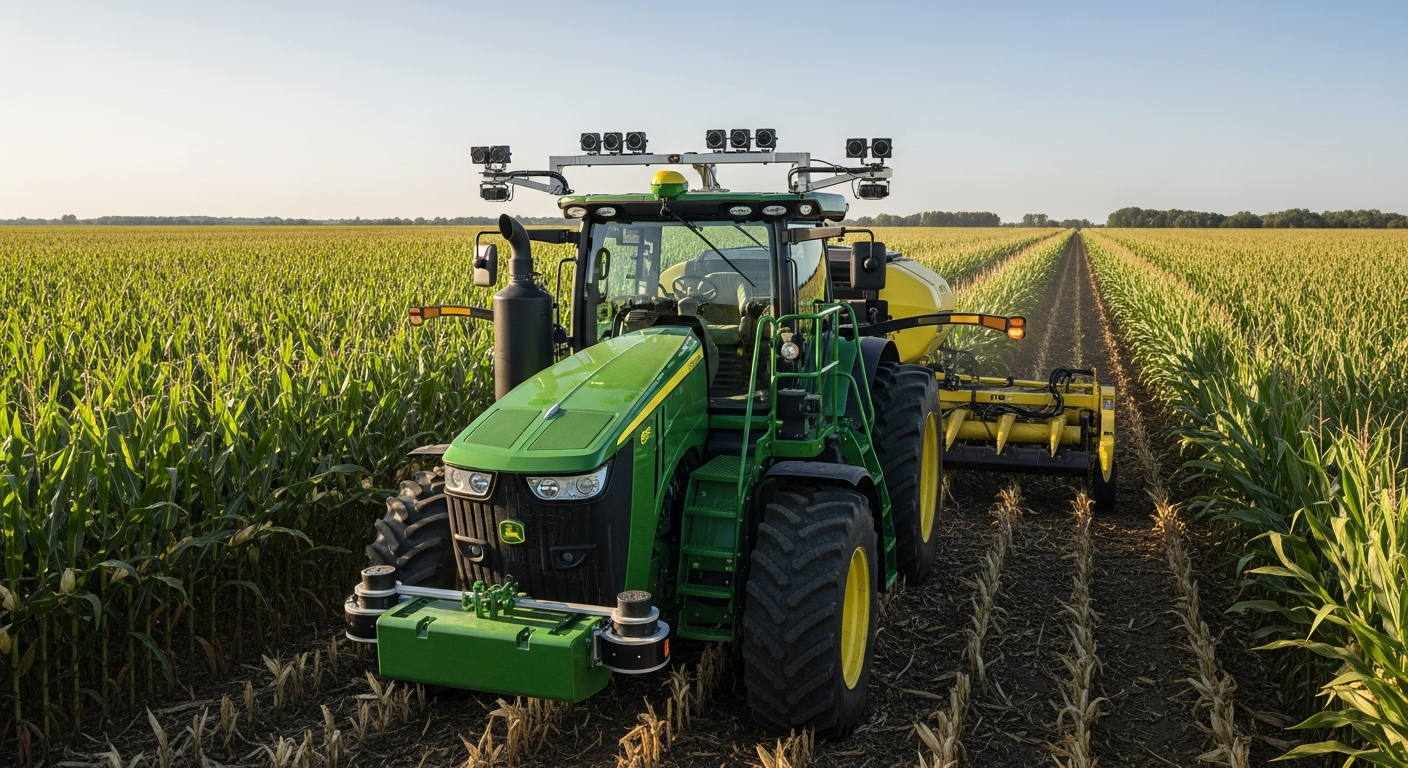
John Deere 8R Autonomous Tractor
The John Deere 8R Autonomous Tractor is one of the first fully autonomous large-scale tractors available commercially. Equipped with six pairs of stereo cameras that provide 360-degree obstacle detection, it can perform tillage operations entirely without an operator in the cab. The system uses GPS with sub-inch RTK accuracy to follow precise field paths while continuously checking for obstacles such as people, animals, or equipment. Farmers can monitor and control the tractor remotely via a smartphone app, receiving real-time images and status updates. Capable of covering up to 325 acres per day, it represents John Deere's flagship autonomous farming solution for large-acreage row crop operations.
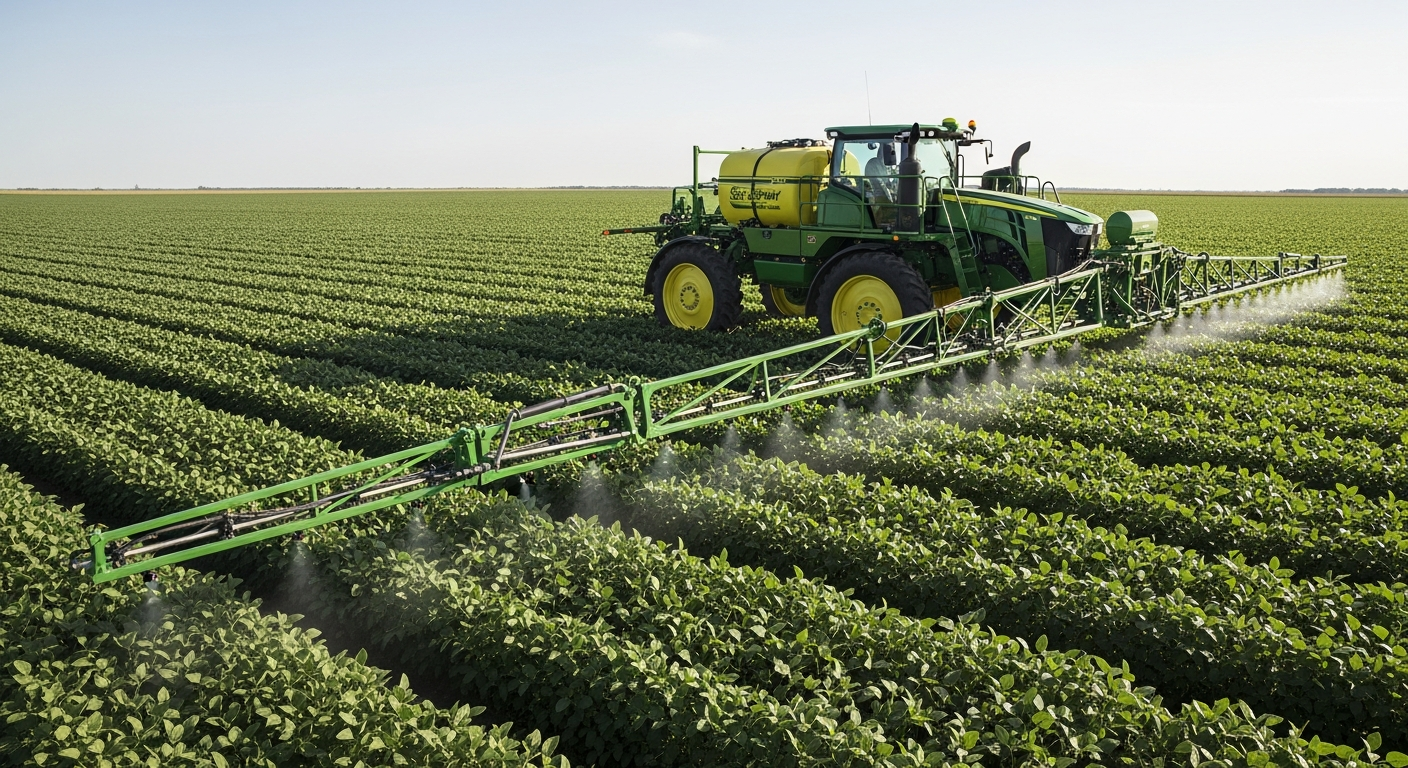
John Deere See & Spray Ultimate
The John Deere See & Spray Ultimate is an AI-powered precision spraying system that uses 36 high-speed cameras to distinguish weeds from crops in real time, targeting only the weeds and reducing herbicide use by up to 77%. Mounted on a 120-foot boom, it processes images at incredible speeds while the sprayer travels at up to 12 mph, covering over 200 acres per day. The system's deep-learning AI has been trained on millions of images of crops and weeds, enabling it to make accurate spray-or-skip decisions for every square inch of field. This targeted approach not only saves farmers significant money on chemical inputs but also reduces the environmental impact of herbicide applications on surrounding ecosystems. See & Spray Ultimate is commercially available as a factory option on John Deere's latest sprayer models and has become one of the company's most in-demand precision agriculture technologies.
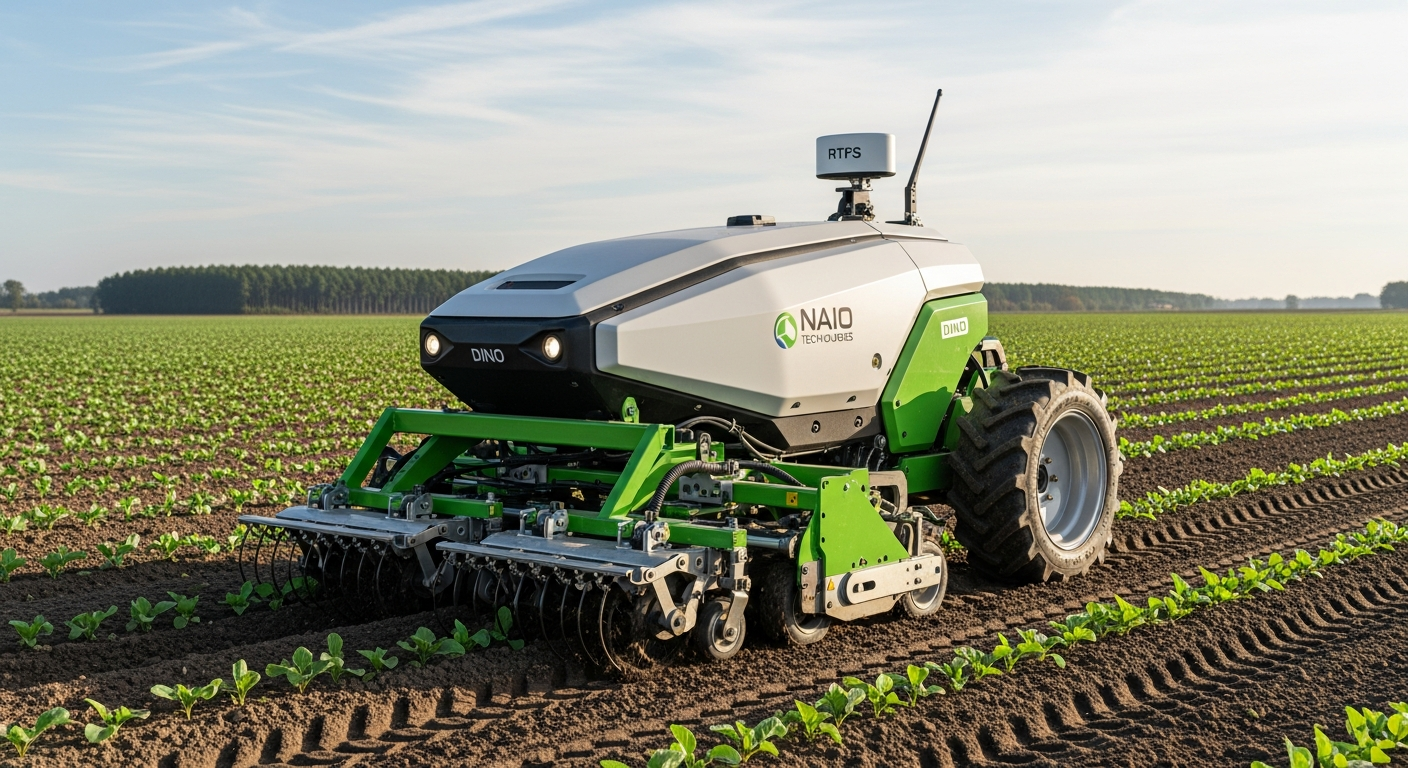
Naio Dino
The Naio Dino is a large-scale autonomous weeding robot designed for vegetable row crops including lettuce, carrots, onions, leeks, and cabbage. It combines RTK GPS positioning with camera-based vision to perform both inter-row and intra-row weeding with high precision, adapting its tools to different crop spacings. The fully electric robot operates quietly and emission-free, weighing around 800 kg and supporting multiple interchangeable tool configurations for hoeing, finger weeding, and harrowing. Developed by French agricultural robotics leader Naio Technologies, the Dino is already deployed on hundreds of farms across Europe and North America. Its adjustable working width of 1.5-1.8 meters makes it versatile enough for a wide range of vegetable production systems.